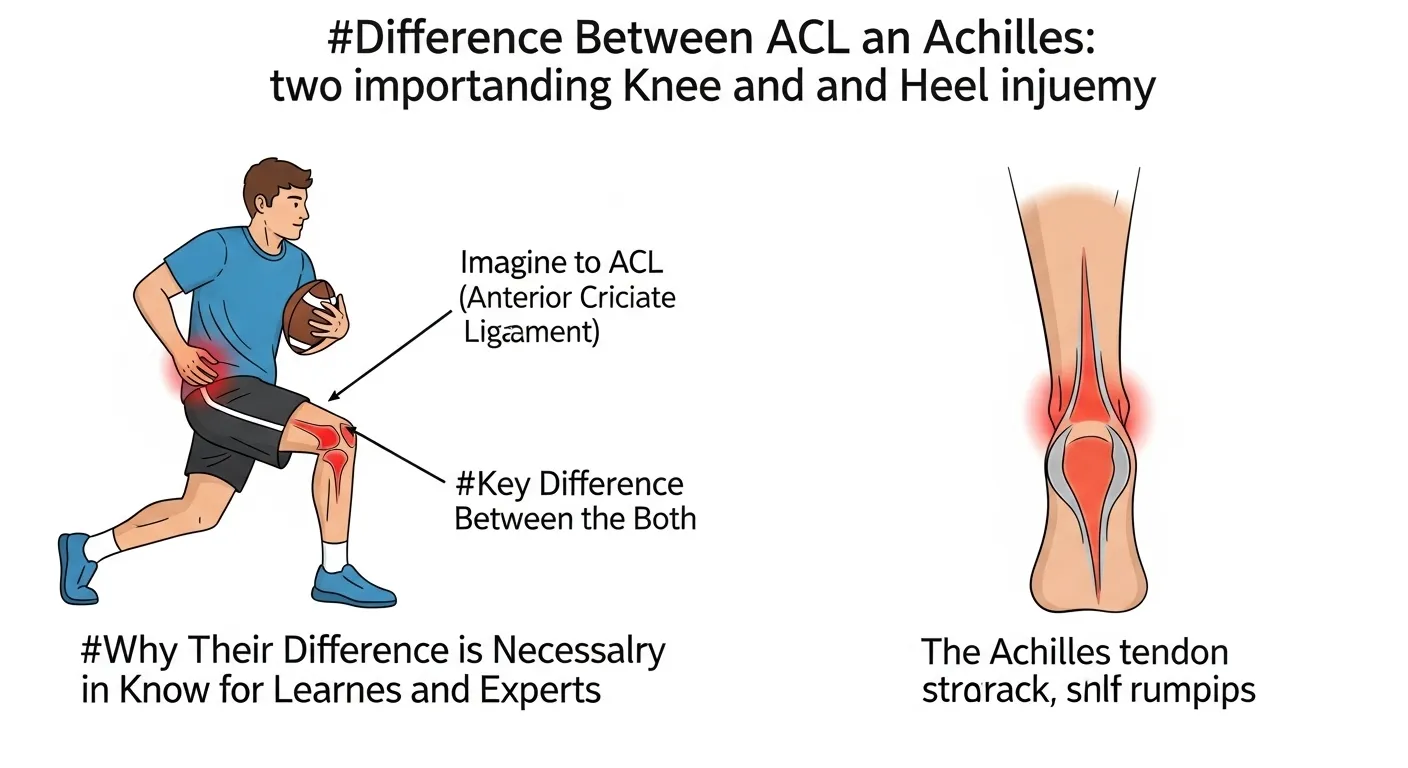
The difference between ACL and Achilles is an important topic in sports medicine and human anatomy. Imagine a football player suddenly falling during a match after twisting his knee, while another runner suddenly stops because of a sharp pain in the back of the heel. These two injuries may look similar because both affect movement, but they involve completely different parts of the body. Understanding the difference between ACL and Achilles helps athletes, doctors, and even ordinary people recognize injuries and respond quickly.
The difference between ACL and Achilles becomes clearer when we know what each term means. ACL refers to a ligament in the knee that stabilizes movement, while Achilles refers to the strong tendon connecting the calf muscles to the heel. Many people confuse these injuries, but learning the difference between ACL and Achilles helps prevent misunderstanding and ensures proper treatment. Knowing the difference between ACL and Achilles is essential for athletes, trainers, and healthcare professionals.
Key Difference Between the Both
The main difference is that ACL (Anterior Cruciate Ligament) is located in the knee joint, while the Achilles tendon is located at the back of the ankle and heel. ACL stabilizes knee movement, whereas the Achilles tendon enables walking, running, and jumping by connecting calf muscles to the heel bone.
Why Their Difference is Necessary to Know for Learners and Experts
Understanding the difference between ACL and Achilles is important because these structures play different roles in human movement. Medical students, athletes, and trainers must recognize these injuries to prevent long-term damage. In sports like football, basketball, and running, ACL injuries are common when the knee twists suddenly, while Achilles injuries occur during explosive movements such as sprinting or jumping.
Knowing their difference helps doctors diagnose injuries accurately and helps athletes adopt preventive training techniques. In society, where physical activity and sports participation are increasing, awareness about these injuries helps reduce long-term disability and improves recovery outcomes.
Pronunciation of Both (US & UK)
| Word | US Pronunciation | UK Pronunciation |
| ACL | /ˌeɪ siː ˈel/ | /ˌeɪ siː ˈel/ |
| Achilles | /əˈkɪliːz/ | /əˈkɪliːz/ |
Understanding their meanings and roles naturally leads us to explore the detailed difference between ACL and Achilles in anatomy and injury patterns.
Difference Between ACL and Achilles
1. Location in the Body
ACL: Located inside the knee joint connecting the thigh bone (femur) to the shin bone (tibia).
Examples:
- A soccer player twisting his knee may tear the ACL.
- A skier landing awkwardly may injure the ACL.
Achilles: Located at the back of the ankle connecting calf muscles to the heel bone.
Examples:
- A runner pushing off the ground may strain the Achilles tendon.
- A basketball player jumping suddenly may rupture the Achilles.
2. Type of Structure
ACL: It is a ligament, connecting bone to bone.
Examples:
- ACL keeps the knee stable when turning quickly.
- It prevents the shin bone from sliding forward.
Achilles: It is a tendon, connecting muscle to bone.
Examples:
- Achilles helps the foot push off while walking.
- It transfers power from calf muscles to the heel.
3. Function in Movement
ACL: Stabilizes the knee during turning, stopping, and pivoting.
Examples:
- Athletes rely on ACL for quick direction changes.
- It protects the knee during sudden stops.
Achilles: Allows the foot to push upward during walking or running.
Examples:
- The tendon works when climbing stairs.
- It helps runners sprint faster.
4. Common Injuries
ACL: Often torn during sports involving sudden direction changes.
Examples:
- Football players frequently experience ACL tears.
- Ski accidents may damage the ACL.
Achilles: Often ruptures during sudden explosive movement.
Examples:
- Runners may suffer Achilles tendonitis.
- Jumping athletes may rupture the tendon.
5. Symptoms of Injury
ACL: Swelling, knee instability, and popping sound.
Examples:
- A player cannot continue the game due to knee instability.
- The knee becomes swollen within hours.
Achilles: Sharp heel pain and difficulty walking.
Examples:
- A runner suddenly cannot push off the foot.
- Standing on toes becomes impossible.
6. Healing Time
ACL: Usually requires surgery and long rehabilitation.
Examples:
- Professional athletes may need 6–12 months recovery.
- Rehabilitation exercises strengthen the knee.
Achilles: May heal with rest or surgery depending on severity.
Examples:
- Mild injuries recover with therapy.
- Severe ruptures require surgery.
7. Risk Groups
ACL: Common among athletes in football, basketball, and skiing.
Examples:
- Female athletes statistically have higher ACL injury rates.
- Sudden pivoting movements increase risk.
Achilles: Common in runners and middle-aged athletes.
Examples:
- Long-distance runners may develop Achilles pain.
- Weekend athletes often experience tendon rupture.
8. Prevention Methods
ACL: Strength training and balance exercises help prevent injury.
Examples:
- Proper landing technique reduces ACL risk.
- Knee strengthening exercises help stability.
Achilles: Stretching and gradual training prevent strain.
Examples:
- Calf stretching before running reduces injury risk.
- Proper footwear protects the tendon.
9. Role in Sports
ACL: Important for stability in sports requiring rapid direction change.
Examples:
- Soccer players rely heavily on ACL strength.
- Tennis players use it when pivoting.
Achilles: Important for speed and jumping power.
Examples:
- Sprinters depend on Achilles power.
- Basketball players use it for jumping.
10. Treatment Approach
ACL: Often treated with reconstructive surgery.
Examples:
- Athletes undergo ligament reconstruction.
- Physical therapy follows surgery.
Achilles: Treated with rest, therapy, or tendon repair surgery.
Examples:
- Ice and rest may help mild tendon injuries.
- Complete ruptures require surgery.
Nature and Behaviour of Both
ACL: The ACL behaves like a stabilizing band in the knee joint. It prevents excessive movement and maintains joint alignment. Because it experiences high stress during sports, it is vulnerable to tears.
Achilles: The Achilles tendon behaves like a powerful elastic band. It stores and releases energy during movement, allowing the body to walk, run, and jump efficiently.
Why People Are Confused About Their Use
People often confuse ACL and Achilles because both injuries commonly occur in athletes and affect movement. Media reports about sports injuries frequently mention both terms, leading to misunderstanding. Additionally, both injuries can cause severe pain and require long recovery periods, which adds to the confusion.
Table Showing Difference and Similarity
| Feature | ACL | Achilles |
| Type | Ligament | Tendon |
| Location | Knee joint | Back of ankle |
| Function | Stabilizes knee | Enables foot movement |
| Common Injury | ACL tear | Achilles rupture |
| Sports Risk | Football, basketball | Running, jumping |
| Similarity | Both support movement | Both are vital in sports |
Which is Better in What Situation?
The ACL is essential when stability and directional control are required. Sports such as football, basketball, and tennis rely heavily on knee stability, and the ACL plays a critical role in preventing sudden knee collapse. Without a healthy ACL, athletes struggle to pivot or stop quickly. Therefore, in activities requiring balance and joint stability, the ACL is more important.
The Achilles tendon is more useful when powerful movement and speed are needed. Running, sprinting, jumping, and climbing stairs all rely heavily on the Achilles tendon. It allows the foot to push off the ground with force. In activities involving explosive power or endurance running, the Achilles tendon becomes more important than the ACL.
Use in Metaphors and Similes
The word Achilles is commonly used metaphorically as “Achilles’ heel,” meaning a hidden weakness.
Examples:
- His lack of patience is his Achilles’ heel.
- Poor planning became the company’s Achilles’ heel.
ACL is rarely used metaphorically because it is a technical medical term.
Connotative Meaning
ACL: Neutral and technical in meaning.
Examples:
- The athlete suffered an ACL injury.
- Doctors repaired the ACL through surgery.
Achilles: Often has a negative connotation when used metaphorically.
Examples:
- Pride became his Achilles’ heel.
- The weakness was the team’s Achilles’ heel.
Idioms or Proverbs Related
Achilles’ heel – a small weakness that can cause failure.
Examples:
- Overconfidence was his Achilles’ heel.
- Poor communication became the company’s Achilles’ heel.
Works in Literature
- “The Iliad” – Epic Poetry – Homer – 8th century BCE (story of Achilles)
- “Achilles in Vietnam” – Nonfiction – Jonathan Shay – 1994
Movies Related to the Keywords
- Troy (2004, USA) – Story of the warrior Achilles
- Achilles and the Tortoise (2008, Japan)
Frequently Asked Questions
1. What is the main difference between ACL and Achilles?
ACL is a ligament in the knee, while Achilles is a tendon in the heel.
2. Which injury is more common in athletes?
Both occur frequently, but ACL tears are more common in sports with rapid direction changes.
3. Can Achilles injuries heal without surgery?
Yes, mild injuries may heal with rest and physical therapy.
4. Why is ACL surgery common?
Because severe ACL tears cannot heal properly without reconstruction.
5. Why is Achilles famous in language?
Because of the mythological phrase “Achilles’ heel,” meaning a weakness.
How Both Are Useful for Surroundings
Both ACL and Achilles are essential parts of the human body that allow smooth movement and participation in sports and daily activities. They support walking, running, and physical work, making them important for active lifestyles and healthy societies.
Final Words for Both
ACL and Achilles are crucial structures in the human musculoskeletal system. While they differ in location, structure, and function, both are essential for stability and movement.
Conclusion
Understanding the difference between ACL and Achilles helps people recognize two important structures in the human body that support movement and athletic performance. ACL stabilizes the knee joint and allows safe turning or stopping during physical activity, while the Achilles tendon enables powerful foot movement such as running and jumping. Although these injuries may appear similar to the public, they involve different anatomical structures and require different treatments. Awareness about their roles and injuries can help athletes, trainers, and healthcare professionals prevent serious damage. Ultimately, learning the difference between ACL and Achilles improves medical understanding, promotes injury prevention, and supports healthier and safer participation in sports and daily life.

I’m Shabbir Hussain, a professional content writer who specializes in clear and authentic comparisons between similar terms. I write concise, research-based, and reader-friendly content that turns complex language into simple explanations. Through Mysynonyms.com, I help readers strengthen their vocabulary and clearly understand word differences.