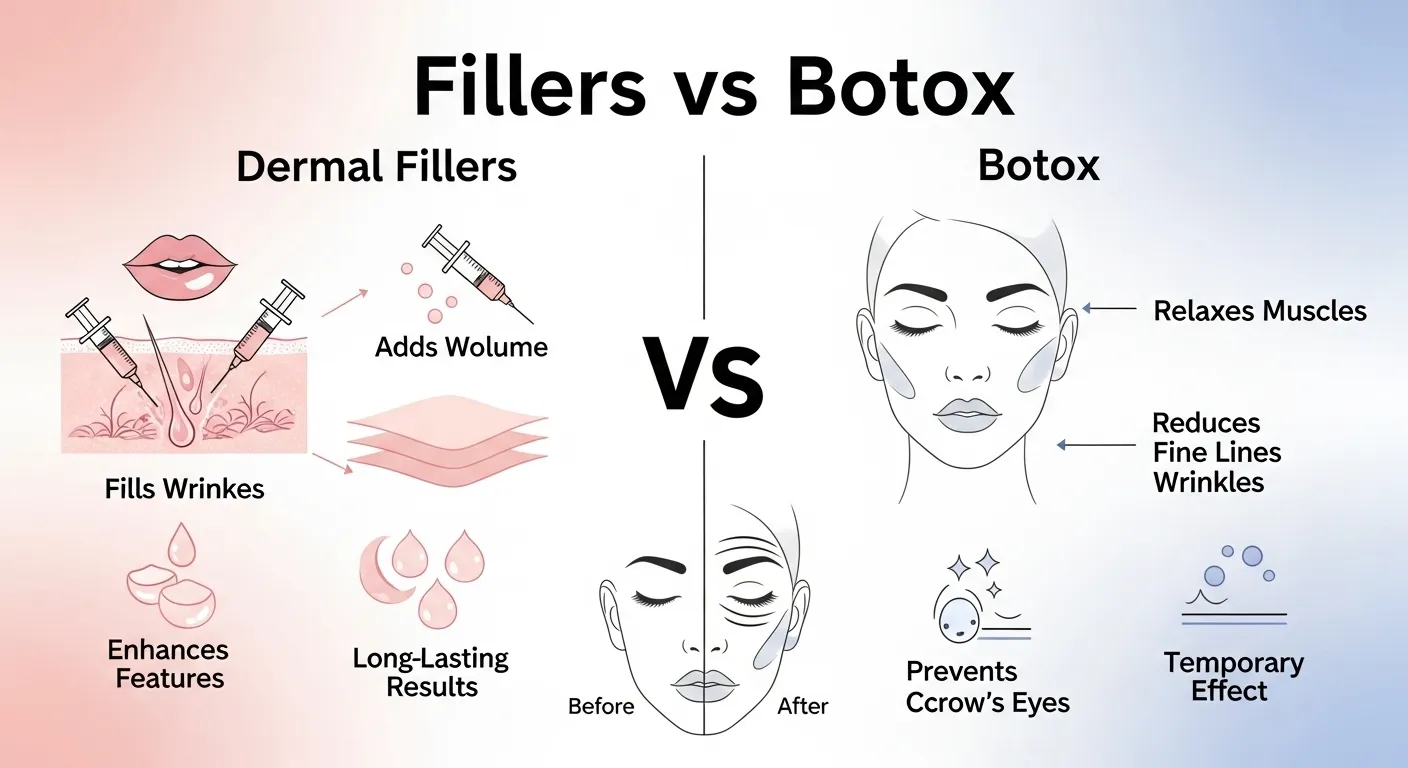
Fillers and Botox are both cosmetic treatments, but fillers add volume to the skin, while Botox relaxes muscles to reduce wrinkles.
Understanding the difference between fillers and botox is essential for anyone considering cosmetic treatments. Imagine looking in the mirror and noticing fine lines or loss of volume, some treatments smooth wrinkles by relaxing muscles, while others restore fullness to the face.
The difference between fillers and botox lies in how they work and what they treat. Botox is used to temporarily relax facial muscles, reducing wrinkles caused by movement. On the other hand, dermal fillers are gel-like substances injected beneath the skin to restore lost volume and enhance facial contours. Learning the difference between fillers and botox helps individuals choose the right treatment based on their needs. By understanding the difference between fillers and botox, you can achieve more natural and effective results.
Pronunciation
Fillers
US: /ˈfɪlərz/
Botox
US: /ˈboʊtɑːks/
Key Difference Between the Both
The main difference between fillers and botox is that fillers add volume to areas like cheeks and lips, while Botox reduces wrinkles by relaxing the muscles that cause them.
Why Is Their Difference Necessary to Know for Learners and Experts?
Knowing the difference between fillers and botox is important for patients, dermatologists, and cosmetic professionals. For learners, it clarifies two commonly confused treatments. For experts, understanding the difference between fillers and botox ensures correct application and patient satisfaction.
In society, cosmetic treatments are increasingly popular. Misunderstanding the difference between fillers and botox can lead to unrealistic expectations or incorrect choices, making this knowledge highly valuable.
Difference Between Fillers and Botox
1. Definition
Fillers are substances injected to add volume. Botox is a toxin used to relax muscles.
Examples
Fillers:
- Lip enhancement.
- Cheek volume.
Botox:
- Forehead wrinkle reduction.
- Frown line smoothing.
2. Function
Fillers restore volume. Botox reduces muscle activity.
Examples
Fillers:
- Plump lips.
- Fill wrinkles.
Botox:
- Smooth expression lines.
- Prevent wrinkles.
3. Areas of Use
Fillers are used in cheeks, lips, and under eyes. Botox is used on forehead and around eyes.
Examples
Fillers:
- Nasolabial folds.
- Jawline contour.
Botox:
- Crow’s feet.
- Forehead lines.
4. Type of Wrinkles
Fillers treat static wrinkles. Botox treats dynamic wrinkles.
Examples
Fillers:
- Wrinkles at rest.
- Deep folds.
Botox:
- Wrinkles during movement.
- Expression lines.
5. Duration
Fillers last longer. Botox has shorter duration.
Examples
Fillers:
- 6–18 months.
- Gradual breakdown.
Botox:
- 3–6 months.
- Temporary effect.
6. Composition
Fillers are made of substances like hyaluronic acid. Botox is derived from botulinum toxin.
Examples
Fillers:
- Gel-like material.
- Natural substances.
Botox:
- Purified protein.
- Injectable toxin.
7. Results
Fillers give immediate volume. Botox results appear after a few days.
Examples
Fillers:
- Instant plumpness.
- Visible change.
Botox:
- Gradual smoothing.
- Delayed effect.
8. Purpose
Fillers enhance facial features. Botox reduces wrinkles.
Examples
Fillers:
- Lip shaping.
- Facial contouring.
Botox:
- Anti-aging treatment.
- Line reduction.
9. Risk
Both are safe when done professionally but have different risks.
Examples
Fillers:
- Swelling.
- Bruising.
Botox:
- Temporary drooping.
- Mild discomfort.
10. Popularity
Both are widely used cosmetic treatments.
Examples
Fillers:
- Popular for volume.
- Used in beauty industry.
Botox:
- Popular for wrinkle treatment.
- Common worldwide.
Nature and Behaviour of Both
Fillers physically add volume beneath the skin, enhancing structure. Botox works chemically by blocking nerve signals to muscles, reducing movement and smoothing wrinkles.
Why People Are Confused About Their Use?
People often confuse fillers and Botox because both are injectable cosmetic treatments used for anti-aging. However, the key difference is that fillers add volume, while Botox relaxes muscles.
Table Showing Difference and Similarity
| Feature | Fillers | Botox | Similarity |
| Function | Add volume | Relax muscles | Cosmetic treatment |
| Use | Static wrinkles | Dynamic wrinkles | Anti-aging |
| Result | Immediate | Delayed | Injectable |
| Duration | Longer | Shorter | Temporary |
| Composition | Gel | Toxin | Medical use |
Which Is Better in What Situation?
Fillers
Fillers are better for restoring volume, enhancing lips, and filling deep wrinkles or hollow areas.
Botox
Botox is better for reducing expression lines like forehead wrinkles and crow’s feet caused by muscle movement.
How the Keywords Are Used in Metaphors and Similes
Examples:
- “Her confidence was like fillers—restored and enhanced.”
- “His calm expression was like Botox—smooth and relaxed.”
Connotative Meaning
Fillers
Connotation: Enhancement, fullness.
Example:
“Fillers symbolize added beauty and volume.”
Botox
Connotation: Smoothness, control.
Example:
“Botox represents wrinkle-free calmness.”
Idioms or Proverbs Related to the Words
There are no direct idioms, but related expressions exist:
Put on a new face
Example:
“She seemed to put on a new face, like using Botox.”
Works in Literature
Fillers and Botox are modern terms commonly discussed in beauty, medical, and lifestyle publications.
Movie Names Made on the Keywords
There are no major movies directly based on fillers or Botox as cosmetic procedures.
Five Frequently Asked Questions
1. What is the main difference between fillers and botox?
Fillers add volume, while Botox relaxes muscles.
2. Which lasts longer?
Fillers usually last longer than Botox.
3. Are both safe?
Yes, when performed by professionals.
4. Can they be used together?
Yes, often combined for better results.
5. Which is better?
Depends on your needs—volume or wrinkle reduction.
How Both Are Useful for Surroundings
Both treatments help improve confidence, appearance, and self-esteem, contributing to personal well-being. One’s feel confident by using these treatments.
Final Words for the Both
Fillers and Botox are different but complementary treatments in modern cosmetic care.
Conclusion
The difference between fillers and botox lies in their function and effect. Fillers restore volume and enhance facial features, while Botox relaxes muscles to reduce wrinkles. Understanding the difference between fillers and botox helps individuals choose the right treatment for their needs. By learning the difference between fillers and botox, you can achieve safer and more effective cosmetic results.

I’m Shabbir Hussain, a professional content writer who specializes in clear and authentic comparisons between similar terms. I write concise, research-based, and reader-friendly content that turns complex language into simple explanations. Through Mysynonyms.com, I help readers strengthen their vocabulary and clearly understand word differences.