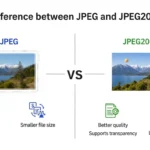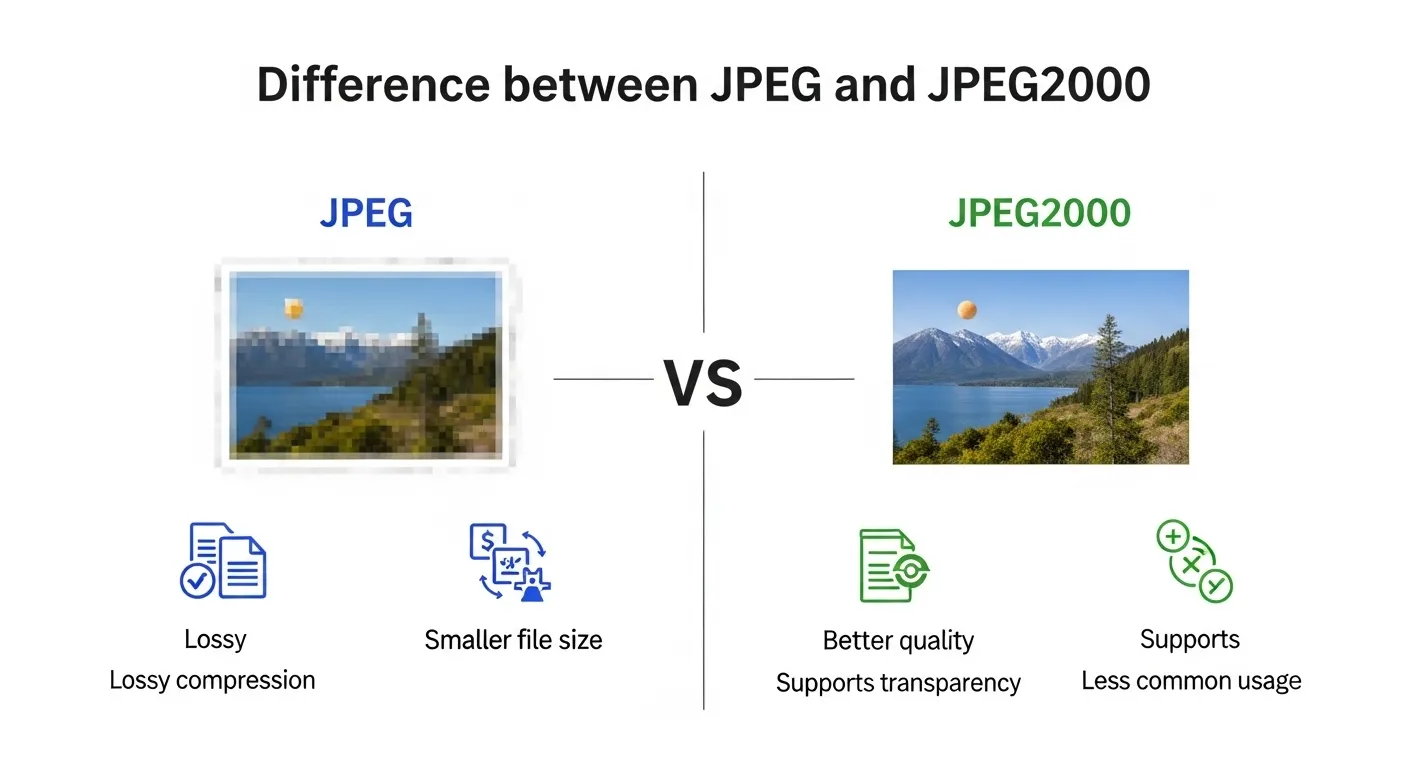
JPEG and JPEG2000 are both image formats, but JPEG uses older compression with some quality loss, while JPEG2000 uses advanced compression with better quality and flexibility.
Understanding the difference between JPEG and JPEG2000 is important for photographers, designers, and anyone working with digital images. Imagine saving a photo on your phone, sometimes the file is small but loses quality, while other times it keeps high detail with better compression.
The difference between JPEG and JPEG2000 lies in their compression techniques and performance. JPEG is a widely used format that compresses images by reducing some data, often causing visible quality loss. In contrast, JPEG 2000 uses a more modern method that can preserve higher image quality even at smaller file sizes. Learning the difference between JPEG and JPEG2000 helps users choose the right format for their needs. By understanding the difference between JPEG and JPEG2000, you can balance quality, size, and performance effectively.
Pronunciation
JPEG
US: /ˈdʒeɪpɛɡ/
JPEG 2000
US: /ˈdʒeɪpɛɡ tuː ˈθaʊzənd/
Key Difference Between the Both
The main difference between JPEG and JPEG2000 is that JPEG uses lossy compression that reduces image quality, while JPEG 2000 uses advanced compression that can be both lossy and lossless with better quality retention.
Why Is Their Difference Necessary to Know for Learners and Experts?
Knowing the difference between JPEG and JPEG2000 is essential for students, photographers, and IT professionals. For learners, it builds basic understanding of image formats. For experts, understanding the difference between JPEG and JPEG2000 helps in selecting the best format for storage, editing, and transmission.
In today’s digital world, images are everywhere, from social media to medical imaging. Misunderstanding the difference between JPEG and JPEG2000 can lead to poor quality or inefficient file management.
Difference Between JPEG and JPEG2000
1. Definition
JPEG is a standard image format using lossy compression. JPEG2000 is an advanced format with improved compression methods.
Examples
JPEG:
- Common photos.
- Web images.
JPEG 2000:
- High-quality images.
- Professional use.
2. Compression Type
JPEG uses lossy compression. JPEG2000 supports both lossy and lossless compression.
Examples
JPEG:
- Data is removed.
- Quality loss occurs.
JPEG 2000:
- Can preserve full data.
- Flexible compression.
3. Image Quality
JPEG may lose quality after compression. JPEG2000 maintains better quality.
Examples
JPEG:
- Blurry at high compression.
- Artifacts appear.
JPEG 2000:
- Sharper images.
- Fewer artifacts.
4. File Size
JPEG produces small file sizes. JPEG2000 offers efficient compression with high quality.
Examples
JPEG:
- Small files.
- Faster loading.
JPEG 2000:
- Smaller or similar size.
- Better quality.
5. Technology
JPEG uses older DCT-based compression. JPEG2000 uses wavelet-based compression.
Examples
JPEG:
- Traditional method.
- Less efficient.
JPEG 2000:
- Modern method.
- More efficient.
6. Error Handling
JPEG is less resilient to errors. JPEG2000 is more robust.
Examples
JPEG:
- Corruption affects whole image.
- Less stable.
JPEG 2000:
- Handles errors better.
- Partial recovery possible.
7. Progressive Loading
JPEG supports basic progressive loading. JPEG2000 offers advanced progressive display.
Examples
JPEG:
- Loads gradually.
- Limited control.
JPEG 2000:
- Smooth scaling.
- Better preview.
8. Usage
JPEG is widely used on the web. JPEG2000 is used in specialized fields.
Examples
JPEG:
- Social media.
- Websites.
JPEG 2000:
- Medical imaging.
- Digital cinema.
9. Compatibility
JPEG is highly compatible. JPEG2000 has limited support.
Examples
JPEG:
- Works on all devices.
- Universal format.
JPEG 2000:
- Limited software support.
- Specialized tools.
10. Adoption
JPEG is globally popular. JPEG2000 is less widely adopted.
Examples
JPEG:
- Everyday use.
- Standard format.
JPEG 2000:
- Niche applications.
- Professional environments.
Nature and Behaviour of Both
JPEG is simple, fast, and widely used but may lose quality. JPEG2000 is advanced, flexible, and maintains higher quality but is less commonly used.
Why People Are Confused About Their Use?
People often confuse JPEG and JPEG2000 because of their similar names. However, they differ significantly in technology and performance.
Table Showing Difference and Similarity
| Feature | JPEG | JPEG2000 | Similarity |
| Compression | Lossy | Lossy & Lossless | Image formats |
| Quality | Lower | Higher | Digital images |
| Compatibility | High | Limited | Used in media |
| Technology | DCT | Wavelet | Compression-based |
| Usage | Common | Specialized | Visual storage |
Which Is Better in What Situation?
JPEG
It is better for everyday use, such as web images, social media, and general photography due to its compatibility and small file size.
JPEG2000
JPEG 2000 is better for high-quality applications like medical imaging, digital cinema, and professional editing where image detail is critical.
How the Keywords Are Used in Metaphors and Similes
Examples:
- “The image quality dropped like a compressed JPEG.”
- “The clarity remained like a JPEG2000 file.”
Connotative Meaning
JPEG
Connotation: Common, practical.
Example:
“It was a JPEG-level solution, simple and widely used.”
JPEG2000
Connotation: Advanced, high-quality.
Example:
“It was a JPEG 2000 approach, detailed and refined.”
Idioms or Proverbs Related to the Words
Picture perfect
Example:
“The result was picture perfect, like a high-quality image.”
Works in Literature
JPEG and JPEG 2000 are discussed in computer science books, digital imaging guides, and multimedia studies.
Movie Names Made on the Keywords
There are no movies directly based on JPEG or JPEG2000.
Five Frequently Asked Questions
1. What is the main difference between JPEG and JPEG2000?
JPEG uses lossy compression, while JPEG 2000 uses advanced compression with better quality.
2. Which is better quality?
JPEG2000.
3. Why is JPEG more popular?
Because of compatibility.
4. Can JPEG2000 be lossless?
Yes.
5. Which is used on websites?
JPEG.
How Both Are Useful for Surroundings
Both formats help store, share, and display images efficiently in digital environments.
Final Words for the Both
JPEG and JPEG2000 serve different needs, one for convenience and the other for quality.
Conclusion
The difference between JPEG and JPEG2000 lies in their compression technology and performance. JPEG is a widely used format with lossy compression, while JPEG 2000 offers advanced compression with better quality and flexibility. Understanding the difference between JPEG and JPEG2000 helps users choose the right format for their needs. By learning the difference between JPEG and JPEG2000, individuals can manage images more effectively in both everyday and professional settings.

I’m Shabbir Hussain, a professional content writer who specializes in clear and authentic comparisons between similar terms. I write concise, research-based, and reader-friendly content that turns complex language into simple explanations. Through Mysynonyms.com, I help readers strengthen their vocabulary and clearly understand word differences.