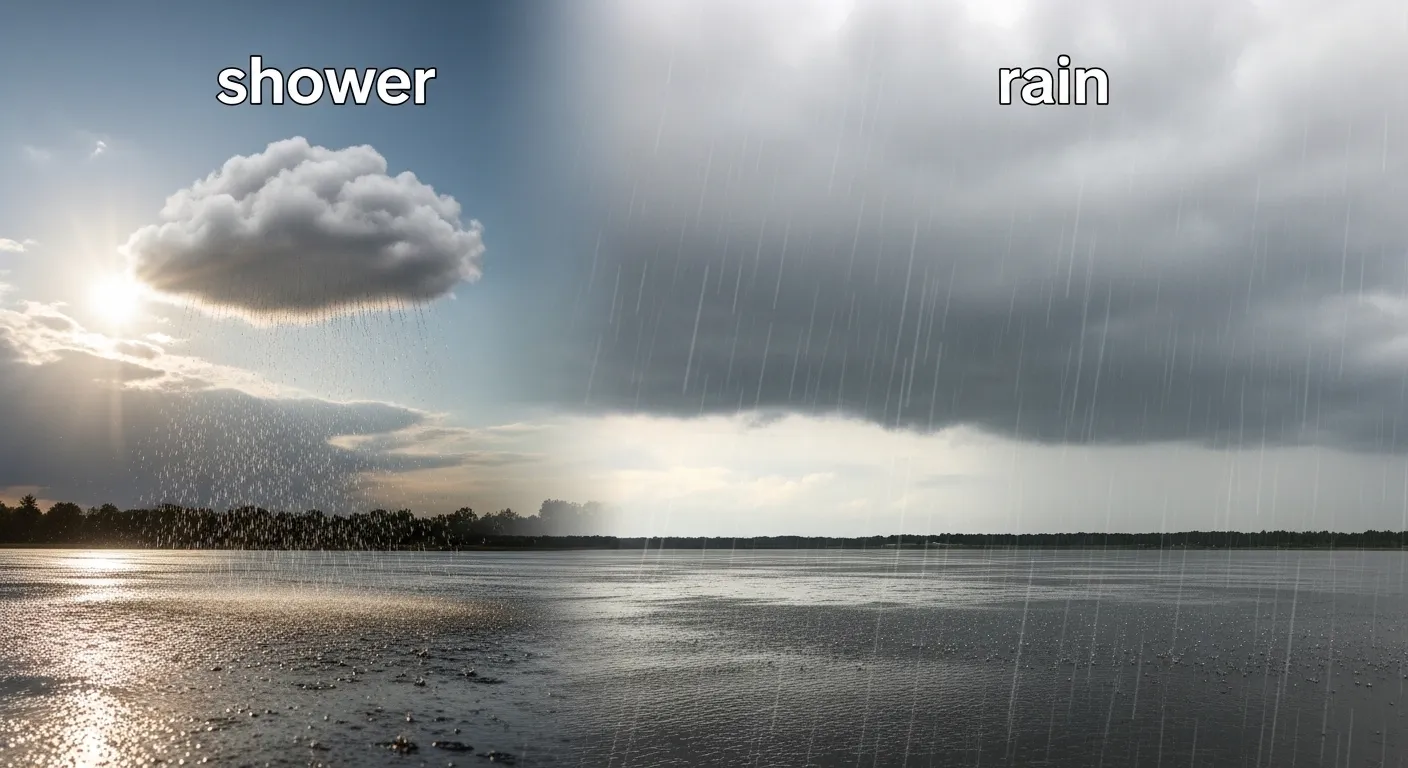
Difference between showers and rain is something many people wonder about when checking the weather forecast before leaving home. Imagine you are planning a picnic. The forecast says “scattered showers.” You hesitate — will it rain all day or just briefly? Understanding the difference between showers and rain helps you prepare wisely. In simple terms, rain refers to steady, continuous precipitation falling from clouds, while showers are short, sudden bursts of rain that start and stop quickly. Knowing the difference between showers and rain is important for travelers, farmers, students, and even weather experts. When you clearly understand the difference between showers and rain, you can interpret forecasts more accurately and make smarter daily decisions.
Pronunciation (US & UK)
- Showers
- US: /ˈʃaʊ.ɚz/
- UK: /ˈʃaʊ.əz/
- Rain
- US: /reɪn/
- UK: /reɪn/
Before diving deeper, let’s explore how they truly differ in weather science and real-life situations.
Key Difference Between the Both
The key difference between showers and rain lies in duration and intensity. Rain usually falls steadily over a wide area for a longer time. Showers are brief, intermittent, and often vary in intensity.
Why Their Difference Is Necessary to Know
Understanding this difference is essential for:
- Farmers, who plan irrigation and crop protection.
- Travelers, who decide whether to delay trips.
- Event planners, managing outdoor activities.
- Meteorologists, who communicate forecasts clearly.
In society, accurate weather knowledge helps reduce risks, improve agriculture, and ensure public safety.
Difference Between Showers and Rain
Below are 10 clear points of difference, each explained simply with examples.
1. Duration
- Rain: Lasts for hours.
- Example 1: It rained steadily all night.
- Example 2: Continuous rain flooded the streets.
- Showers: Last a few minutes.
- Example 1: A quick shower passed in 10 minutes.
- Example 2: We waited briefly for the shower to stop.
2. Intensity
- Rain is steady and moderate.
- Showers are sudden and sometimes heavy.
3. Coverage Area
- Rain covers large areas.
- Showers affect small, scattered areas.
4. Cloud Type
- Rain comes from layered clouds (nimbostratus).
- Showers come from towering clouds (cumulonimbus).
5. Predictability
- Rain is easier to predict.
- Showers are more unpredictable.
6. Sky Appearance
- Rain: Sky remains gray and overcast.
- Showers: Sky may clear quickly after.
7. Wind Patterns
- Rain usually has steady winds.
- Showers may come with gusty winds.
8. Lightning
- Rain rarely includes lightning.
- Showers often accompany thunderstorms.
9. Temperature Change
- Rain causes gradual cooling.
- Showers may cause sudden cooling.
10. Frequency
- Rain may persist seasonally.
- Showers are scattered and irregular.
Nature and Behaviour
- Rain: Calm, consistent, long-lasting precipitation.
- Showers: Brief, energetic, and scattered bursts.
Why People Are Confused
People often confuse them because both involve water falling from clouds. Weather apps sometimes use the terms interchangeably, adding to misunderstanding.
Table: Difference and Similarity
| Feature | Rain | Showers | Similarity |
| Duration | Long-lasting | Short bursts | Both involve precipitation |
| Intensity | Steady | Sudden | Both fall from clouds |
| Coverage | Wide area | Localized | Part of water cycle |
| Predictability | More predictable | Less predictable | Influenced by weather systems |
Which Is Better in What Situation?
Rain is better when agriculture needs deep soil watering. Steady rain nourishes crops effectively and replenishes groundwater. It also supports reservoirs and long-term water storage.
Showers are better for short cooling effects during hot weather. They refresh the air without causing flooding or long disruptions. Outdoor events may resume quickly after a brief shower.
Use in Metaphors and Similes
- “She received a shower of compliments.”
- “Tears fell like rain.”
- “Ideas rained down on him.”
Connotative Meaning
- Rain
- Neutral or Positive: “Rain brings life to fields.”
- Negative: “Days of rain caused sadness.”
- Showers
- Positive: “A refreshing shower cooled the city.”
- Neutral: “Scattered showers expected.”
Idioms & Proverbs
- “Save for a rainy day.” (Prepare for hard times.)
- “Come rain or shine.” (No matter what happens.)
- “It never rains but it pours.” (Problems come together.)
Works in Literature
- “The Rain” – Short Story by W. Somerset Maugham (1921, Fiction)
- “April Rain Song” – Poem by Langston Hughes (1921, Poetry)
Movies Related to Rain
- Singin’ in the Rain (1952, USA)
- Hard Rain (1998, USA)
Frequently Asked Questions
1. Are showers heavier than rain?
Sometimes yes, but only for a short time.
2. Can showers last all day?
No, they usually stop quickly.
3. Is rain more predictable?
Yes, rain systems are easier to track.
4. Do showers cause flooding?
Rarely, unless extremely heavy.
5. Are both part of the water cycle?
Yes, both are natural precipitation forms.
How Both Are Useful for Surroundings
Both rain and showers help plants grow, refill rivers, clean the air, and maintain ecological balance. They support life on Earth.
Final Words
Rain represents stability and nourishment, while showers symbolize quick refreshment and change.
Conclusion
Understanding the difference between showers and rain helps you interpret weather forecasts accurately and make informed decisions. Rain is steady and long-lasting, while showers are brief and scattered. Though both are forms of precipitation, their behaviour, impact, and duration differ significantly. Recognising these differences improves daily planning, agricultural practices, and weather awareness. Whether preparing for travel or farming activities, knowing the distinction ensures better readiness. Ultimately, both rain and showers play essential roles in sustaining life and maintaining Earth’s natural balance.

I’m Shabbir Hussain, a professional content writer who specializes in clear and authentic comparisons between similar terms. I write concise, research-based, and reader-friendly content that turns complex language into simple explanations. Through Mysynonyms.com, I help readers strengthen their vocabulary and clearly understand word differences.