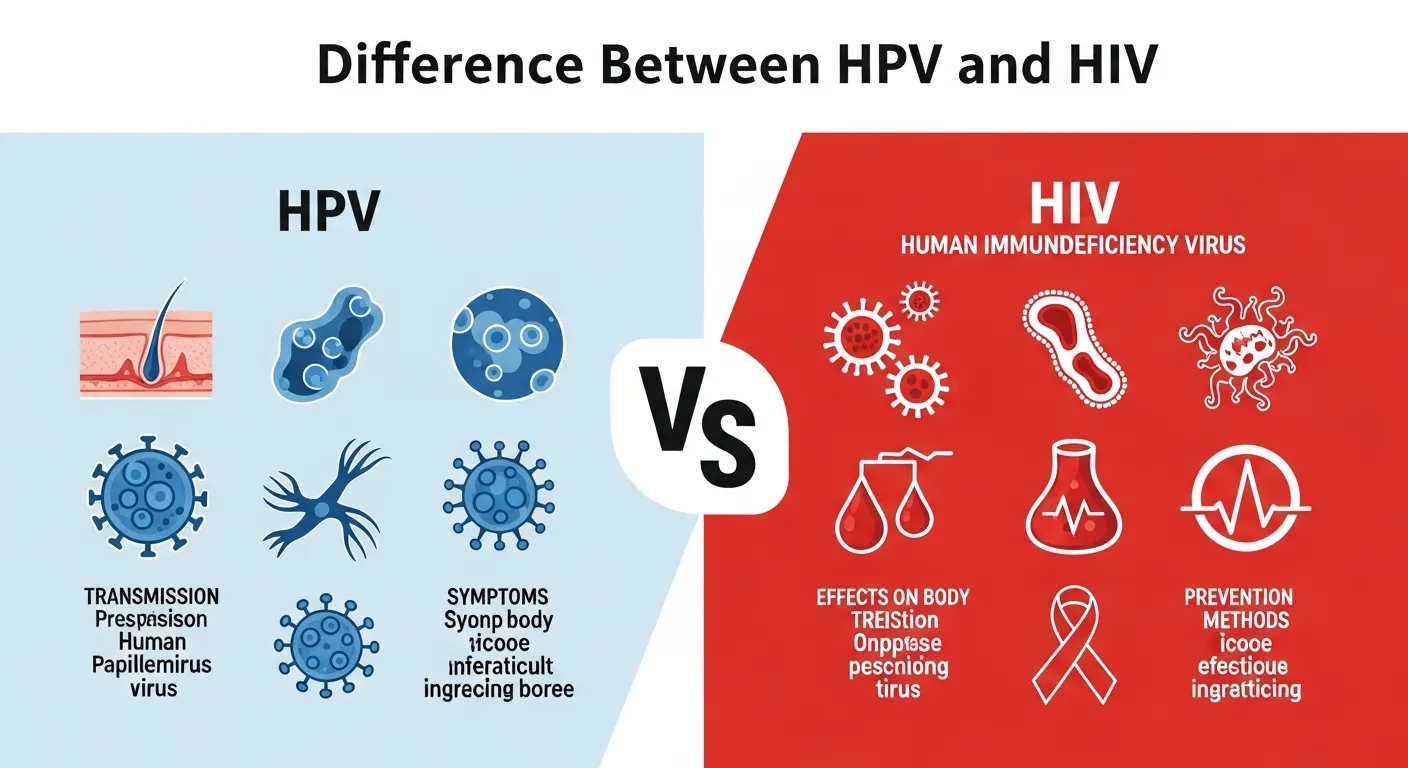
HPV and HIV are both viral infections, but HPV (Human Papillomavirus) mainly affects the skin and mucous membranes causing warts or cancer, while HIV (Human Immunodeficiency Virus) attacks the immune system and can lead to AIDS.
Understanding the difference between HPV and HIV is crucial for maintaining sexual health and awareness. Imagine two individuals concerned about their health after exposure to a virus—one may be dealing with HPV, which often shows up as warts or remains silent, while the other may face HIV, a more serious infection that weakens the immune system over time.
The difference between HPV and HIV lies in how these viruses affect the body, how they spread, and their long-term impact. While both are commonly transmitted through sexual contact, they are very different in severity and treatment. Learning the difference between HPV and HIV helps individuals take preventive measures and seek appropriate medical care. By understanding the difference between HPV and HIV, people can make informed decisions about testing, vaccination, and protection.
Pronunciation
HPV (Human Papillomavirus)
US: /ˌeɪtʃ piː ˈviː/
HIV (Human Immunodeficiency Virus)
US: /ˌeɪtʃ aɪ ˈviː/
Key Difference Between the Both
The main difference between HPV and HIV is that HPV affects the skin and can cause warts or certain cancers, while HIV attacks the immune system and can progress to AIDS if untreated.
Why Is Their Difference Necessary to Know for Learners and Experts?
Knowing the difference between HPV and HIV is important for students, healthcare professionals, and the general public. For learners, it builds awareness about sexually transmitted infections (STIs). For experts, understanding the difference between HPV and HIV helps in diagnosis, treatment, and prevention strategies.
In society, both infections are widespread, but their consequences differ greatly. HPV is often preventable through vaccines, while HIV requires lifelong treatment. Therefore, understanding the difference between HPV and HIV is essential for public health and personal safety.
Difference Between HPV and HIV
1. Definition
HPV is a group of viruses that infect the skin and mucous membranes. HIV is a virus that attacks the immune system.
Examples
HPV:
- Causes genital warts.
- Linked to cervical cancer.
HIV:
- Weakens immune defense.
- Leads to serious infections.
2. Type of Virus
HPV includes more than 100 related viruses. HIV is a single virus with two main types (HIV-1 and HIV-2).
Examples
HPV:
- Different strains cause different conditions.
- Some strains are harmless.
HIV:
- HIV-1 is most common worldwide.
- HIV-2 is less common.
3. Transmission
Both are sexually transmitted, but HPV can also spread through skin-to-skin contact.
Examples
HPV:
- Spread through direct skin contact.
- Can spread without penetration.
HIV:
- Spread through blood, semen, vaginal fluids, and breast milk.
- Requires fluid exchange.
4. Symptoms
HPV often shows no symptoms or causes warts. HIV may initially cause flu-like symptoms and later severe immune problems.
Examples
HPV:
- Genital warts.
- Often no visible signs.
HIV:
- Fever and fatigue (early stage).
- Opportunistic infections (advanced stage).
5. Severity
HPV is usually less severe, though some strains can cause cancer. HIV is more serious and life-threatening if untreated.
Examples
HPV:
- Often clears on its own.
- Some cases lead to cancer.
HIV:
- Requires lifelong treatment.
- Can lead to AIDS.
6. Cure and Treatment
HPV has no cure, but many cases resolve naturally; vaccines are available. HIV has no cure but can be controlled with medication.
Examples
HPV:
- Vaccines prevent certain strains.
- Warts can be treated.
HIV:
- Antiretroviral therapy (ART).
- Controls virus progression.
7. Impact on Body
HPV mainly affects skin and mucosal tissues. HIV targets the immune system, especially CD4 cells.
Examples
HPV:
- Affects genital areas.
- Can cause cell changes.
HIV:
- Weakens immune response.
- Increases infection risk.
8. Cancer Risk
HPV is directly linked to several cancers. HIV increases cancer risk indirectly by weakening immunity.
Examples
HPV:
- Cervical cancer.
- Throat cancer.
HIV:
- Higher risk of certain cancers.
- Due to immune suppression.
9. Prevention
HPV can be prevented with vaccines and safe practices. HIV prevention relies on safe sex and avoiding exposure to infected fluids.
Examples
HPV:
- Vaccination.
- Regular screening.
HIV:
- Condom use.
- Blood safety measures.
10. Long-Term Outlook
HPV often resolves without long-term issues. HIV is a lifelong condition.
Examples
HPV:
- Clears in many cases.
- May not cause lasting harm.
HIV:
- Requires ongoing treatment.
- Needs regular monitoring.
Nature and Behaviour of Both
HPV is often silent and may go unnoticed, affecting the skin and causing localized issues. HIV, however, gradually weakens the immune system, making the body vulnerable to infections and diseases.
Why People Are Confused About Their Use?
People often confuse HPV and HIV because both are sexually transmitted infections and have similar abbreviations. However, they differ greatly in their effects, severity, and treatment.
Table Showing Difference and Similarity
| Feature | HPV | HIV | Similarity |
| Type | Group of viruses | Single virus | Both viral infections |
| Effect | Skin and mucosa | Immune system | Both can spread sexually |
| Severity | Usually mild | Serious | Both require awareness |
| Cure | No cure, often clears | No cure, manageable | Both need prevention |
| Vaccine | Available | Not available | Health concern |
Which Is Better in What Situation?
HPV
HPV is generally less severe and often manageable, especially with vaccination and screening.
HIV
HIV requires serious medical attention and lifelong treatment but can be controlled effectively with proper care.
How the Keywords Are Used in Metaphors and Similes
Examples:
- “The problem spread like HPV, quiet but persistent.”
- “His illness attacked like HIV, weakening everything over time.”
Connotative Meaning
HPV
Connotation: Common and often manageable infection.
Example:
“HPV is widespread but often preventable.”
HIV
Connotation: Serious and life-altering condition.
Example:
“HIV requires lifelong care and awareness.”
Idioms or Proverbs Related to the Words
Prevention is better than cure
Example:
“Using protection and vaccines proves that prevention is better than cure.”
Works in Literature
HPV and HIV are discussed mainly in medical literature, public health studies, and awareness campaigns rather than traditional literary works.
Movie Names Made on the Keywords
- Philadelphia (1993) – focuses on HIV/AIDS awareness
- Dallas Buyers Club (2013) – based on HIV treatment struggles
Five Frequently Asked Questions
1. What is the main difference between HPV and HIV?
HPV affects the skin and may cause warts or cancer, while HIV attacks the immune system.
2. Can HPV turn into HIV?
No, they are completely different viruses.
3. Is HPV more common than HIV?
Yes, HPV is much more common.
4. Is there a vaccine for HIV?
No, but there is a vaccine for HPV.
5. Can both be prevented?
Yes, through safe practices, and HPV also through vaccination.
How Both Are Useful for Surroundings
Understanding HPV and HIV helps promote awareness, prevention, and early treatment, improving public health and reducing disease spread.
Final Words for the Both
HPV and HIV are both important health concerns but differ significantly in impact and management.
Conclusion
The difference between HPV and HIV lies in their effects on the body, severity, and treatment. HPV is a common virus that affects the skin and can sometimes lead to cancer, while HIV is a serious virus that weakens the immune system and can lead to AIDS.
Understanding the difference between HPV and HIV helps individuals take preventive measures and seek timely medical care. By learning the difference between HPV and HIV, people can protect their health and make informed decisions about their well-being.

I’m Shabbir Hussain, a professional content writer who specializes in clear and authentic comparisons between similar terms. I write concise, research-based, and reader-friendly content that turns complex language into simple explanations. Through Mysynonyms.com, I help readers strengthen their vocabulary and clearly understand word differences.