The difference between restart and shutdown becomes clear when we look at how people use computers in everyday life. Imagine you are working on an important project, and suddenly your computer begins to slow down or freeze. In such situations, you may wonder whether you should restart the system or completely shutdown it. Understanding the difference between restart and shutdown helps users manage their devices more efficiently and avoid unnecessary problems.
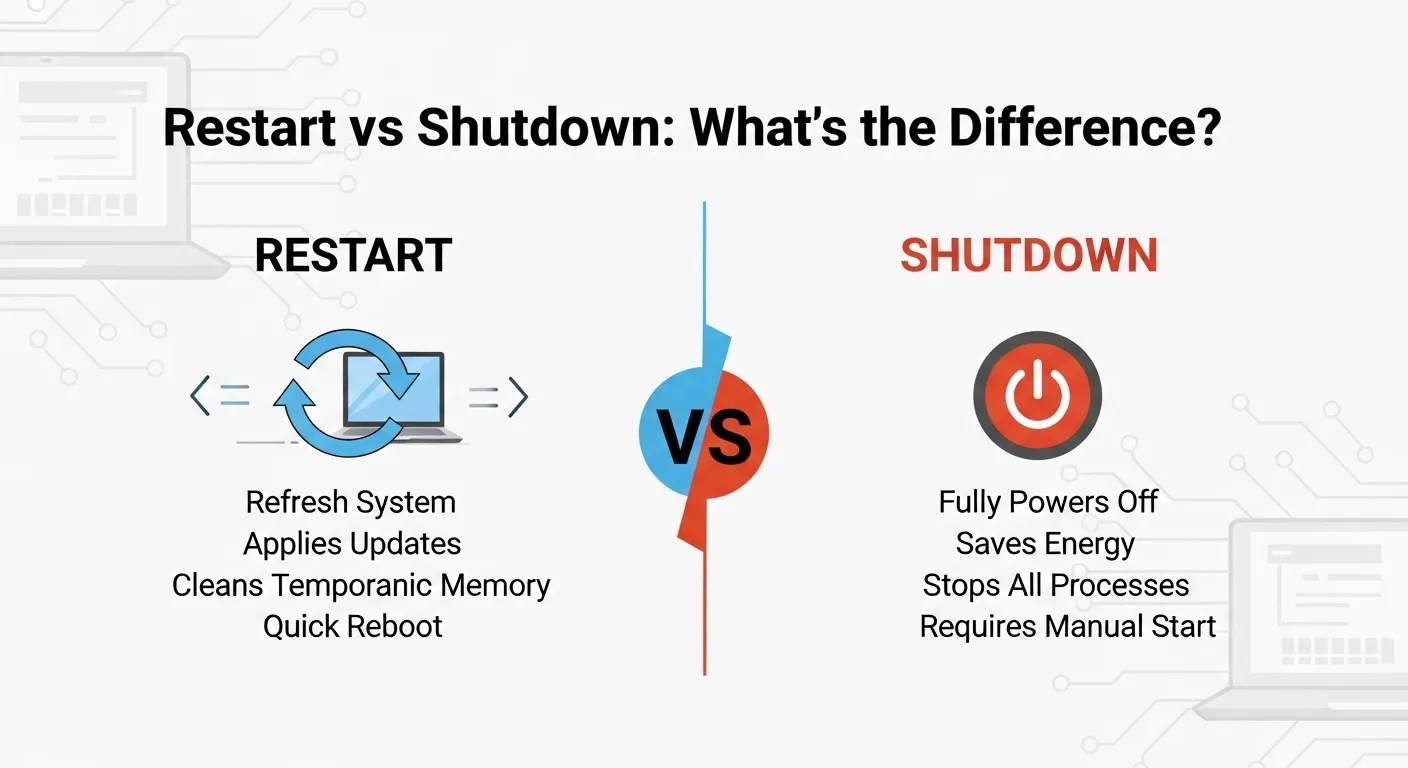
A restart means turning the computer off and then automatically turning it back on again. A shutdown, on the other hand, means turning the computer completely off until someone manually starts it again. Although both actions stop the system temporarily, the difference between restart and shutdown lies in how the computer processes its tasks and prepares to run again. Knowing the difference between restart and shutdown is useful for students, professionals, and anyone who uses digital devices daily.
Key Difference Between Restart and Shutdown
The key difference between restart and shutdown is that restart temporarily closes the system and immediately starts it again, while shutdown completely powers off the device and requires manual power-on later.
Why Is Their Difference Important for Learners and Experts?
Understanding the difference between restart and shutdown is important because computers and digital devices are essential in modern society. Students use them for learning, businesses rely on them for productivity, and experts depend on them for complex tasks.
For learners, knowing when to restart or shutdown helps maintain device performance and prevents data issues. For experts, especially in IT and system management, choosing between restart and shutdown ensures system stability, updates installation, and energy efficiency. Proper knowledge of these actions also reduces technical errors and improves the lifespan of devices used in homes, offices, and industries.
Pronunciation (US & UK)
| Word | US Pronunciation | UK Pronunciation |
| Restart | /ˌriːˈstɑːrt/ | /ˌriːˈstɑːt/ |
| Shutdown | /ˈʃʌtˌdaʊn/ | /ˈʃʌtˌdaʊn/ |
Linking Hook
Although both actions are related to powering down a computer, their purpose, process, and results are different. Let us explore the difference between restart and shutdown in detail.
Difference Between Restart and Shutdown
1. Definition
Restart: Restart means closing all programs and turning the computer off briefly before starting it again automatically.
Examples:
- Restarting a laptop after installing software updates.
- Restarting a smartphone when it becomes slow.
Shutdown: Shutdown means turning the computer completely off.
Examples:
- Shutting down a computer before leaving the office.
- Shutting down a desktop during a power outage.
2. Power State
Restart: The system powers off temporarily and then powers back on.
Examples:
- Restarting after a driver update.
- Restarting a router to fix internet problems.
Shutdown: The system power is completely cut off.
Examples:
- Turning off the computer overnight.
- Shutting down a workstation after work hours.
3. Purpose
Restart: Mainly used to refresh the system.
Examples:
- Restarting to fix minor software glitches.
- Restarting after installing updates.
Shutdown: Used to stop using the device for a longer time.
Examples:
- Shutting down before traveling.
- Shutting down a computer at the end of the day.
4. System Memory
Restart: Clears temporary memory but starts fresh immediately.
Examples:
- Restarting to clear RAM issues.
- Restarting after system lag.
Shutdown: Clears memory and ends all processes completely.
Examples:
- Shutting down to save power.
- Shutting down before hardware maintenance.
5. Time Required
Restart: Takes slightly longer because the system shuts down and starts again.
Examples:
- Restart after updates may take several minutes.
- Restarting a server.
Shutdown: Usually faster because the system only turns off.
Examples:
- Quick shutdown after finishing work.
- Turning off a laptop quickly.
6. Automatic Startup
Restart: The computer automatically starts again.
Examples:
- Restarting during Windows updates.
- Restarting a phone after installing apps.
Shutdown: Requires manual startup.
Examples:
- Pressing the power button later to start.
- Turning on a PC the next morning.
7. Use in Troubleshooting
Restart: Commonly used to fix minor technical issues.
Examples:
- Restarting to fix frozen software.
- Restarting to reconnect network devices.
Shutdown: Used for complete system rest or maintenance.
Examples:
- Shutting down before cleaning hardware.
- Shutting down during electrical storms.
8. Energy Consumption
Restart: Uses power because the system immediately starts again.
Examples:
- Restarting a laptop consumes startup power.
- Restarting a gaming PC.
Shutdown: Saves electricity because the system stays off.
Examples:
- Shutting down at night.
- Turning off computers in offices.
9. Software Updates
Restart: Often required to complete updates.
Examples:
- Restart after installing Windows updates.
- Restarting after driver installation.
Shutdown: Updates may install during shutdown but do not immediately reopen the system.
Examples:
- “Update and shut down” option.
- System closing after update installation.
10. Frequency of Use
Restart: Used when the system has problems or after updates.
Examples:
- Restarting once or twice a week.
- Restarting after installing new software.
Shutdown: Used when stopping work for a long period.
Examples:
- Daily shutdown after office hours.
- Shutting down during travel.
Nature and Behaviour of Restart and Shutdown
Restart is temporary and dynamic. It allows the system to refresh itself without stopping work for too long. It is commonly used for maintenance and troubleshooting.
Shutdown is final for the current session. It completely stops all processes and powers off the system, making it ideal for long breaks or energy saving.
Why People Are Confused About Their Use
People often confuse restart and shutdown because both actions turn off the computer temporarily. The visual process looks similar: the screen goes black and programs close. However, the internal processes are different. Restart prepares the system to start again immediately, while shutdown ends the session completely. Lack of technical knowledge also contributes to this confusion.
Table Showing Difference and Similarity
| Feature | Restart | Shutdown | Similarity |
| Meaning | Turns off and on again | Completely turns off | Both stop system activity |
| Power | Temporary power cycle | Full power off | Both close programs |
| Purpose | Refresh system | End session | Improve system management |
| Startup | Automatic | Manual | Both involve system boot |
| Usage | Troubleshooting | Long breaks | Maintain system stability |
Which Is Better in What Situation?
Restart is better when the system becomes slow, freezes, or requires updates. Restarting refreshes memory and reloads the operating system. It is commonly recommended by IT professionals to fix temporary software issues. Restarting also helps install updates properly and improves system performance.
Shutdown is better when the device will not be used for several hours or days. It saves electricity, protects hardware, and allows the system to cool down. Shutting down regularly can also help extend the life of computer components.
Use in Metaphors and Similes
Both words are sometimes used metaphorically in everyday language.
Restart examples:
- “After the failure, he decided to restart his life.”
- “The new year felt like a restart button for her goals.”
Shutdown examples:
- “After the long day, his brain completely shut down.”
- “The company shut down operations during the crisis.”
Connotative Meaning
Restart
Positive: new beginning
Example: She restarted her career successfully.
Neutral: technical action
Example: Please restart the computer.
Negative: repeating effort
Example: He had to restart the project again.
Shutdown
Positive: rest or closure
Example: The system shutdown saved energy.
Neutral: normal computer action
Example: The technician shut down the server.
Negative: failure or closure
Example: The factory shutdown caused job losses.
Idioms or Expressions Related to the Words
Hit the reset button (similar to restart)
Example: After the argument, they decided to hit the reset button in their relationship.
Close down / shut down
Example: The store shut down after many years of service.
Works in Literature Using the Keywords
Restart
- Restart — Youth fiction novel by Gordon Korman (2017)
Shutdown
- Shutdown: How COVID Shook the World’s Economy — Adam Tooze (2021)
Movies Related to the Keywords
Restart
- Restart After Come Back Home (2020, Japan)
Shutdown
- Shutdown (2019, United States)
Frequently Asked Questions
1. What is the main difference between restart and shutdown?
Restart turns the computer off and on again automatically, while shutdown completely turns the computer off.
2. When should I restart my computer?
You should restart when installing updates or fixing system issues.
3. Is shutdown better than restart?
It depends on the situation. Shutdown is better for long breaks, while restart is better for troubleshooting.
4. Does restarting improve performance?
Yes, restarting clears memory and refreshes the system.
5. Can frequent shutdowns harm a computer?
No, normal shutdowns are safe and can even help preserve hardware.
How Both Are Useful for Surroundings
Restart and shutdown contribute to efficient technology use. Restart helps maintain system health and prevents software errors, which improves productivity in workplaces and schools. Shutdown saves electricity and reduces energy consumption, supporting environmental sustainability.
Final Words for Both
Restart represents renewal and quick recovery in digital systems. Shutdown represents rest and closure, ensuring that systems remain safe and energy-efficient.
Conclusion
Understanding the difference between restart and shutdown is essential for anyone who uses computers or digital devices. While both actions stop the system temporarily, they serve different purposes. Restart refreshes the system by turning it off and on again automatically, making it useful for troubleshooting and updates. Shutdown completely powers off the device, making it ideal for saving energy and ending work sessions. By learning the difference between restart and shutdown, users can make smarter decisions about managing their devices, improving performance, and maintaining hardware longevity. In the modern digital world, this simple knowledge can make technology use more efficient and reliable.

I’m Shabbir Hussain, a professional content writer who specializes in clear and authentic comparisons between similar terms. I write concise, research-based, and reader-friendly content that turns complex language into simple explanations. Through Mysynonyms.com, I help readers strengthen their vocabulary and clearly understand word differences.