Have you ever walked into a kitchen and noticed the warm smell of fresh cookies? Or maybe you passed a flower garden and enjoyed the sweet scent in the air? Learning synonyms for smell can help you describe these moments in a better way.
Many people use the word “smell” again and again. This is fine, but using synonyms for smell can make your writing more interesting. Students, bloggers, content writers, and daily English users often look for synonyms for smell to improve their vocabulary.
A smell is what your nose notices. Some smells are pleasant, like flowers or perfume. Other smells are unpleasant, like garbage or smoke. Knowing different synonyms for smell helps you describe each situation clearly.
For example, instead of saying, “The cake had a good smell,” you can say, “The cake had a wonderful aroma.” Small changes like this make writing stronger and easier to read.
Learning synonyms for smell is useful for essays, blog posts, emails, and daily conversations. It also helps you avoid repeating the same word too often.
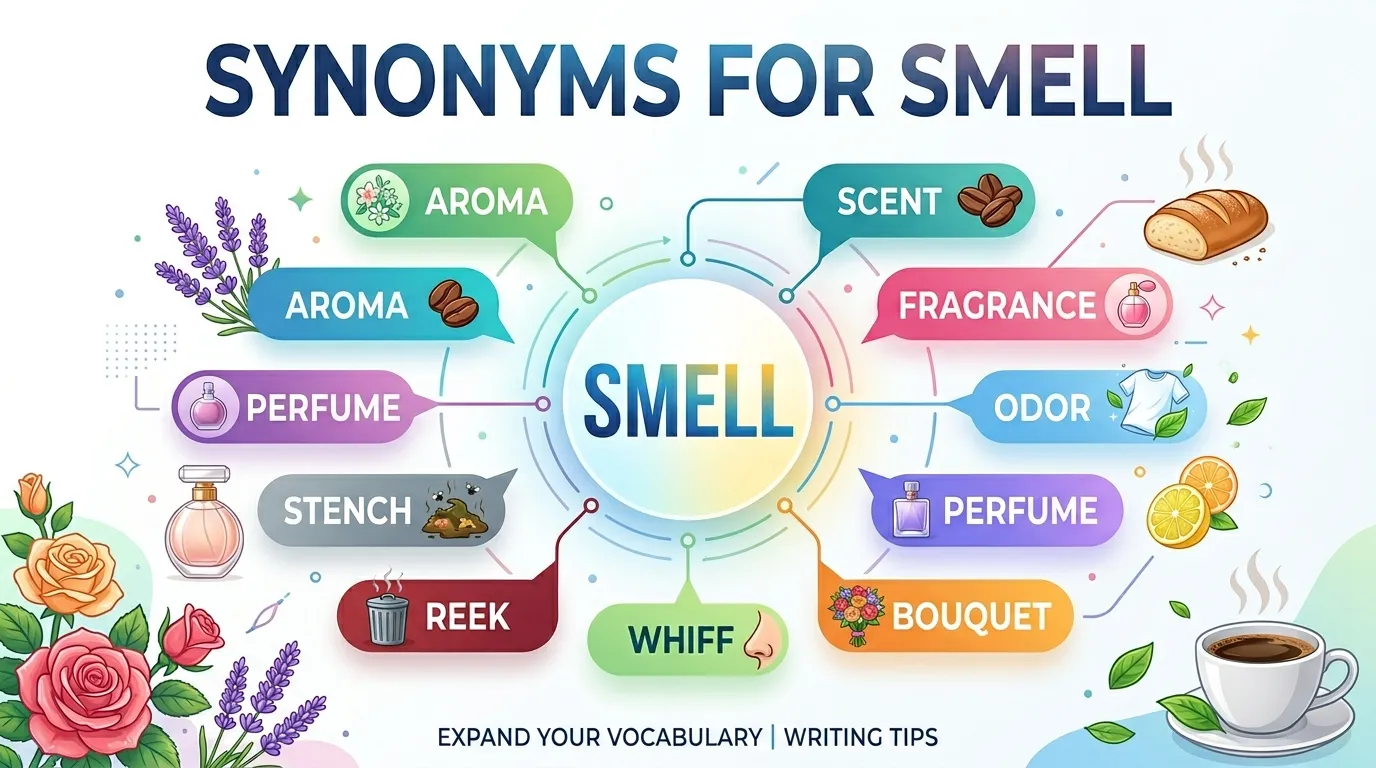
✦✦✦ Top 5 Synonyms for Smell ✦✦✦
🌸 Fragrance • ☕ Aroma • 🌹 Scent • 🧴 Perfume • 🍃 Odor
Meaning of the Word “Smell”
A smell is something your nose detects from a person, object, food, flower, or place.
Easy English Explanation
A smell is what you notice when you breathe through your nose.
Example:
You can smell popcorn when it is cooking.
Pronunciation of “Smell”
- Phonetic Spelling: smel
- IPA Format: /smel/
- Simple Breakdown: smell
Syllables of “Smell”
- Syllable Breakdown: smell
- Number of Syllables: 1
- Simple Explanation: The word “smell” has one syllable.
Categorized Synonyms for Smell
Pleasant Smell Synonyms
| Synonym | Best Use |
| Fragrance | Flowers and perfumes |
| Aroma | Food and drinks |
| Scent | Natural smells |
| Perfume | Sweet fragrances |
| Bouquet | Flowers and wine |
| Essence | Natural extracts |
| Musk | Rich natural smells |
| Incense | Religious fragrances |
| Sweetness | Pleasant scents |
| Redolence | Literary writing |
Neutral Smell Synonyms
| Synonym | Best Use |
| Odor | General use |
| Smell | Everyday use |
| Whiff | Quick smell |
| Hint | Light scent |
| Trace | Small amount of smell |
| Breath | Gentle smell |
| Note | Perfume reviews |
| Air | Environmental smell |
| Tone | Fragrance descriptions |
| Suggestion | Very mild scent |
Unpleasant Smell Synonyms
| Synonym | Best Use |
| Stench | Very bad smell |
| Reek | Strong bad smell |
| Funk | Informal bad smell |
| Mustiness | Damp smell |
| Rankness | Rotten smell |
| Foulness | Offensive odor |
| Malodor | Formal bad smell |
| Rot | Decaying smell |
| Pungency | Sharp smell |
| Noxiousness | Harmful odor |
List of 40 Synonyms for Smell
Fragrance
Meaning
A pleasant and sweet smell.
Examples
- The roses had a lovely fragrance.
- Her perfume left a soft fragrance.
Aroma
Meaning
A pleasant smell from food or drinks.
Examples
- The coffee aroma filled the room.
- I enjoyed the aroma of fresh bread.
Scent
Meaning
A smell that comes from something.
Examples
- The scent of flowers was relaxing.
- I noticed a fresh scent outside.
Perfume
Meaning
A sweet and attractive smell.
Examples
- Her perfume smelled wonderful.
- The perfume lasted all day.
Odor
Meaning
A smell from a thing, place, or person.
Examples
- An odd odor came from the box.
- The odor faded after cleaning.
Bouquet
Meaning
A rich and pleasant smell.
Examples
- The wine had a fruity bouquet.
- The bouquet of flowers smelled amazing.
Essence
Meaning
The main smell of something.
Examples
- The soap had a lemon essence.
- I liked the vanilla essence.
Musk
Meaning
A strong natural smell.
Examples
- The perfume contained musk.
- I noticed a soft musk scent.
Incense
Meaning
A fragrance made by burning special sticks.
Examples
- Incense filled the room.
- We smelled incense during the ceremony.
Sweetness
Meaning
A pleasant sugary smell.
Examples
- The sweetness of the cake spread quickly.
- I loved the sweetness in the bakery.
Redolence
Meaning
A strong pleasant smell.
Examples
- The garden had a redolence of roses.
- The room carried a redolence of lavender.
Whiff
Meaning
A small and quick smell.
Examples
- I caught a whiff of smoke.
- She noticed a whiff of perfume.
Hint
Meaning
A very light smell.
Examples
- There was a hint of mint.
- I smelled a hint of lemon.
Trace
Meaning
A tiny amount of smell.
Examples
- A trace of paint remained.
- I detected a trace of coffee.
Breath
Meaning
A light smell in the air.
Examples
- A breath of jasmine drifted in.
- We noticed a breath of fresh flowers.
Note
Meaning
A specific smell in perfume or food.
Examples
- The perfume had a floral note.
- I liked the citrus note.
Air
Meaning
A smell present in a place.
Examples
- The room had a fresh air.
- The air carried a scent of rain.
Tone
Meaning
A particular quality of smell.
Examples
- The fragrance had a woody tone.
- I noticed a sweet tone.
Suggestion
Meaning
A very slight smell.
Examples
- There was a suggestion of spice.
- I sensed a suggestion of fruit.
Stench
Meaning
A very strong and unpleasant smell.
Examples
- The stench came from the trash.
- We moved away from the stench.
Reek
Meaning
A very strong and unpleasant smell.
Examples
- The old shoes began to reek.
- The room reeked of smoke.
Funk
Meaning
A bad smell that is strong and unpleasant.
Examples
- The gym had a strong funk.
- We noticed a funk in the basement.
Mustiness
Meaning
A damp and old smell.
Examples
- The closet had a mustiness.
- I smelled mustiness in the attic.
Rankness
Meaning
A rotten and unpleasant smell.
Examples
- The rankness was hard to ignore.
- The spoiled food caused rankness.
Foulness
Meaning
A very bad and offensive smell.
Examples
- The foulness spread through the room.
- Everyone noticed the foulness immediately.
Malodor
Meaning
A formal word for a bad smell.
Examples
- The malodor came from the drain.
- Workers removed the source of the malodor.
Rot
Meaning
The smell of something decaying.
Examples
- The rot came from fallen fruit.
- We could smell rot near the bin.
Pungency
Meaning
A sharp and strong smell.
Examples
- The onion had a strong pungency.
- I noticed the pungency of garlic.
Noxiousness
Meaning
A harmful and unpleasant smell.
Examples
- The chemical caused noxiousness.
- We avoided the area because of the noxiousness.
Tang
Meaning
A sharp and fresh smell.
Examples
- The sea air had a salty tang.
- I noticed a tang of citrus.
Zest
Meaning
A fresh and lively smell.
Examples
- The drink had a lemon zest.
- Orange zest filled the kitchen.
Spice
Meaning
A warm smell from seasonings.
Examples
- The spice of cinnamon smelled great.
- I enjoyed the spice in the tea.
Freshness
Meaning
A clean and pleasant smell.
Examples
- The laundry had a freshness.
- Morning air carried freshness.
Earthiness
Meaning
A natural smell like soil or plants.
Examples
- The garden had an earthiness.
- Rain brought an earthiness to the air.
Floralness
Meaning
A smell similar to flowers.
Examples
- The lotion had a floralness.
- I liked the floralness of the soap.
Fruitiness
Meaning
A smell like fresh fruit.
Examples
- The drink had a fruitiness.
- I noticed fruitiness in the perfume.
Woodiness
Meaning
A smell like wood or trees.
Examples
- The candle had a woodiness.
- The cabin smelled of woodiness.
Smokiness
Meaning
A smell like smoke.
Examples
- The sauce had a pleasant smokiness.
- I noticed smokiness from the grill.
Mintiness
Meaning
A smell like mint.
Examples
- The toothpaste had a mintiness.
- The room felt fresh because of the mintiness.
Citrusness
Meaning
A smell like lemons or oranges.
Examples
- The cleaner had a citrusness.
- I enjoyed the citrusness of the spray.
When to Use Each Synonym
Using the correct synonym makes your writing clearer and more natural.
| Synonym | When to Use |
| Aroma | Food, coffee, tea |
| Fragrance | Flowers, perfumes |
| Scent | General pleasant smells |
| Perfume | Sweet manufactured smells |
| Odor | Neutral everyday use |
| Stench | Very bad smell |
| Reek | Strong unpleasant smell |
| Mustiness | Damp or old places |
| Pungency | Sharp smells like onions |
| Tang | Fresh and sharp smells |
| Freshness | Clean and pleasant smells |
| Earthiness | Natural outdoor smells |
| Woodiness | Tree or wood-related smells |
| Citrusness | Lemon and orange smells |
Difference Between Common Smell Synonyms
Aroma vs Fragrance
Aroma is usually used for food and drinks.
Example: The aroma of coffee was wonderful.
Fragrance is commonly used for flowers and perfumes.
Example: The fragrance of roses filled the garden.
Odor vs Stench
Odor is a neutral word.
Example: An odor came from the kitchen.
Stench means a very bad smell.
Example: The stench from the garbage was terrible.
Scent vs Perfume
Scent can come from anything.
Example: The scent of flowers was lovely.
Perfume is a sweet smell made by products.
Example: Her perfume smelled amazing.
Related Searches
People searching for synonyms for smell also search for:
- another word for smell
- smell synonyms
- pleasant smell synonyms
- bad smell synonyms
- fragrance synonyms
- odor synonyms
- words related to smell
- vocabulary for describing smells
- twist synonyms
- another word for twist
FAQ
What are the best synonyms for smell?
Some of the best synonyms for smell are aroma, fragrance, scent, perfume, odor, stench, and reek.
Which synonym means a pleasant smell?
Fragrance, aroma, scent, and perfume are commonly used for pleasant smells.
Which synonym means a bad smell?
Stench, reek, malodor, foulness, and rankness describe unpleasant smells.
Is odor always negative?
No. Odor can be neutral. It simply means a smell, whether good or bad.
Why should I learn synonyms for smell?
Learning synonyms helps improve writing, speaking, blogging, and communication by giving you more ways to express ideas.
Conclusion
Learning synonyms for smell is a simple way to improve your English vocabulary. Different words help you describe pleasant, neutral, and unpleasant smells more accurately.
Whether you are a student writing essays, a blogger creating content, a content writer working on SEO articles, or someone improving daily communication, these words can make your language richer and more interesting.
Try using these synonyms in emails, essays, school assignments, blog posts, and everyday conversations. The more you practice, the more natural they will become. A strong vocabulary helps you communicate clearly and confidently.

I’m Shabbir Hussain, a professional content writer who specializes in clear and authentic comparisons between similar terms. I write concise, research-based, and reader-friendly content that turns complex language into simple explanations. Through Mysynonyms.com, I help readers strengthen their vocabulary and clearly understand word differences.