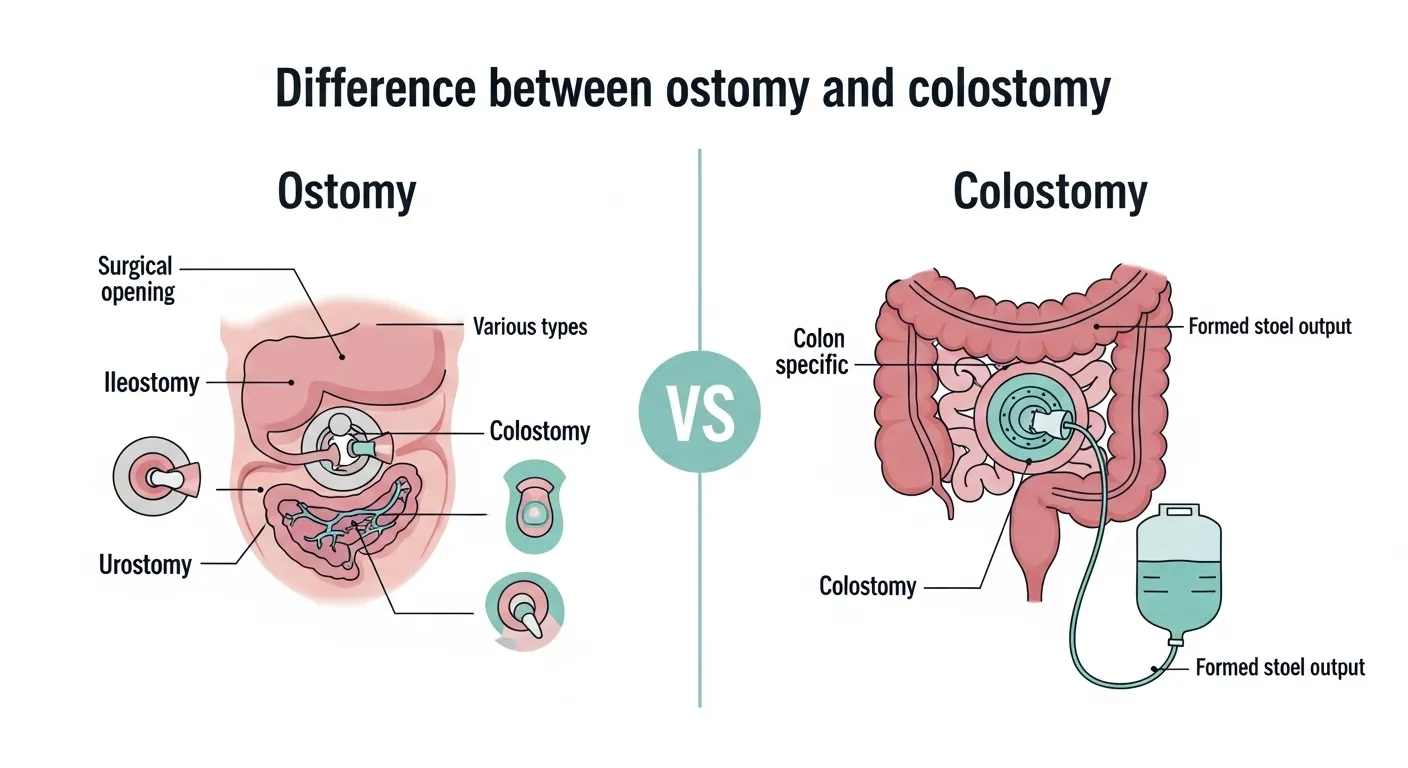
Ostomy and colostomy are related medical procedures, but ostomy is a general term for surgically created openings, while colostomy is a specific type involving the colon.
Understanding the difference between ostomy and colostomy is important for patients, caregivers, and learners in healthcare. Imagine a patient who undergoes surgery due to a serious digestive condition, the body may need a new pathway to remove waste. In such cases, doctors create an opening in the abdomen to help the body function properly.
The difference between ostomy and colostomy lies in scope and specificity. Ostomy refers to any surgically created opening (stoma) that allows waste or bodily fluids to exit the body. In contrast, Colostomy is a specific type of ostomy involving the large intestine. Learning the difference between ostomy and colostomy helps patients better understand their condition and care requirements. By understanding the difference between ostomy and colostomy, individuals can approach treatment with confidence and clarity.
Pronunciation
Ostomy
US: /ˈɒstəmi/
Colostomy
US: /kəˈlɒstəmi/
Key Difference Between the Both
The main difference between ostomy and colostomy is that ostomy is a broad term for any surgically created opening, while colostomy specifically refers to an opening made in the colon.
Why Is Their Difference Necessary to Know for Learners and Experts?
Knowing the difference between ostomy and colostomy is crucial for both patients and healthcare professionals. For learners, it builds a clear understanding of medical terminology. For experts, understanding the difference between ostomy and colostomy ensures accurate diagnosis, communication, and treatment planning.
In society, patients with these procedures require proper care and awareness. Misunderstanding the difference between ostomy and colostomy can lead to confusion about treatment, lifestyle adjustments, and medical advice. Clear knowledge helps improve patient care and reduces anxiety.
Difference Between Ostomy and Colostomy
1. Definition
Ostomy is a general surgical opening. Colostomy is a specific opening in the colon.
Examples
Ostomy:
- Ileostomy
- Urostomy
Colostomy:
- Sigmoid colostomy
- Transverse colostomy
2. Scope
Ostomy includes many procedures. Colostomy is one type.
Examples
Ostomy:
- Multiple types
- Broad category
Colostomy:
- Specific procedure
- Narrow category
3. Body Part Involved
Ostomy can involve different organs. Colostomy involves the colon.
Examples
Ostomy:
- Small intestine
- Urinary system
Colostomy:
- Large intestine
- Colon
4. Purpose
Ostomy helps remove waste or fluids. Colostomy specifically removes stool from the colon.
Examples
Ostomy:
- Urine removal
- Digestive waste
Colostomy:
- Fecal waste
- Colon function
5. Types
Ostomy includes ileostomy, colostomy, and urostomy. Colostomy has subtypes based on colon location.
Examples
Ostomy:
- Ileostomy
- Urostomy
Colostomy:
- Descending colostomy
- Ascending colostomy
6. Output Nature
Ostomy output varies by type. Colostomy output is usually semi-solid stool.
Examples
Ostomy:
- Liquid output
- Urine
Colostomy:
- Formed stool
- Semi-solid waste
7. Location on Abdomen
Ostomy location depends on organ. Colostomy is usually on the left side.
Examples
Ostomy:
- Right side
- Lower abdomen
Colostomy:
- Left abdomen
- Specific placement
8. Medical Conditions
Ostomy is used for various conditions. Colostomy is used for colon-related diseases.
Examples
Ostomy:
- Bladder issues
- Intestinal diseases
Colostomy:
- Colon cancer
- Bowel obstruction
9. Permanence
Ostomy may be temporary or permanent. Colostomy can also be temporary or permanent but depends on colon condition.
Examples
Ostomy:
- Reversible
- Long-term
Colostomy:
- Temporary healing
- Permanent cases
10. Care Requirements
Ostomy care varies by type. Colostomy care focuses on stool management.
Examples
Ostomy:
- Different appliances
- Varying care
Colostomy:
- Regular bag changes
- Skin care
Nature and Behaviour of Both
Ostomy is a broad medical category that includes various procedures for waste removal. Colostomy is a specific, well-defined procedure focused on the colon and digestive system.
Why People Are Confused About Their Use?
People often confuse ostomy and colostomy because colostomy is a type of ostomy. The general term is sometimes used interchangeably with the specific one, leading to misunderstanding.
Table Showing Difference and Similarity
| Feature | Ostomy | Colostomy | Similarity |
| Meaning | General term | Specific type | Surgical opening |
| Scope | Broad | Narrow | Medical procedure |
| Organ | Multiple | Colon | Waste removal |
| Types | Many | Subtypes | Requires care |
| Purpose | Various | Digestive waste | Health support |
Which Is Better in What Situation?
Ostomy
Ostomy is not a single procedure but a category. The type of ostomy chosen depends on the medical condition. It is suitable for various health issues involving digestion or urinary systems.
Colostomy
Colostomy is specifically used when the colon cannot function properly. It is the best option for conditions like colon cancer or severe bowel disease, providing a reliable way to remove waste.
How the Keywords Are Used in Metaphors and Similes
Examples:
- “The system needed an ostomy-like solution—an alternative pathway.”
- “The process worked like a colostomy—redirecting flow effectively.”
Connotative Meaning
Ostomy
Connotation: Adjustment, adaptation.
Example:
“The company made an ostomy-like change to survive.”
Colostomy
Connotation: Specific solution.
Example:
“They chose a colostomy-like approach to fix the issue.”
Idioms or Proverbs Related to the Words
There are no direct idioms related to ostomy or colostomy, as they are medical terms.
Works in Literature
Ostomy and colostomy are discussed in medical textbooks and patient care guides rather than traditional literature.
Movie Names Made on the Keywords
There are no major movies directly based on ostomy or colostomy procedures.
Five Frequently Asked Questions
1. What is the main difference between ostomy and colostomy?
Ostomy is a general term, while colostomy is a specific type involving the colon.
2. Is colostomy a type of ostomy?
Yes.
3. Are all ostomies permanent?
No, some are temporary.
4. What conditions require colostomy?
Colon-related diseases like cancer or blockage.
5. Can people live normally with these procedures?
Yes, with proper care.
How Both Are Useful for Surroundings
Both ostomy and colostomy procedures play a vital role in healthcare by saving lives, improving quality of life, and allowing patients to function normally despite serious medical conditions.
Final Words for the Both
Ostomy and colostomy are essential medical procedures that help manage serious health conditions and support life.
Conclusion
The difference between ostomy and colostomy lies in their scope and application. Ostomy is a broad term covering various surgical openings, while colostomy is a specific procedure involving the colon. Understanding the difference between ostomy and colostomy helps patients and caregivers make informed decisions and manage care effectively. By learning the difference between ostomy and colostomy, individuals can approach medical treatment with confidence and clarity.

I’m Shabbir Hussain, a professional content writer who specializes in clear and authentic comparisons between similar terms. I write concise, research-based, and reader-friendly content that turns complex language into simple explanations. Through Mysynonyms.com, I help readers strengthen their vocabulary and clearly understand word differences.