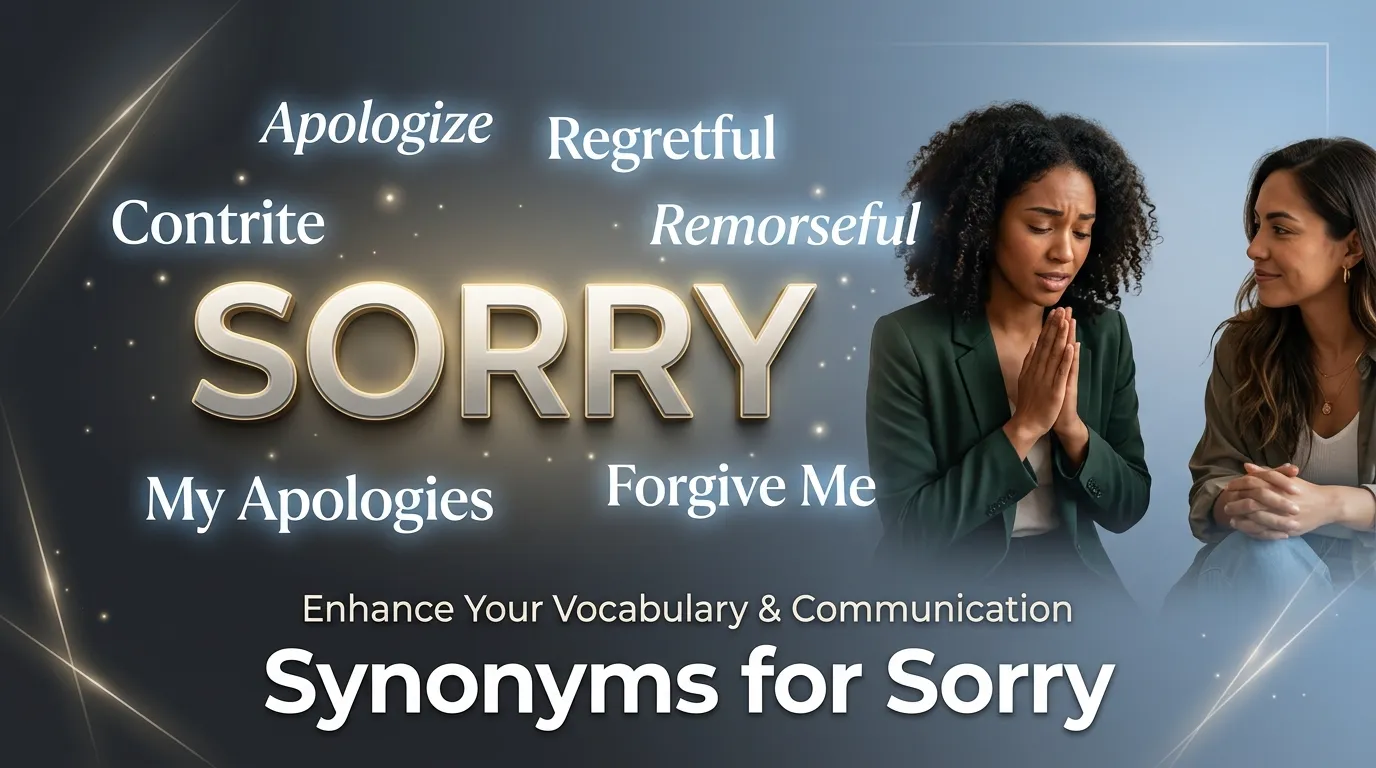
Have you ever hurt someone by mistake and did not know the right words to say? Many people use the same word again and again. That is why learning synonyms for sorry can make your English sound more natural and kind.
Imagine forgetting your friend’s birthday. You quickly say, “I’m sorry.” But sometimes, another word may fit the situation better. You may want to sound more polite, caring, or formal. Learning different synonyms for sorry helps you express feelings in a better way.
The word “sorry” means feeling sad because of a mistake, problem, or bad action. People use it every day in school, work, emails, blogs, and conversations. Students use it in writing. Bloggers use it in articles. Content writers use it in messages and stories. Daily English users say it while talking to family and friends.
Knowing synonyms for sorry also improves communication skills. It helps your speaking sound smarter and more friendly. When you practice these words, your English becomes more powerful and natural.
✨ Top 5 Synonyms for Sorry ✨
- Apologetic
- Regretful
- Ashamed
- Guilty
- Remorseful
✨ Next 5 Synonyms for Sorry ✨
- Contrite
- Penitent
- Sorrowful
- Repentant
- Sheepish
Pronunciation of “Synonyms for Sorry”
- Phonetic Spelling: sih-nuh-nims for sor-ee
- IPA Format: /ˈsɪnənɪmz fɔːr ˈsɒri/
- Simple Breakdown: “sin-uh-nimz” + “sor-ee”
Syllables of “Synonyms for Sorry”
- Synonyms = syn-o-nyms
- Sorry = sor-ry
“Synonyms” has 3 syllables.
“Sorry” has 2 syllables.
List of 50 Synonyms for Sorry
Apologetic
Meaning
Feeling bad after doing something wrong.
Examples
- She looked apologetic after the mistake.
- I gave an apologetic smile.
Regretful
Meaning
Feeling sad about something done before.
Examples
- He felt regretful after the argument.
- I sounded regretful on the call.
Ashamed
Meaning
Feeling bad and embarrassed.
Examples
- She felt ashamed of her words.
- I was ashamed after yelling.
Guilty
Meaning
Feeling responsible for something wrong.
Examples
- He looked guilty after lying.
- I felt guilty all day.
Remorseful
Meaning
Feeling deep sadness for a mistake.
Examples
- The boy became remorseful later.
- She sounded remorseful in class.
Contrite
Meaning
Showing true sadness for wrongdoing.
Examples
- He gave a contrite apology.
- She looked contrite afterward.
Penitent
Meaning
Feeling sorry and wanting forgiveness.
Examples
- The child seemed penitent.
- He spoke in a penitent voice.
Sorrowful
Meaning
Feeling full of sadness.
Examples
- She had a sorrowful face.
- He sounded sorrowful today.
Repentant
Meaning
Feeling sorry and wanting change.
Examples
- He became repentant quickly.
- She wrote a repentant note.
Sheepish
Meaning
Feeling embarrassed after a mistake.
Examples
- He gave a sheepish grin.
- I felt sheepish afterward.
Mournful
Meaning
Showing deep sadness.
Examples
- She had a mournful look.
- His voice sounded mournful.
Heartbroken
Meaning
Feeling very sad emotionally.
Examples
- She felt heartbroken after losing.
- He looked heartbroken yesterday.
Dejected
Meaning
Feeling unhappy and low.
Examples
- The player felt dejected.
- I looked dejected after class.
Miserable
Meaning
Feeling very unhappy.
Examples
- He felt miserable afterward.
- She looked miserable today.
Upset
Meaning
Feeling emotionally disturbed.
Examples
- I was upset about it.
- She seemed upset yesterday.
Distressed
Meaning
Feeling worried and sad.
Examples
- The news made him distressed.
- She looked distressed at school.
Sad
Meaning
Feeling unhappy.
Examples
- I felt sad after leaving.
- She looked sad today.
Blue
Meaning
Feeling a little sad.
Examples
- He felt blue this morning.
- I get blue sometimes.
Downhearted
Meaning
Feeling discouraged and sad.
Examples
- She became downhearted quickly.
- He looked downhearted afterward.
Crestfallen
Meaning
Feeling disappointed and sad.
Examples
- He looked crestfallen today.
- She felt crestfallen after losing.
Humble
Meaning
Showing modest feelings.
Examples
- He stayed humble afterward.
- She gave a humble reply.
Rueful
Meaning
Feeling sorry in a quiet way.
Examples
- She gave a rueful smile.
- He sounded rueful today.
Compassionate
Meaning
Showing kindness and care.
Examples
- She was compassionate to him.
- He gave a compassionate response.
Sympathetic
Meaning
Showing understanding for sadness.
Examples
- She sounded sympathetic today.
- He gave a sympathetic look.
Forgiving
Meaning
Ready to stop being angry.
Examples
- My friend was forgiving.
- She stayed forgiving afterward.
Understanding
Meaning
Showing patience and care.
Examples
- He was understanding with me.
- She gave an understanding reply.
Tenderhearted
Meaning
Having a soft and caring heart.
Examples
- She is tenderhearted always.
- He gave a tenderhearted answer.
Softhearted
Meaning
Kind and easy to forgive.
Examples
- My mother is softhearted.
- He stayed softhearted afterward.
Emotional
Meaning
Feeling strong emotions.
Examples
- She became emotional quickly.
- He sounded emotional today.
Hurt
Meaning
Feeling emotional pain.
Examples
- I felt hurt yesterday.
- She looked hurt afterward.
Brokenhearted
Meaning
Feeling deeply sad.
Examples
- He was brokenhearted after leaving.
- She felt brokenhearted yesterday.
Wistful
Meaning
Feeling quiet sadness.
Examples
- She gave a wistful smile.
- He sounded wistful today.
Low
Meaning
Feeling unhappy or weak.
Examples
- I felt low today.
- She looked low after school.
Melancholy
Meaning
Feeling gentle sadness.
Examples
- He became melancholy afterward.
- She sounded melancholy today.
Gloomy
Meaning
Feeling dark and unhappy.
Examples
- He felt gloomy yesterday.
- She looked gloomy today.
Discouraged
Meaning
Feeling less hopeful.
Examples
- I felt discouraged afterward.
- She seemed discouraged today.
Unhappy
Meaning
Not feeling happy.
Examples
- He looked unhappy yesterday.
- I felt unhappy afterward.
Bad
Meaning
Feeling wrong about something.
Examples
- I felt bad afterward.
- She felt bad about it.
Concerned
Meaning
Feeling worried about someone.
Examples
- He sounded concerned today.
- She looked concerned yesterday.
Troubled
Meaning
Feeling worried or upset.
Examples
- She seemed troubled today.
- He looked troubled afterward.
Nervous
Meaning
Feeling worried or afraid.
Examples
- I felt nervous speaking.
- She looked nervous today.
Embarrassed
Meaning
Feeling shy after a mistake.
Examples
- He felt embarrassed yesterday.
- I looked embarrassed afterward.
Awkward
Meaning
Feeling uncomfortable socially.
Examples
- The moment felt awkward.
- She looked awkward afterward.
Sorry-hearted
Meaning
Feeling emotionally sorry.
Examples
- He seemed sorry-hearted today.
- She gave a sorry-hearted reply.
Remorse-stricken
Meaning
Feeling extreme regret.
Examples
- He became remorse-stricken quickly.
- She sounded remorse-stricken today.
Self-blaming
Meaning
Blaming yourself for mistakes.
Examples
- She became self-blaming afterward.
- He sounded self-blaming today.
Conscience-stricken
Meaning
Feeling bad because of guilt.
Examples
- He felt conscience-stricken afterward.
- She looked conscience-stricken today.
Repenting
Meaning
Trying to correct wrong actions.
Examples
- He was repenting quietly.
- She sounded repenting today.
Kindhearted
Meaning
Having a caring nature.
Examples
- She stayed kindhearted always.
- He gave a kindhearted reply.
Caring
Meaning
Showing love and concern.
Examples
- She sounded caring today.
- He gave a caring message.
Compassion-filled
Meaning
Full of kindness and sympathy.
Examples
- Her words were compassion-filled.
- He gave a compassion-filled answer.
Conclusion
In everyday conversations, professional emails, and heartfelt apologies, choosing the right words can make your message feel more sincere and meaningful. Exploring different synonyms for sorry helps you express regret, sympathy, or politeness in a more natural and thoughtful way. Whether you use words like “apologetic,” “regretful,” “remorseful,” or simple phrases such as “my apologies,” each option adds a unique tone to your communication.
Learning synonyms for sorry can improve your English in many ways. These words help you sound more polite, natural, and expressive. They also make your writing and speaking more interesting.
Students can use these words in essays and school work. Bloggers and content writers can make articles stronger and more engaging. Daily English users can improve conversations with friends, family, and coworkers.
Practice these synonyms for sorry while writing emails, messages, and daily conversations. The more you use them, the easier they become. Small vocabulary changes can make a big difference in communication skills.
FAQ
What are synonyms for sorry?
Synonyms for sorry are words that express regret, sadness, guilt, or apology. Examples include apologetic, remorseful, regretful, and ashamed.
Why should I learn synonyms for sorry?
Learning synonyms improves speaking, writing, blogging, and communication skills. It also helps you sound more natural in English.
Which synonym for sorry is best for formal writing?
Words like “apologetic,” “remorseful,” and “contrite” work well in formal writing and professional emails.
Can students use synonyms for sorry in essays?
Yes, students can use these words to make essays more creative and avoid repeating the same word again and again.
Are synonyms for sorry useful in daily conversation?
Yes, they help people express feelings better in normal conversations with friends, teachers, coworkers, and family members.

I’m Shabbir Hussain, a professional content writer who specializes in clear and authentic comparisons between similar terms. I write concise, research-based, and reader-friendly content that turns complex language into simple explanations. Through Mysynonyms.com, I help readers strengthen their vocabulary and clearly understand word differences.