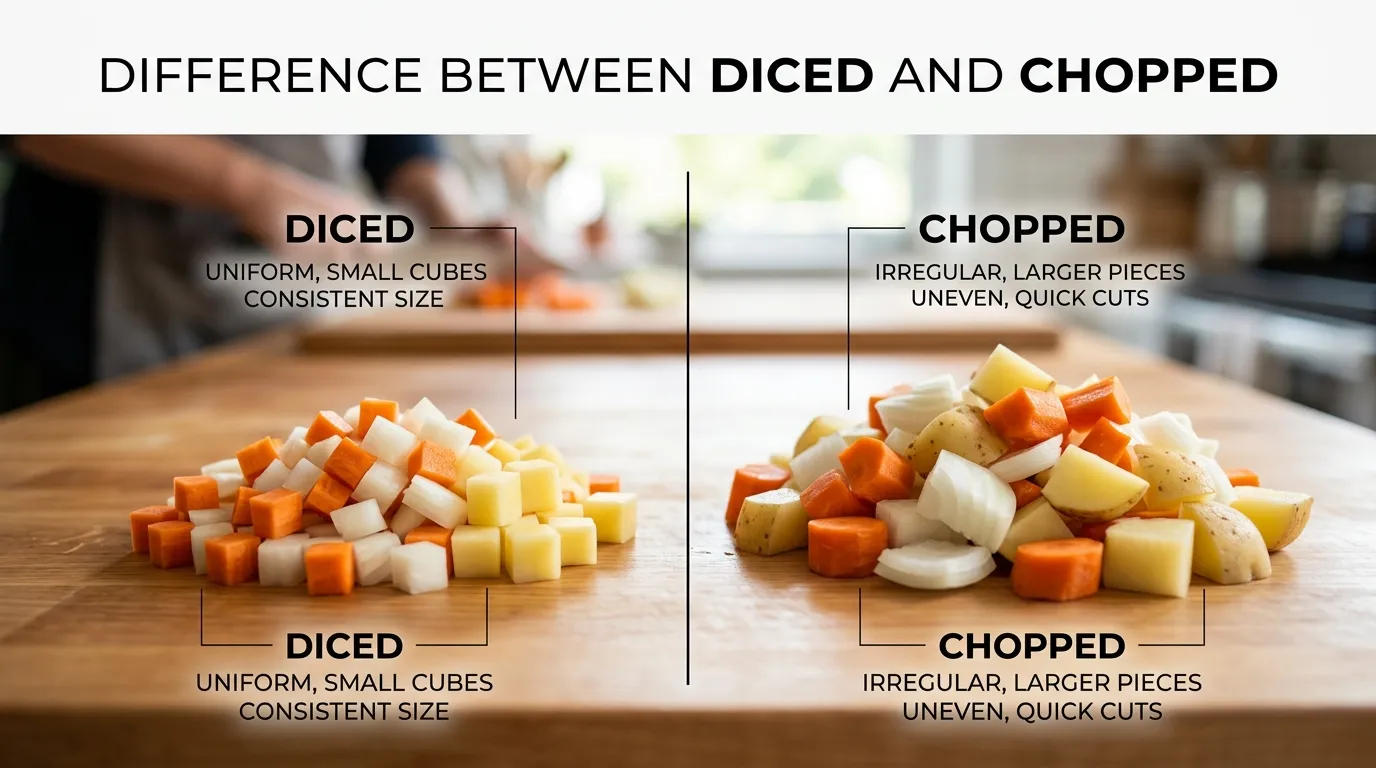
Diced means cutting food into small, equal cubes, while chopped means cutting food into irregular, uneven pieces.
Sara was helping her mother cook in Los Angeles for the first time. Her mom asked her to “dice the onions,” but Sara chopped them instead. The soup looked fine, but the pieces cooked unevenly. That day, Sara learned the real difference between diced and chopped.
The difference between diced and chopped is very important in cooking. Diced means cutting food into small, equal cubes. Chopped means cutting food into rough, uneven pieces. Many beginners get confused by the difference between diced and chopped because both use a knife and both cut food. But once you understand the difference between diced and chopped, your cooking becomes more accurate and professional. Let’s explore how each cut changes food texture, taste, and cooking results.
Key Difference
Diced means small, even cube-shaped pieces of food. Chopped means larger, uneven pieces with no fixed shape. Dicing gives uniform cooking, while chopping gives a rustic and rough texture.
Why Is This Difference Important to Know?
Understanding the difference between diced and chopped helps beginners cook food more evenly. It improves taste, texture, and cooking time. Chefs use correct cutting styles for better presentation and flavor. Knowing this skill also helps in recipes, restaurant cooking, and meal prep. It avoids mistakes that can change how food cooks or tastes.
Linking Hook
Now that you know why this difference matters, let’s break it down step by step. We will explore how diced and chopped food differ in shape, use, cooking style, and real kitchen situations.
10 Points of Difference
1. Basic Definition and Meaning
Diced means cutting food into small, equal cube shapes. Each piece is similar in size. Chopped means cutting food into random, uneven pieces without a fixed shape. Dicing is precise and neat. Chopping is fast and rough. Both are used in cooking but give very different results in dishes.
Examples:
- Diced carrots in chicken soup
- Chopped onions in salsa
2. Origin and Main Components
Both cutting styles come from basic kitchen knife skills used worldwide. Dicing is often used in professional cooking and French cuisine techniques. Chopping is a simple home cooking method. Dicing needs careful knife control. Chopping needs less precision and more speed during preparation.
Examples:
- French mirepoix uses diced vegetables
- Homemade salad with chopped cucumbers
3. How They Are Done
Dicing requires cutting food into slices, then strips, then small cubes. It follows a step-by-step method. Chopping is done by cutting food directly into pieces without a strict pattern. Dicing takes practice and control. Chopping is faster and easier for beginners.
Examples:
- Diced potatoes for stew
- Chopped tomatoes for sandwiches
4. Time Involved and Duration
Dicing takes more time because it needs equal sizing and careful cutting. Chopping is quicker because it does not need precision. Dicing is often used in professional kitchens where presentation matters. Chopping is common in home cooking where speed is more important.
Examples:
- Diced apples for fruit salad
- Chopped garlic for quick frying
5. Flavor, Feel, or Output Quality
Diced food cooks evenly because all pieces are the same size. It gives a smooth texture. Chopped food cooks unevenly and feels more rustic. It can change bite size and flavor distribution. Dicing gives a cleaner presentation. Chopping gives a natural, homemade look.
Examples:
- Diced onions in pasta sauce
- Chopped herbs on grilled chicken
6. Primary Use Cases
Dicing is used in soups, salads, and dishes that need even cooking. Chopping is used in fast recipes, sauces, and marinades. Diced food is common in restaurant meals. Chopped food is common in home-style cooking.
Examples:
- Diced vegetables in stew
- Chopped chilies in chutney
7. Effect or Impact on Cooking
Dicing helps food cook at the same speed, improving texture. Chopping may cause uneven cooking because pieces are different sizes. Dicing improves presentation and consistency. Chopping improves speed but may reduce uniformity in dishes.
Examples:
- Diced potatoes in curry
- Chopped onions in omelets
8. Degree of Specificity
Dicing is highly specific because it follows size rules. Chopping is less specific because size can vary. Dicing is used in recipes that need accuracy. Chopping is used when flexibility is allowed in cooking.
Examples:
- Diced bell peppers in tacos
- Chopped spinach in soup
9. Can They Replace Each Other?
Sometimes they can replace each other, but results will change. Chopped food may cook differently than diced food. Diced food may feel too small in some recipes. The choice depends on texture and cooking goals.
Examples:
- Chopped onions instead of diced onions
- Diced cucumbers in place of chopped salad
10. Long-Term Results and Cooking Impact
Dicing improves cooking consistency and professional presentation. It is preferred in restaurants. Chopping builds speed and flexibility in home cooking. Over time, both skills improve kitchen confidence and knife control.
Examples:
- Diced vegetables in gourmet meals
- Chopped ingredients in daily home cooking
Nature and Behaviour
Diced food feels neat, structured, and uniform. It behaves well in cooking because all pieces heat evenly. It is ideal for recipes that need balance and clean presentation.
Chopped food feels casual, rough, and natural. It behaves freely in cooking and adds texture variety. It works best in quick meals and simple recipes.
Why Do People Confuse Them?
People confuse diced and chopped because both use knives and cutting boards. Recipes sometimes use the terms loosely. Both methods cut vegetables, so beginners think they are the same. A common mistake happens when someone chops onions for a recipe that needs small diced pieces, changing the dish texture and cooking time.
Comparison Table
| Feature | Diced | Chopped |
| Definition | Small cube cuts | Rough uneven cuts |
| Origin | Professional cooking | Home cooking |
| Process | Precise steps | Simple cutting |
| Duration | Slower | Faster |
| Output | Even pieces | Irregular pieces |
| Main Use | Soups, salads | Quick meals |
| Impact | Even cooking | Variable texture |
| Interchangeable? | Limited | Limited |
| Long-term Result | Consistency | Speed skill |
| Similarity | Both cut food | Both use knives |
| Key Difference | Uniform size | Uneven size |
Which Is Better and When?
Diced is better when you need even cooking and neat presentation. For example, diced potatoes cook evenly in stews and look clean in salads.
Chopped is better when speed matters and appearance is less important. For example, chopped onions work well in quick frying or sauces where texture is not strict.
Quick Decision Guide
Choose Diced if:
☑ You need even cooking pieces
☑ Recipe requires neat presentation
☑ Making soups or salads
☑ Cooking gourmet dishes
Choose Chopped if:
☑ You need fast preparation
☑ Cooking everyday meals
☑ Texture does not matter much
☑ Making sauces or stir-fry
Metaphors and Similes
Diced food is like building blocks lined up neatly.
Chopped food is like broken pieces scattered freely.
Together, they are like order and creativity in cooking.
Connotative Meaning
Diced often feels professional and clean. Positive: “The diced veggies looked perfect.” Negative: “It took too long to dice.” Neutral: “She diced the carrots.”
Chopped feels quick and casual. Positive: “Chopped herbs added flavor.” Negative: “Chopped pieces were uneven.” Neutral: “He chopped onions for dinner.”
Idioms and Proverbs
“Cut to size” means preparing things carefully. Example: “She cut the vegetables to size for soup.”
“Rough around the edges” fits chopped food style. Example: “The salad looked rough around the edges.”
[coined expression] “Dice it neat, chop it quick.” Example: “In cooking class, we learned: dice it neat, chop it quick.”
FAQ Section
Q1: What is the main difference between diced and chopped?
Diced means cutting food into small, equal cubes. Chopped means cutting food into uneven pieces. Dicing focuses on size and precision, while chopping focuses on speed and rough cutting for everyday cooking.
Q2: Can diced be used instead of chopped?
Sometimes yes, but results change. Diced food cooks evenly, while chopped food may cook differently. Recipes needing texture or speed may not work well if you switch them.
Q3: Which is better, diced or chopped?
Neither is always better. Diced is best for neat cooking and even texture. Chopped is best for quick meals and simple cooking. The choice depends on the recipe.
Q4: How long do diced and chopped foods take to cook?
Diced food cooks evenly and may take slightly longer due to size control. Chopped food may cook faster but unevenly because pieces vary in size.
Q5: Why do people mix up diced and chopped?
People mix them up because both use cutting tools and appear similar. Recipes sometimes use words loosely, making beginners think both cutting styles are the same.
Real-World Importance
Knowing the difference between diced and chopped helps in cooking school, home kitchens, and restaurants. It improves food taste, texture, and cooking time. It also builds knife skills and helps beginners follow recipes correctly. This knowledge is useful in daily meal preparation and professional cooking.
Conclusion
The difference between diced and chopped is simple but important. Diced means small, equal cubes for even cooking and neat presentation. Chopped means rough, uneven pieces for quick and easy cooking. They differ in size, speed, texture, and use. Dicing improves accuracy and consistency, while chopping improves speed and flexibility. Both skills are essential in cooking and help you become more confident in the kitchen. Once you understand the difference between diced and chopped, you can follow recipes better and cook more delicious meals with ease.

I’m Shabbir Hussain, a professional content writer who specializes in clear and authentic comparisons between similar terms. I write concise, research-based, and reader-friendly content that turns complex language into simple explanations. Through Mysynonyms.com, I help readers strengthen their vocabulary and clearly understand word differences.