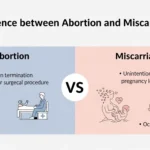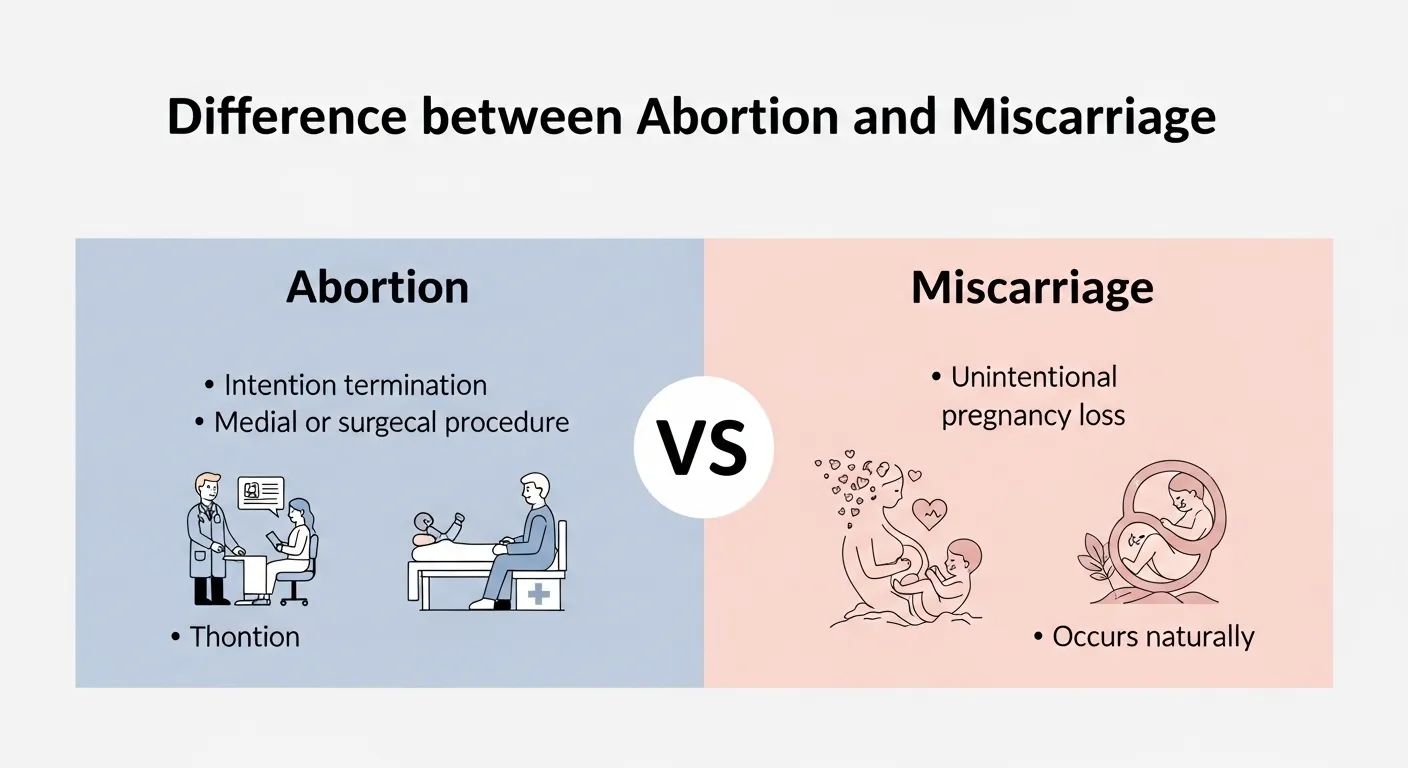
Abortion and miscarriage both involve pregnancy loss, but abortion is a deliberate medical or personal decision, while miscarriage is a natural and unintentional loss of pregnancy.
Understanding the difference between abortion and miscarriage is essential for medical clarity and emotional awareness. Imagine a couple expecting a baby—everything seems normal, but suddenly the pregnancy ends without warning. In another situation, a person may decide, for personal or health reasons, to end a pregnancy under medical supervision. These two situations may appear similar on the surface, yet they are very different in cause, intention, and experience.
The difference between abortion and miscarriage lies mainly in intention and biological process. Abortion is a planned and controlled procedure, while Miscarriage happens naturally without deliberate action. Learning the difference between abortion and miscarriage helps remove confusion and stigma. By understanding the difference between abortion and miscarriage, individuals can approach the topic with sensitivity, knowledge, and empathy in both personal and societal contexts.
Pronunciation
Abortion
US: /əˈbɔːrʃən/
Miscarriage
US: /ˌmɪsˈkærɪdʒ/
Key Difference Between the Both
The main difference between abortion and miscarriage is that abortion is intentional and medically or personally chosen, while miscarriage is a natural and unplanned loss of pregnancy.
Why Is Their Difference Necessary to Know for Learners and Experts?
Knowing the difference between abortion and miscarriage is important for students, healthcare professionals, and society as a whole. For learners, it builds accurate medical understanding. For experts, understanding the difference between abortion and miscarriage ensures correct diagnosis, treatment, and communication with patients.
In society, confusion around these terms can lead to emotional distress and misunderstanding. Some people may wrongly assume blame in cases of miscarriage, which is medically incorrect. Clear knowledge of the difference between abortion and miscarriage promotes compassion, reduces stigma, and supports informed healthcare decisions.
Difference Between Abortion and Miscarriage
1. Definition
Abortion is the intentional termination of pregnancy. Miscarriage is the natural loss of pregnancy before viability.
Examples
Abortion:
- A medical procedure to end pregnancy
- Planned termination under medical care
Miscarriage:
- Spontaneous pregnancy loss
- Occurs without planning
2. Cause
Abortion is caused by human decision or medical need. Miscarriage is caused by biological or natural factors.
Examples
Abortion:
- Personal choice
- Health complications
Miscarriage:
- Chromosomal abnormalities
- Hormonal issues
3. Intent
Abortion is intentional. Miscarriage is unintentional.
Examples
Abortion:
- Decided outcome
- Controlled process
Miscarriage:
- Unexpected event
- No control
4. Medical Involvement
Abortion always involves medical or clinical intervention. Miscarriage may or may not require medical care.
Examples
Abortion:
- Performed by healthcare providers
- Uses medication or surgery
Miscarriage:
- May occur naturally at home
- Sometimes requires medical follow-up
5. Timing
Abortion is scheduled at a chosen time. Miscarriage occurs unpredictably.
Examples
Abortion:
- Planned date
- Controlled timing
Miscarriage:
- Sudden occurrence
- Often in early pregnancy
6. Emotional Impact
Both experiences can be emotionally intense but differ in context and feelings.
Examples
Abortion:
- May involve mixed emotions
- Decision-related feelings
Miscarriage:
- Often associated with grief
- Sense of unexpected loss
7. Legal Status
Abortion is regulated by laws that vary by country. Miscarriage is a natural event and not legally regulated.
Examples
Abortion:
- Legal restrictions may apply
- Medical guidelines required
Miscarriage:
- No legal control
- Natural biological event
8. Health Risks
Both involve health considerations, but their risks differ.
Examples
Abortion:
- Managed risks under medical care
- Generally safe when done properly
Miscarriage:
- Risk of infection or complications
- May require treatment
9. Terminology
Abortion includes induced medical or surgical procedures. Miscarriage is also referred to as spontaneous abortion in medical language.
Examples
Abortion:
- Induced abortion
- Therapeutic abortion
Miscarriage:
- Early pregnancy loss
- Spontaneous abortion
10. Outcome
Both result in pregnancy loss but differ in process and control.
Examples
Abortion:
- Planned conclusion
- Managed procedure
Miscarriage:
- Natural ending
- Unplanned process
Nature and Behaviour of Both
Abortion is a deliberate and controlled medical or personal decision. Miscarriage is a natural biological process that often occurs due to factors beyond human control, such as genetic abnormalities or health conditions.
Why People Are Confused About Their Use?
People often confuse abortion and miscarriage because both involve pregnancy loss. Additionally, the medical term “spontaneous abortion” for miscarriage adds to the confusion. However, the key difference remains intention and cause.
Table Showing Difference and Similarity
| Feature | Abortion | Miscarriage | Similarity |
| Cause | Intentional | Natural | Pregnancy loss |
| Control | Planned | Unplanned | Medical relevance |
| Timing | Scheduled | Sudden | Emotional impact |
| Legal | Regulated | Not regulated | Health concern |
| Nature | Decision-based | Biological | Reproductive process |
Which Is Better in What Situation?
Abortion
Abortion may be considered in situations where continuing the pregnancy poses health risks, or due to personal, social, or medical reasons. It is a controlled and medically supervised process that allows individuals to make informed decisions based on their circumstances.
Miscarriage
Miscarriage is not a choice but a natural occurrence. In such situations, the focus should be on medical care, emotional support, and recovery. Proper guidance from healthcare professionals helps manage both physical and emotional aspects.
How the Keywords Are Used in Metaphors and Similes
Examples:
- “The project was aborted before it could begin.”
- “The plan ended like a miscarriage—unexpected and incomplete.”
Connotative Meaning
Abortion
Connotation: Interruption, decision, control.
Example:
“The mission faced an abortion due to sudden challenges.”
Miscarriage
Connotation: Loss, failure, injustice.
Example:
“It was a miscarriage of justice that shocked everyone.”
Idioms or Proverbs Related to the Words
Miscarriage of justice
Example:
“The innocent man’s punishment was a miscarriage of justice.”
Works in Literature
Abortion and miscarriage are explored in many literary and social works:
- The Cider House Rules (Novel, John Irving, 1985)
- Revolutionary Road (Novel, Richard Yates, 1961)
Movie Names Made on the Keywords
- If These Walls Could Talk (1996, USA)
- The Cider House Rules (1999, USA)
Five Frequently Asked Questions
1. What is the main difference between abortion and miscarriage?
Abortion is intentional, while miscarriage is natural and unplanned.
2. Is miscarriage medically called abortion?
Yes, it is often called spontaneous abortion.
3. Can miscarriage be prevented?
Not always, as it often results from natural biological factors.
4. Is abortion safe?
When performed under proper medical care, it is generally safe.
5. Which is more common?
Miscarriage is relatively common, especially in early pregnancy.
How Both Are Useful for Surroundings
Understanding both abortion and miscarriage improves healthcare awareness, promotes emotional support systems, and helps society respond with empathy and knowledge.
Final Words for the Both
Abortion and miscarriage are sensitive and important topics that require awareness, respect, and understanding in both medical and social contexts.
Conclusion
The difference between abortion and miscarriage lies in intention, cause, and control. Abortion is a deliberate and medically managed process, while miscarriage is a natural and unplanned loss of pregnancy. Understanding the difference between abortion and miscarriage helps individuals make informed decisions and approach the topic with empathy and clarity. By learning the difference between abortion and miscarriage, society can foster better awareness, reduce stigma, and support those affected with compassion.

I’m Shabbir Hussain, a professional content writer who specializes in clear and authentic comparisons between similar terms. I write concise, research-based, and reader-friendly content that turns complex language into simple explanations. Through Mysynonyms.com, I help readers strengthen their vocabulary and clearly understand word differences.