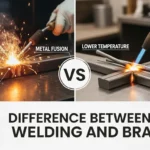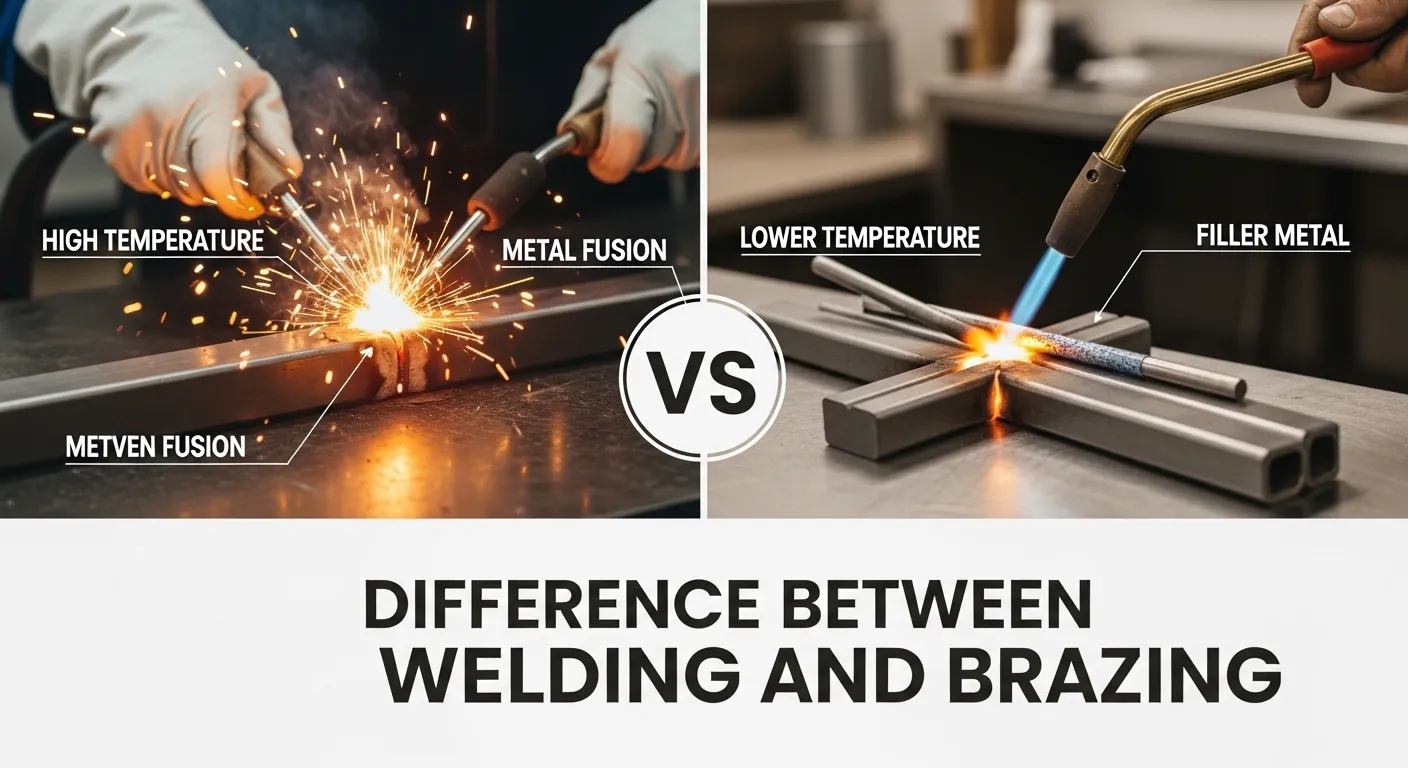
Welding and brazing are both metal-joining processes, but welding melts the base metals, while brazing joins them using a filler metal without melting the base materials.
Understanding the difference between welding and brazing is important in manufacturing, construction, and repair work. Imagine fixing a broken metal frame—sometimes the metal itself is melted and fused, while other times a separate material is used to bond pieces together without melting them.
The difference between welding and brazing lies in how the metals are joined. Welding involves melting the base metals to create a strong joint, while Brazing uses a filler metal that melts at a lower temperature than the base metals.
Learning the difference between welding and brazing helps professionals choose the right method for strength, precision, and material compatibility. By understanding the difference between welding and brazing, you can improve efficiency and safety in metalwork.
Pronunciation
Welding
US: /ˈwɛldɪŋ/
Brazing
US: /ˈbreɪzɪŋ/
Key Difference Between the Both
The main difference between welding and brazing is that welding melts the base metals to fuse them, while brazing joins metals using a melted filler without melting the base metals.
Why Is Their Difference Necessary to Know for Learners and Experts?
Knowing the difference between welding and brazing is essential for engineers, technicians, and students. For learners, it builds a strong foundation in metalworking. For experts, understanding the difference between welding and brazing ensures selecting the right method for durability and efficiency.
In industries like construction, automotive, and manufacturing, choosing the wrong joining method can lead to weak joints or damage. Misunderstanding the difference between welding and brazing can affect safety and product quality.
Difference Between Welding and Brazing
1. Definition
Welding melts base metals to join them. Brazing uses a filler metal without melting base metals.
Examples
Welding:
- Steel frame joining
- Pipeline welding
Brazing:
- Copper pipe joining
- Jewelry making
2. Temperature
Welding requires very high temperatures. Brazing uses lower temperatures.
Examples
Welding:
- Above melting point
- High heat tools
Brazing:
- Below melting point
- Moderate heat
3. Base Metal Involvement
Welding melts base metals. Brazing does not.
Examples
Welding:
- Metal fusion
- Strong bonding
Brazing:
- Surface bonding
- No melting
4. Strength
Welding produces stronger joints. Brazing produces moderately strong joints.
Examples
Welding:
- Structural joints
- Heavy-duty use
Brazing:
- Light-duty joints
- Precision work
5. Filler Material
Welding may or may not use filler. Brazing always uses filler metal.
Examples
Welding:
- Sometimes no filler
- Matching metal
Brazing:
- Always filler
- Lower melting point
6. Applications
Welding is used in heavy industries. Brazing is used in delicate work.
Examples
Welding:
- Construction
- Shipbuilding
Brazing:
- HVAC systems
- Electronics
7. Equipment
Welding requires complex equipment. Brazing uses simpler tools.
Examples
Welding:
- Welding machines
- Protective gear
Brazing:
- Torch
- Basic tools
8. Joint Appearance
Welding joints are rougher. Brazing joints are cleaner.
Examples
Welding:
- Visible seams
- Post-processing needed
Brazing:
- Smooth finish
- Minimal cleanup
9. Metal Compatibility
Welding requires similar metals. Brazing can join different metals.
Examples
Welding:
- Steel to steel
- Aluminum to aluminum
Brazing:
- Copper to steel
- Dissimilar metals
10. Distortion Risk
Welding has higher distortion risk. Brazing has lower risk.
Examples
Welding:
- Heat warping
- Structural stress
Brazing:
- Minimal distortion
- Controlled heat
Nature and Behaviour of Both
Welding is intense and produces strong, permanent joints by melting metals. Brazing is gentler, using filler material to bond metals without altering their structure.
Why People Are Confused About Their Use?
People often confuse welding and brazing because both join metals using heat. However, the key difference is whether the base metal melts or not.
Table Showing Difference and Similarity
| Feature | Welding | Brazing | Similarity |
| Process | Melting metals | Using filler | Joining metals |
| Temperature | High | Moderate | Heat-based |
| Strength | High | Moderate | Durable |
| Use | Heavy industry | Precision work | Manufacturing |
| Metal Type | Similar | Different | Metal joining |
Which Is Better in What Situation?
Welding
Welding is better for structural work requiring maximum strength, such as bridges, buildings, and pipelines.
Brazing
Brazing is better for delicate work, joining dissimilar metals, and applications where precision and minimal heat damage are required.
How the Keywords Are Used in Metaphors and Similes
Examples:
- “Their bond was welded, strong and unbreakable.”
- “The connection was like brazing, subtle but effective.”
Connotative Meaning
Welding
Connotation: Strength, permanence.
Example:
“It was a welded relationship, solid and lasting.”
Brazing
Connotation: Precision, subtlety.
Example:
“It was a brazed connection, carefully crafted.”
Idioms or Proverbs Related to the Words
Strike while the iron is hot
Example:
“In welding, timing matters, strike while the iron is hot.”
Works in Literature
Welding and brazing are commonly discussed in engineering manuals, technical guides, and industrial training books.
Movie Names Made on the Keywords
There are no major movies directly based on welding or brazing.
Five Frequently Asked Questions
1. What is the main difference between welding and brazing?
Welding melts base metals, while brazing uses filler metal without melting them.
2. Which is stronger?
Welding is stronger.
3. Can brazing join different metals?
Yes.
4. Which uses more heat?
Welding.
5. Which is easier?
Brazing is generally easier.
How Both Are Useful for Surroundings
Both welding and brazing are essential in construction, manufacturing, and repair, helping create durable and functional metal structures.
Final Words for the Both
Welding and brazing are important metal-joining methods, each suited for different applications.
Conclusion
The difference between welding and brazing lies in their method and application. Welding melts the base metals to create strong, permanent joints, while brazing uses a filler metal to join pieces without melting them. Understanding the difference between welding and brazing helps in choosing the right technique for strength, precision, and efficiency. By learning the difference between welding and brazing, individuals can improve their skills and achieve better results in metalwork.

I’m Shabbir Hussain, a professional content writer who specializes in clear and authentic comparisons between similar terms. I write concise, research-based, and reader-friendly content that turns complex language into simple explanations. Through Mysynonyms.com, I help readers strengthen their vocabulary and clearly understand word differences.