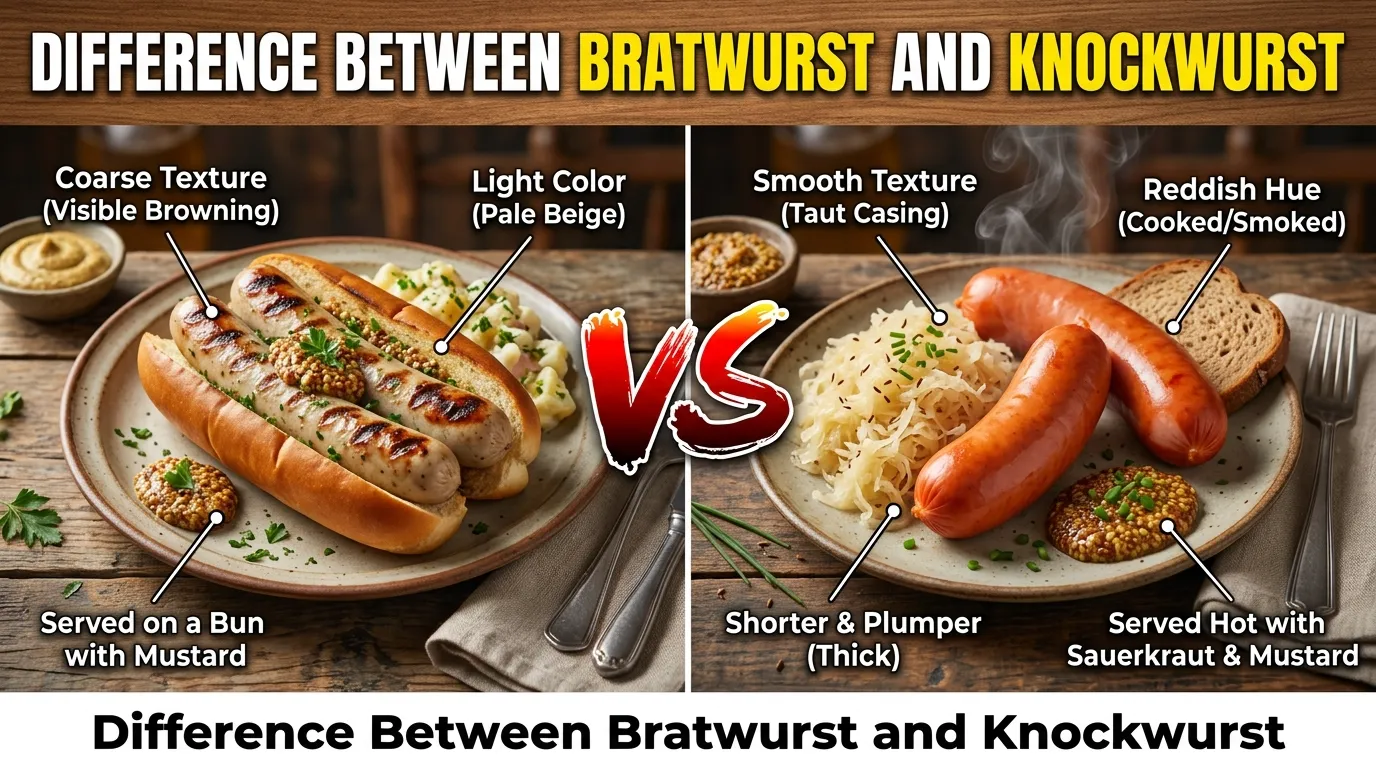
Bratwurst and knockwurst are both classic German sausages, but bratwurst is typically mild, coarse, and ideal for grilling, while knockwurst is shorter, smoother, pre-cooked, and known for its bold garlic flavor.
Understanding the difference between bratwurst and knockwurst can completely change how you experience these two iconic sausages. Imagine that you attend a summer barbecue or visit a traditional German food market, and someone offers you two sausages that look somewhat similar, yet one delivers a mild, juicy bite while the other bursts with smoky, garlicky intensity.
Without knowing the difference between bratwurst and knockwurst, it’s easy to choose based on appearance alone and miss out on the flavour you truly prefer.
The difference between bratwurst and knockwurst goes beyond just taste. It includes ingredients, preparation methods, cultural origins, and even how they are served. Bratwurst has been a staple of German cuisine for centuries, known for its versatility and regional variations. On the other hand, Knockwurst, often spelled knackwurst, stands out for its fine texture and bold seasoning, especially garlic.
Learning the difference between bratwurst and knockwurst helps food enthusiasts, home cooks, and travelers make better culinary choices. Whether you’re grilling outdoors or preparing a hearty indoor meal, understanding the difference between bratwurst and knockwurst ensures that you pick the right sausage for the right occasion.
Pronunciation
Bratwurst
US: /ˈbrɑːtˌwɜːrst/
Knockwurst (Knackwurst)
US: /ˈnɑːkˌwɜːrst/
Key Difference Between the Both
We usually prepare bratwurst raw, season it mildly, and give it a coarse texture, while we pre-cook knockwurst, grind it finely, and flavuor it strongly with garlic and spices.
Historical Background
To fully grasp the difference between bratwurst and knockwurst, it helps to understand their origins.
Bratwurst dates back to medieval Germany, with records showing its existence as early as the 14th century. Different regions developed their own versions, using local meats and spices. This diversity contributes to the wide range of bratwurst styles available today.
Knockwurst, meanwhile, originated in northern Germany and became popular for its convenience and bold flavor. Because it is typically pre-cooked, it was easier to prepare quickly—making it a favorite for street food and fast meals.
Difference Between Bratwurst and Knockwurst
1. Ingredients
People primarily make bratwurst from pork, sometimes mixing it with veal or beef, and they season it lightly.
They make knockwurst from finely ground pork and beef, and they season it more heavily.
Examples
Bratwurst:
- Pork-based
- Mild herbs
Knockwurst:
- Pork and beef mix
- Garlic-heavy spices
2. Flavor Profile
Bratwurst has a subtle, balanced flavor.
Knockwurst delivers a strong, smoky, and garlicky taste.
Examples
Bratwurst:
- Light seasoning
- Slightly sweet or herbed
Knockwurst:
- Intense garlic
- Rich and savory
3. Texture
Bratwurst has a coarse, chunky texture due to less grinding.
Knockwurst is smooth and fine because the meat is ground more thoroughly.
4. Size and Shape
Bratwurst is long and slightly curved.
Knockwurst is shorter, thicker, and plumper.
5. Preparation Method
Bratwurst is often grilled, pan-fried, or roasted.
Knockwurst is usually boiled or heated since it is pre-cooked.
6. Cooking Time
Bratwurst requires thorough cooking because it is often raw.
Knockwurst needs only reheating, making it quicker to prepare.
7. Serving Style
Bratwurst is commonly served in buns with mustard or alongside grilled vegetables.
Knockwurst is often served on a plate with sauerkraut, potatoes, or bread.
8. Cultural Use
Bratwurst is popular at festivals and barbecues, especially in outdoor settings.
Knockwurst is more common in traditional meals and comfort food dishes.
9. Regional Variations
Bratwurst has many regional types, such as Nürnberger or Thüringer varieties.
Knockwurst has fewer variations but maintains a consistent style.
10. Convenience
Bratwurst requires more preparation and cooking skill.
Knockwurst is convenient and beginner-friendly due to its pre-cooked nature.
Nature and Culinary Experience
The difference between bratwurst and knockwurst also appears in the overall eating experience. Bratwurst is juicy, mild, and adaptable, it pairs well with a wide variety of toppings and side dishes. Knockwurst, on the other hand, offers a bold and rich taste that stands out even without additional seasoning.
If you prefer subtle flavors and grilling experiences, bratwurst is the better choice. If you enjoy strong, savory flavors and quick preparation, knockwurst is more suitable.
Why People Are Confused?
The difference between bratwurst and knockwurst is often overlooked because both sausages share similar origins and appearances. They are both German, both made from meat, and both commonly served hot. However, their flavor, texture, and preparation methods differ significantly.
Another reason for confusion is that in many international markets, labeling may not clearly distinguish between sausage types, leading people to assume they are interchangeable.
Comparison Table
| Feature | Bratwurst | Knockwurst | Similarity |
| Flavor | Mild | Strong, garlicky | German sausages |
| Texture | Coarse | Smooth | Meat-based |
| Size | Long | Short | Cylindrical shape |
| Cooking | Raw, needs cooking | Pre-cooked | Served hot |
| Use | BBQ, grilling | Hearty meals | Popular dishes |
Which Is Better in What Situation?
Bratwurst
Bratwurst is ideal for:
- Barbecues and outdoor grilling
- Casual meals
- People who prefer mild flavors
It works well in buns, sandwiches, and with a variety of toppings like mustard, onions, and peppers.
Knockwurst
Knockwurst is ideal for:
- Quick meals
- Traditional German dishes
- Those who enjoy strong flavors
It pairs well with sauerkraut, mashed potatoes, and hearty sides.
Nutritional Considerations
While both sausages are rich in protein, they can also be high in fat and sodium. Bratwurst may vary depending on the meat used, while knockwurst often has a higher sodium content due to curing and seasoning.
Moderation is key when enjoying either sausage, especially for those monitoring their diet.
Cooking Tips
For Bratwurst:
- Cook thoroughly to avoid raw meat inside
- Grill slowly to prevent splitting
- Avoid piercing the casing to retain juices
For Knockwurst:
- Heat gently in water, not boiling
- Avoid overcooking to maintain texture
- Serve immediately for best flavor
Frequently Asked Questions
1. What is the main difference between bratwurst and knockwurst?
Bratwurst is mild and coarse, while knockwurst is smooth and strongly seasoned with garlic.
2. Which sausage is better for grilling?
Bratwurst is better suited for grilling.
3. Is knockwurst already cooked?
Yes, it is usually pre-cooked.
4. Which one has a stronger flavor?
Knockwurst.
5. Can they be used interchangeably?
They can be substituted, but the taste and texture will differ.
Conclusion
The difference between bratwurst and knockwurst lies in their ingredients, flavor, texture, and preparation methods. Bratwurst is a mild, versatile sausage perfect for grilling and casual meals, while knockwurst is a bold, garlicky sausage designed for quick preparation and hearty dishes. Understanding the difference between bratwurst and knockwurst allows you to make better culinary choices and fully enjoy these traditional German specialties.
Whether you’re planning a barbecue or preparing a comforting meal, knowing the difference between bratwurst and knockwurst ensures that you select the right sausage for the perfect experience.

I’m Shabbir Hussain, a professional content writer who specializes in clear and authentic comparisons between similar terms. I write concise, research-based, and reader-friendly content that turns complex language into simple explanations. Through Mysynonyms.com, I help readers strengthen their vocabulary and clearly understand word differences.