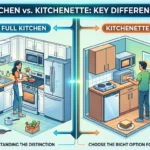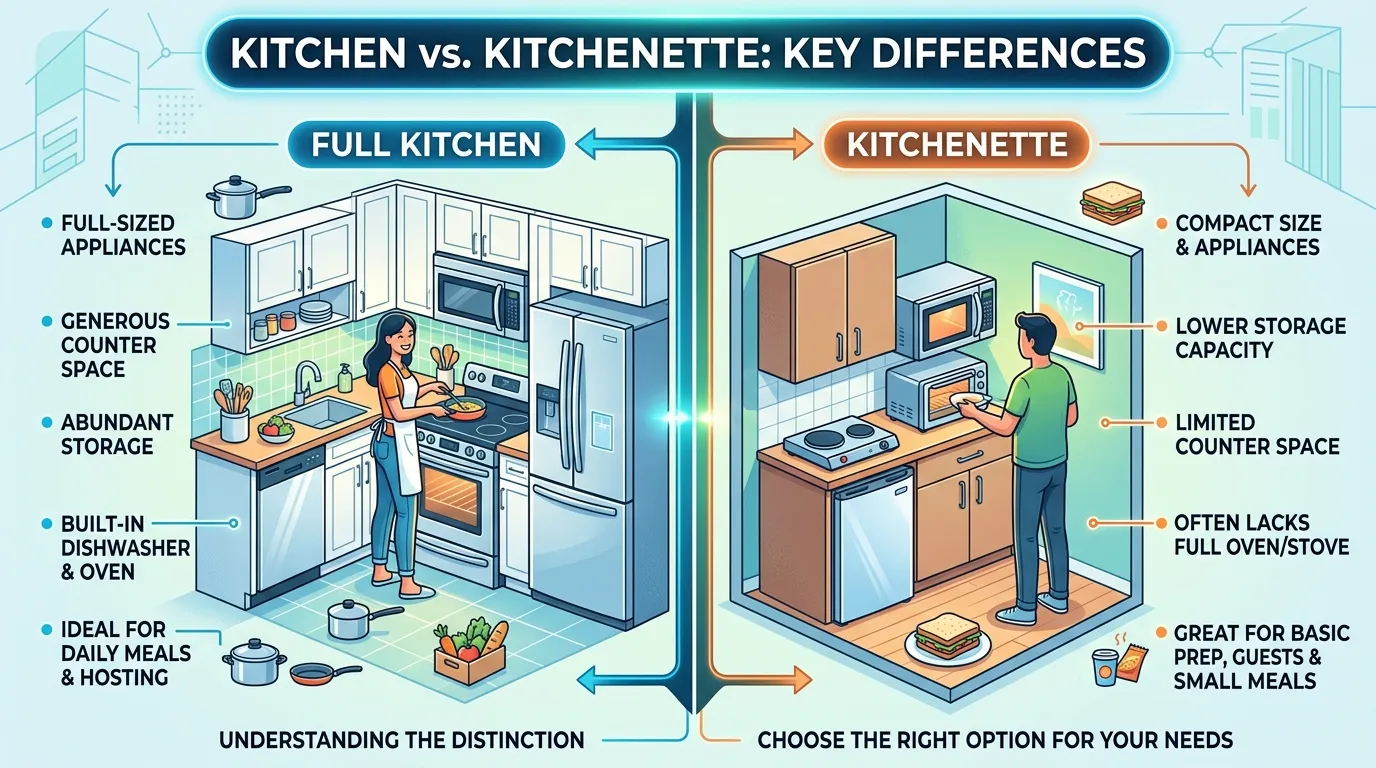
The difference between kitchen and kitchenette is that a kitchen is a full-sized cooking space with complete appliances and storage, while a kitchenette is a smaller, compact version designed for limited cooking and smaller living spaces.
Understanding the difference between kitchen and kitchenette is important for homeowners, renters, travelers, students, and anyone interested in home design or real estate. At first glance, both spaces may appear similar because they are used for preparing food and storing cooking essentials. However, the difference between kitchen and kitchenette becomes clear when you compare their size, features, functionality, and intended use.
A Kitchen is typically a full cooking area equipped with major appliances, storage cabinets, countertops, and enough space for regular meal preparation. In contrast, a Kitchenette is a smaller version designed for compact apartments, hotel rooms, dormitories, offices, or studio living spaces.
Learning the difference between kitchen and kitchenette helps people make better decisions about housing, travel accommodations, interior planning, and lifestyle needs. By understanding the difference between kitchen and kitchenette, individuals can choose the space that best suits their cooking habits, available area, and daily requirements.
Pronunciation
Kitchen
US: /ˈkɪtʃ.ən/
Kitchenette
US: /ˌkɪtʃ.əˈnet/
Key Difference Between the Both
The main difference between kitchen and kitchenette is that a kitchen is a complete cooking room with full functionality, while a kitchenette is a smaller and more limited cooking area intended for light or basic food preparation.
Why Is Their Difference Important?
Knowing the difference between kitchen and kitchenette is important because each serves different living situations and lifestyle needs.
A full kitchen is better for:
- Large families
- Frequent cooking
- Extensive meal preparation
A kitchenette is better for:
- Small apartments
- Temporary stays
- Minimal cooking needs
Understanding the difference between kitchen and kitchenette also helps people compare property listings, hotel accommodations, and apartment features more accurately.
Difference Between Kitchen and Kitchenette
1. Size
A kitchen is larger and more spacious.
A kitchenette is compact and space-saving.
Examples
Kitchen:
- Separate cooking room
- Large countertops
Kitchenette:
- Small corner setup
- Compact layout
2. Appliances
Kitchens usually include full-sized appliances.
Kitchenettes often contain smaller or fewer appliances.
Examples
Kitchen:
- Full refrigerator
- Oven
- Dishwasher
Kitchenette:
- Mini fridge
- Microwave
- Small sink
3. Cooking Capacity
Kitchens support complete meal preparation.
Kitchenettes are designed for basic or light cooking.
4. Storage Space
Kitchens generally provide more cabinets and pantry space.
Kitchenettes offer limited storage.
5. Intended Use
Kitchens are meant for daily household cooking.
Kitchenettes are often intended for convenience or temporary living.
6. Common Locations
Kitchens are common in houses and family apartments.
Kitchenettes are common in:
- Hotel rooms
- Studio apartments
- Dormitories
- Offices
7. Layout
Kitchens usually have separated work areas.
Kitchenettes combine functions into a smaller space.
8. Cost
Full kitchens are generally more expensive to build and maintain.
Kitchenettes are more affordable and economical.
9. Design Purpose
Kitchens prioritize functionality and long-term use.
Kitchenettes prioritize space efficiency.
10. Dining Integration
Some kitchens include dining areas.
Kitchenettes rarely include full dining spaces.
Nature and Purpose of Both
The difference between kitchen and kitchenette mainly relates to scale and functionality.
Kitchens are designed for:
- Regular cooking
- Family meal preparation
- Long-term residential use
Kitchenettes are designed for:
- Limited cooking
- Compact living
- Convenience and efficiency
Both serve food preparation purposes, but the overall capability differs greatly.
Why People Are Confused?
People often confuse the difference between kitchen and kitchenette because both contain:
- Cooking appliances
- Sinks
- Food preparation areas
In modern apartments and hotels, some kitchenettes may resemble small kitchens, making the distinction less obvious.
Additionally, real estate advertisements sometimes use the terms loosely for marketing purposes.
Comparison Table
| Feature | Kitchen | Kitchenette | Similarity |
| Size | Large | Small | Cooking spaces |
| Appliances | Full-sized | Compact | Food preparation |
| Storage | Extensive | Limited | May include sink |
| Cooking Ability | Complete meals | Basic meals | Residential use |
| Common Location | Homes | Studios & hotels | Household utility |
Common Features of a Kitchen
A full kitchen often includes:
- Stove or oven
- Refrigerator
- Dishwasher
- Pantry
- Large countertops
- Multiple cabinets
These features support extensive cooking and food storage.
Common Features of a Kitchenette
A kitchenette often includes:
- Microwave
- Small refrigerator
- Compact sink
- Limited countertop space
- Small cabinets
Some kitchenettes may not include full ovens or dishwashers.
Advantages and Disadvantages
Advantages of a Kitchen
- Supports full meal preparation
- More storage space
- Better for families
- More appliance options
Disadvantages
- Requires more space
- Higher installation cost
- More maintenance
Advantages of a Kitchenette
- Space-efficient
- Lower cost
- Convenient for small living spaces
- Easier to clean
Disadvantages
- Limited cooking ability
- Less storage
- Fewer appliances
Which Is Better in What Situation?
Kitchen
A kitchen is better for:
- Families
- Home chefs
- Long-term living
- Frequent cooking
Best For
- Houses
- Large apartments
Kitchenette
A kitchenette is better for:
- Students
- Travelers
- Small apartments
- Minimal cooking needs
Best For
- Studio apartments
- Hotel suites
- Dormitories
Real Estate and Hospitality Usage
In real estate listings, the difference between kitchen and kitchenette often affects:
- Property value
- Rental pricing
- Tenant expectations
Hotels with kitchenettes usually market them as convenient for longer stays because guests can prepare simple meals.
Interior Design Considerations
Designers approach kitchens and kitchenettes differently.
Kitchen Design Priorities
- Functionality
- Workflow
- Storage capacity
Kitchenette Design Priorities
- Compact efficiency
- Multi-purpose furniture
- Space-saving appliances
Understanding the difference between kitchen and kitchenette helps create more effective layouts.
Educational Importance
The difference between kitchen and kitchenette is important in:
- Interior design education
- Hospitality management
- Real estate studies
- Architecture and housing planning
It also helps people better understand modern housing terminology.
Frequently Asked Questions
1. What is the main difference between kitchen and kitchenette?
A kitchen is a full-sized cooking area, while a kitchenette is a smaller and more limited cooking space.
2. Can a kitchenette have an oven?
Sometimes, but many only include microwaves or small cooking appliances.
3. Which is better for families?
A kitchen.
4. Are kitchenettes common in hotels?
Yes.
5. Is a kitchenette cheaper than a kitchen?
Usually yes.
Real-Life Importance
Understanding the difference between kitchen and kitchenette helps people:
- Choose suitable housing
- Understand property listings
- Plan interior spaces
- Match cooking needs with living arrangements
This knowledge is useful for renters, homeowners, travelers, and designers alike.
Conclusion
The difference between kitchen and kitchenette mainly lies in size, functionality, and intended use. A kitchen is a full-featured cooking space designed for regular meal preparation and larger households, while a kitchenette is a compact alternative intended for limited cooking and smaller living spaces.
Although both spaces serve food preparation purposes, understanding the difference between kitchen and kitchenette helps people make better decisions about housing, travel, and interior design. By learning the difference between kitchen and kitchenette, individuals can choose the setup that best fits their lifestyle and practical needs.

I’m Shabbir Hussain, a professional content writer who specializes in clear and authentic comparisons between similar terms. I write concise, research-based, and reader-friendly content that turns complex language into simple explanations. Through Mysynonyms.com, I help readers strengthen their vocabulary and clearly understand word differences.