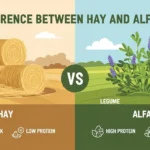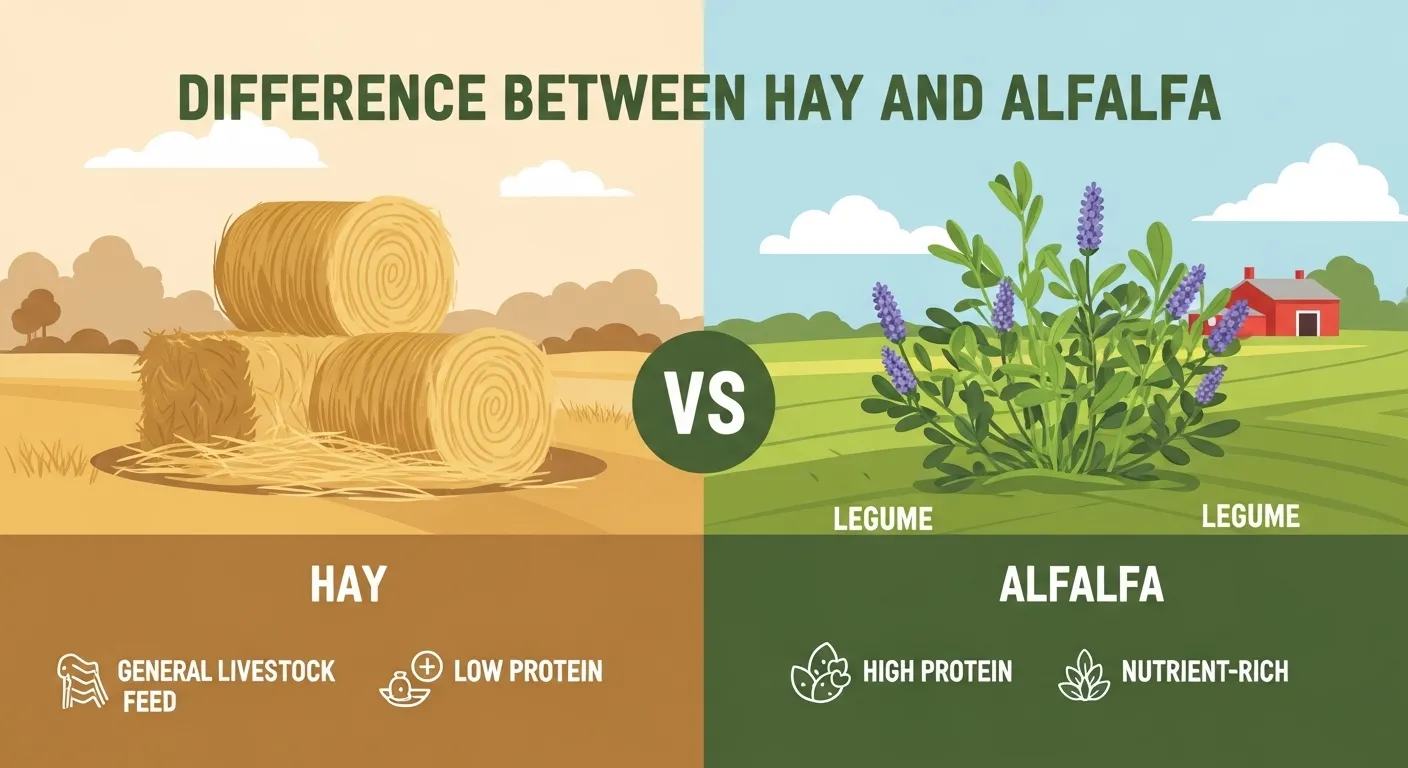
Hay and alfalfa are both used as animal feed, but hay is a general term for dried grasses, while alfalfa is a specific high-protein legume plant.
Understanding the difference between hay and alfalfa is important for farmers, pet owners, and anyone involved in animal care. Imagine feeding livestock or even a pet rabbit, some feeds provide basic nutrition, while others offer higher protein and energy levels.
The difference between hay and alfalfa lies in their type and nutritional value. Hay is a general category of dried grasses like timothy or meadow grass, while Alfalfa is a specific plant known for its rich nutrients. Learning the difference between hay and alfalfa helps ensure animals receive the right diet. By understanding the difference between hay and alfalfa, you can improve animal health and feeding efficiency.
Pronunciation
Hay
US: /heɪ/
Alfalfa
US: /ælˈfælfə/
Key Difference Between the Both
The main difference between hay and alfalfa is that hay is a broad category of dried grasses, while alfalfa is a nutrient-rich legume often considered a type of hay but with higher protein and calcium.
Why Is Their Difference Necessary to Know for Learners and Experts?
Knowing the difference between hay and alfalfa is essential for proper animal nutrition. For beginners, it helps in selecting the right feed. For experts, understanding the difference between hay and alfalfa ensures balanced diets for livestock and pets.
In agriculture and animal care, feeding the wrong type can lead to health issues. Misunderstanding the difference between hay and alfalfa may result in overfeeding nutrients or undernourishment.
Difference Between Hay and Alfalfa
1. Definition
Hay is dried grass used as feed. Alfalfa is a specific legume plant used as feed.
Examples
Hay:
- Timothy hay
- Meadow hay
Alfalfa:
- Alfalfa bales
- Alfalfa pellets
2. Type
Hay is usually grass. Alfalfa is a legume.
Examples
Hay:
- Grass-based
- Fiber-rich
Alfalfa:
- Legume-based
- Protein-rich
3. Nutritional Value
Hay has moderate nutrients. Alfalfa has high protein and calcium.
Examples
Hay:
- Balanced diet
- Lower protein
Alfalfa:
- High protein
- High calcium
4. Protein Content
Hay contains less protein. Alfalfa contains more protein.
Examples
Hay:
- Suitable for maintenance
- Adult animals
Alfalfa:
- Growth support
- Young animals
5. Calcium Levels
Hay has lower calcium. Alfalfa has higher calcium.
Examples
Hay:
- Safe for regular feeding
- Prevents excess minerals
Alfalfa:
- Good for growth
- Risk of excess if overfed
6. Digestibility
Hay is easy to digest. Alfalfa is richer and heavier.
Examples
Hay:
- Daily diet
- Light digestion
Alfalfa:
- Energy-rich
- Heavier digestion
7. Usage
Hay is used for daily feeding. Alfalfa is used for special dietary needs.
Examples
Hay:
- Horses
- Rabbits
Alfalfa:
- Dairy cows
- Growing animals
8. Cost
Hay is generally cheaper. Alfalfa is more expensive.
Examples
Hay:
- Budget-friendly
- Widely available
Alfalfa:
- Higher cost
- Premium feed
9. Availability
Hay is widely available. Alfalfa is more region-specific.
Examples
Hay:
- Found everywhere
- Easy to store
Alfalfa:
- Grown in specific areas
- Requires care
10. Purpose
Hay is for maintenance feeding. Alfalfa is for growth and production.
Examples
Hay:
- Daily nutrition
- Maintenance
Alfalfa:
- Milk production
- Weight gain
Nature and Behaviour of Both
Hay is simple, fiber-rich, and suitable for regular feeding. Alfalfa is nutrient-dense, rich in protein and minerals, and used for boosting growth and productivity.
Why People Are Confused About Their Use?
People often confuse hay and alfalfa because alfalfa is sometimes called “alfalfa hay.” However, the key difference is that hay is a category, while alfalfa is a specific plant.
Table Showing Difference and Similarity
| Feature | Hay | Alfalfa | Similarity |
| Type | Grass | Legume | Animal feed |
| Protein | Low | High | Nutritious |
| Calcium | Low | High | Used in farming |
| Cost | Lower | Higher | Dried feed |
| Use | Daily diet | Growth support | Livestock care |
Which Is Better in What Situation?
Hay
Hay is better for daily feeding, especially for adult animals that need a balanced and fiber-rich diet.
Alfalfa
Alfalfa is better for young, growing, pregnant, or high-producing animals that require extra protein and nutrients.
How the Keywords Are Used in Metaphors and Similes
Examples:
- “His routine was like hay—simple and steady.”
- “Her energy was like alfalfa—rich and powerful.”
Connotative Meaning
Hay
Connotation: Simplicity, stability.
Example:
“It was a hay-like lifestyle—basic and consistent.”
Alfalfa
Connotation: Strength, richness.
Example:
“He had alfalfa-level energy—strong and active.”
Idioms or Proverbs Related to the Words
Make hay while the sun shines
Example:
“Farmers make hay while the sun shines to prepare for winter.”
Works in Literature
Hay is often mentioned in rural and farming literature, while alfalfa appears in agricultural studies and farming guides.
Movie Names Made on the Keywords
- The Little Rascals (1994, USA) – features a character named Alfalfa
Five Frequently Asked Questions
1. What is the main difference between hay and alfalfa?
Hay is dried grass, while alfalfa is a nutrient-rich legume.
2. Is alfalfa a type of hay?
Yes, but it is more nutritious.
3. Which is better for rabbits?
Hay for adults, alfalfa for young rabbits.
4. Why is alfalfa more expensive?
Due to higher nutritional value.
5. Can animals eat both?
Yes, depending on their needs.
How Both Are Useful for Surroundings
Both hay and alfalfa play a vital role in agriculture by supporting livestock health, improving productivity, and maintaining food supply systems.
Final Words for the Both
Hay and alfalfa are essential animal feeds, each serving different nutritional purposes.
Conclusion
The difference between hay and alfalfa lies in their type, nutritional content, and usage. Hay is a general term for dried grasses used for daily feeding, while alfalfa is a protein-rich legume used for growth and high-energy needs. Understanding the difference between hay and alfalfa helps ensure proper animal care and feeding. By learning the difference between hay and alfalfa, you can make better decisions in agriculture and pet care.

I’m Shabbir Hussain, a professional content writer who specializes in clear and authentic comparisons between similar terms. I write concise, research-based, and reader-friendly content that turns complex language into simple explanations. Through Mysynonyms.com, I help readers strengthen their vocabulary and clearly understand word differences.