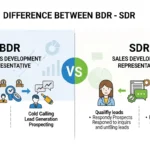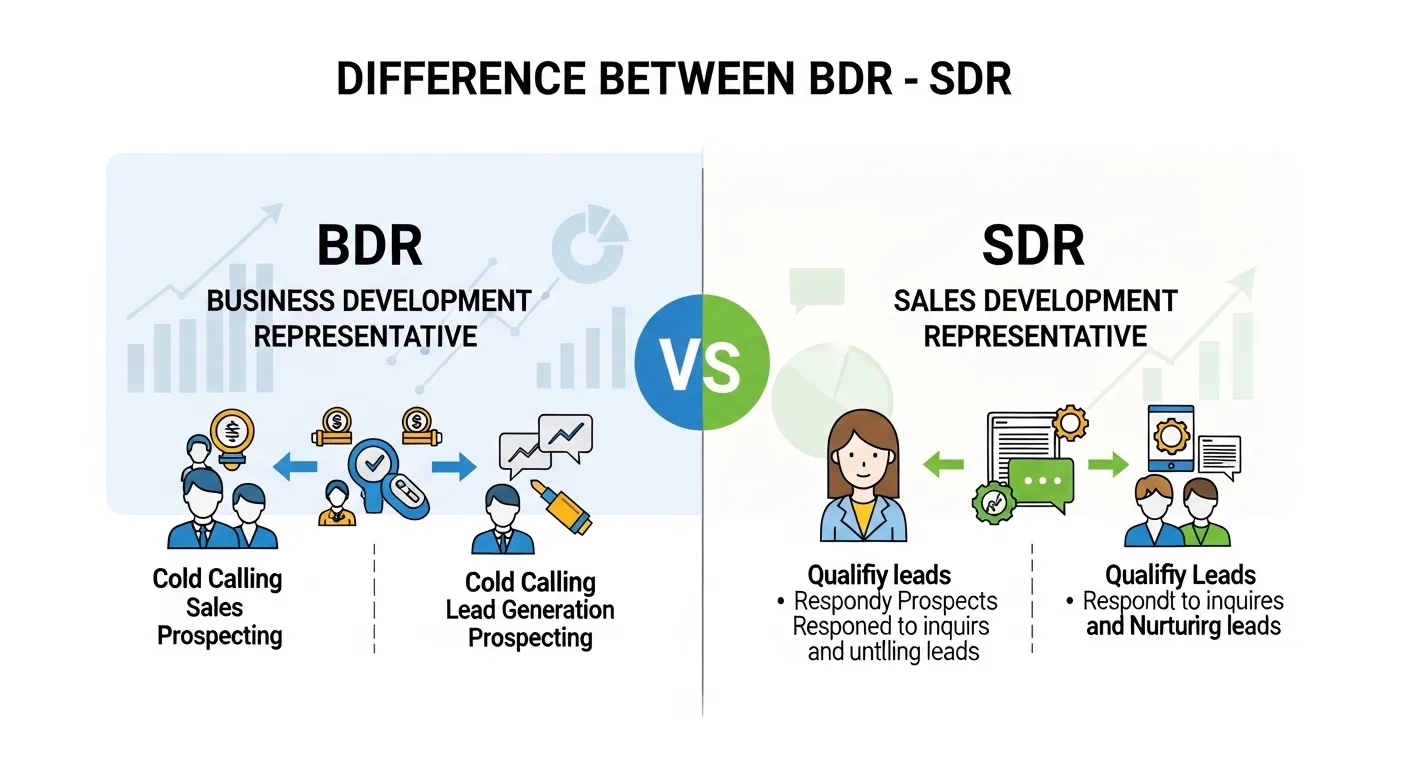
BDR and SDR are both sales roles, but an SDR focuses on qualifying inbound leads, while a BDR focuses on generating outbound opportunities and building new business relationships.
Understanding the difference between BDR and SDR is essential for anyone entering sales or business development. Imagine a company trying to grow, some team members respond to interested customers, while others actively reach out to find new opportunities. Both roles are crucial but serve different purposes.
The difference between BDR and SDR lies in how they approach potential customers. Sales Development Representative (SDR) typically handles inbound leads, people who have already shown interest. On the other hand, Business Development Representative (BDR) focuses on outbound efforts, reaching out to new prospects to create opportunities. Knowing the difference between BDR and SDR helps businesses structure their sales teams effectively. By understanding the difference between BDR and SDR, individuals can choose the right career path in sales.
Pronunciation
BDR
US: /ˌbiːˌdiːˈɑːr/
SDR
US: /ˌɛsˌdiːˈɑːr/
Key Difference Between the Both
The main difference between BDR and SDR is that SDRs handle inbound leads and qualify them, while BDRs generate outbound leads and build new business opportunities.
Why Is Their Difference Necessary to Know for Learners and Experts?
Knowing the difference between BDR and SDR is important for both job seekers and organizations. For learners, it helps identify career roles in sales. For companies, understanding the difference between BDR and SDR improves team efficiency and revenue generation.
In modern business environments, lead generation and conversion are critical. Misunderstanding the difference between BDR and SDR can lead to poor sales strategies and missed opportunities.
Difference Between BDR and SDR
1. Definition
SDR focuses on inbound lead qualification. BDR focuses on outbound lead generation.
Examples
SDR:
- Responds to website inquiries
- Qualifies marketing leads
BDR:
- Cold calls prospects
- Sends outreach emails
2. Lead Source
SDR works with inbound leads. BDR works with outbound leads.
Examples
SDR:
- Demo requests
- Sign-up inquiries
BDR:
- Cold outreach
- Prospect lists
3. Primary Goal
SDR aims to qualify leads. BDR aims to create new opportunities.
Examples
SDR:
- Book meetings
- Filter prospects
BDR:
- Generate leads
- Expand pipeline
4. Approach
SDR uses reactive approach. BDR uses proactive approach.
Examples
SDR:
- Responds to interest
- Follows up leads
BDR:
- Initiates contact
- Finds new clients
5. Skills Required
SDR needs communication and qualification skills. BDR needs prospecting and persuasion skills.
Examples
SDR:
- Listening skills
- Customer understanding
BDR:
- Cold calling
- Negotiation
6. Tools Used
SDR uses CRM and inbound tools. BDR uses outreach and prospecting tools.
Examples
SDR:
- CRM systems
- Lead tracking
BDR:
- Email automation
- Prospect databases
7. Work Style
SDR works with warm leads. BDR works with cold leads.
Examples
SDR:
- Interested customers
- Ready prospects
BDR:
- Unknown prospects
- New contacts
8. Difficulty Level
SDR role is relatively easier. BDR role is more challenging.
Examples
SDR:
- Engaged audience
- Higher response rate
BDR:
- Cold audience
- Lower response rate
9. Career Path
Both roles lead to sales careers but differ in experience gained.
Examples
SDR:
- Moves to account executive
- Customer-focused growth
BDR:
- Moves to business development manager
- Strategy-focused growth
10. Contribution to Sales Funnel
SDR works in middle of funnel. BDR works at top of funnel.
Examples
SDR:
- Qualifies leads
- Passes to sales team
BDR:
- Creates pipeline
- Feeds leads
Nature and Behaviour of Both
SDRs are responsive and analytical, focusing on understanding customer needs. BDRs are proactive and persuasive, focusing on creating opportunities from scratch.
Why People Are Confused About Their Use?
People often confuse SDR and BDR because both roles involve lead generation and early-stage sales. However, the key difference is inbound versus outbound focus.
Table Showing Difference and Similarity
| Feature | SDR | BDR | Similarity |
| Lead Type | Inbound | Outbound | Sales roles |
| Approach | Reactive | Proactive | Lead generation |
| Goal | Qualification | Opportunity creation | Revenue growth |
| Audience | Warm leads | Cold leads | Customer interaction |
| Funnel Stage | Middle | Top | Sales process |
Which Is Better in What Situation?
SDR
SDR is better when a company receives many inbound leads and needs efficient qualification and follow-up.
BDR
BDR is better when a company wants to expand its market and actively reach new customers.
How the Keywords Are Used in Metaphors and Similes
Examples:
- “He worked like an SDR—responsive and efficient.”
- “She acted like a BDR—bold and proactive.”
Connotative Meaning
SDR
Connotation: Supportive, responsive.
Example:
“He handled queries like an SDR, quick and helpful.”
BDR
Connotation: Ambitious, proactive.
Example:
“She approached growth like a BDR, fearless and driven.”
Idioms or Proverbs Related to the Words
Make the first move
Example:
“A BDR must make the first move to win clients.”
Works in Literature
BDR and SDR roles are discussed in modern business books, sales guides, and marketing strategies.
Movie Names Made on the Keywords
There are no movies directly based on BDR or SDR roles.
Five Frequently Asked Questions
1. What is the main difference between BDR and SDR?
SDR handles inbound leads, while BDR focuses on outbound prospecting.
2. Which role is harder?
BDR is generally more challenging.
3. Can SDR become BDR?
Yes, with experience.
4. Which role earns more?
Both can earn well depending on performance.
5. Which is better for beginners?
SDR is often easier to start with.
How Both Are Useful for Surroundings
Both BDRs and SDRs are essential for business growth. They help companies generate leads, build relationships, and increase revenue.
Final Words for the Both
BDR and SDR roles complement each other and are both crucial in the sales process.
Conclusion
The difference between BDR and SDR lies in their approach and role in the sales funnel. SDRs focus on qualifying inbound leads, while BDRs focus on generating outbound opportunities. Understanding the difference between BDR and SDR helps businesses optimise their sales strategy and helps individuals choose the right career path. By learning the difference between BDR and SDR, you can better understand modern sales systems.
Understanding the difference between BDR and SDR is essential for building a strong and efficient sales pipeline. While both roles focus on generating opportunities, BDRs (Business Development Representatives) typically handle outbound prospecting and target new markets, whereas SDRs (Sales Development Representatives) often manage inbound leads and qualify potential customers.
In the end, choosing the right approach, or combining both, depends on your company’s goals, target audience, and sales strategy. By leveraging the strengths of both BDRs and SDRs, organisations can create a balanced and results-driven sales process.

I’m Shabbir Hussain, a professional content writer who specializes in clear and authentic comparisons between similar terms. I write concise, research-based, and reader-friendly content that turns complex language into simple explanations. Through Mysynonyms.com, I help readers strengthen their vocabulary and clearly understand word differences.