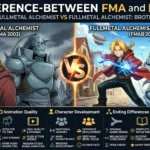
The difference between FMA and FMAB is that FMA follows its own original storyline after diverging from the manga, while FMAB closely follows the original manga from beginning to end.
Understanding the difference between FMA and FMAB is essential for anime fans, especially those starting the legendary Fullmetal Alchemist franchise for the first time. Many viewers become confused because both series share similar characters, settings, and early story arcs. However, despite these similarities, the difference between FMA and FMAB becomes very noticeable as the stories progress.
The franchise is based on the manga created by Hiromu Arakawa. The first anime adaptation, commonly called FMA, aired in 2003 before the manga was completed. Because the source material was unfinished, the anime eventually created its own storyline and ending. Years later, Fullmetal Alchemist: Brotherhood (FMAB) was released as a more faithful adaptation of the manga.
Learning the difference between FMA and FMAB helps viewers decide which version matches their preferences. Some fans enjoy the darker, more emotional tone of FMA, while others prefer FMAB’s complete and manga-accurate story. By understanding the difference between FMA and FMAB, anime fans can appreciate why both series remain highly respected in anime history.
Pronunciation
FMA
Spoken as initials: /ˌef.emˈeɪ/
FMAB
Spoken as initials: /ˌef.em.eɪˈbiː/
Key Difference Between the Both
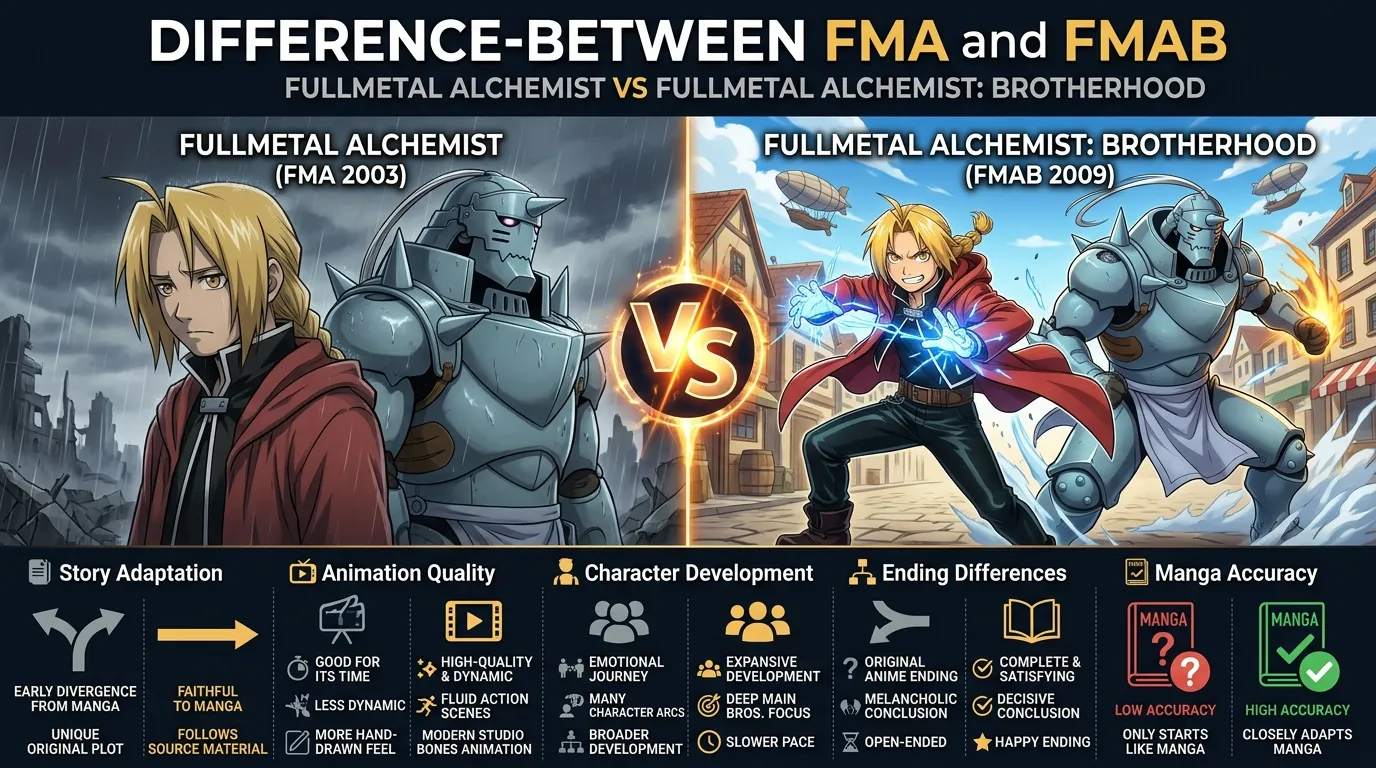
The main difference between FMA and FMAB is that FMA develops an anime-original storyline after diverging from the manga, while FMAB follows the manga almost completely.
Why Is Their Difference Important?
Knowing the difference between FMA and FMAB is important because the two series provide very different viewing experiences despite sharing the same premise.
For new viewers, understanding the difference between FMA and FMAB helps avoid confusion regarding:
- Story continuity
- Character development
- Endings
- Themes
Fans often debate which adaptation is better, so understanding the difference between FMA and FMAB allows viewers to form informed opinions.
Difference Between FMA and FMAB
1. Release Year
FMA was released in 2003.
FMAB was released in 2009.
Examples
FMA:
- Earlier adaptation
- Produced before manga completion
FMAB:
- Later adaptation
- Manga-complete version
2. Storyline
FMA eventually creates its own original plot.
FMAB closely follows the manga storyline.
Examples
FMA:
- Anime-exclusive ending
- Unique plot twists
FMAB:
- Manga-faithful story
- Canon conclusion
3. Tone
FMA has a darker and slower emotional tone.
FMAB balances emotion with action and humor.
4. Pacing
FMA develops slowly with detailed early storytelling.
FMAB moves faster in the beginning because it assumes familiarity with the story.
5. Ending
FMA has a completely different ending.
FMAB ends similarly to the manga.
6. Character Development
Both series develop characters well, but in different ways.
Examples
FMA:
- Focus on emotional depth
- More personal drama
FMAB:
- Larger cast involvement
- Broader world-building
7. Villains
The antagonists differ significantly between the two versions.
Examples
FMA:
- Different villain motivations
- Anime-original developments
FMAB:
- Manga-accurate antagonists
- Expanded lore
8. Animation Style
FMAB generally has more modern animation and smoother action scenes.
FMA reflects early-2000s animation styles.
9. Themes
FMA emphasizes tragedy, sacrifice, and psychological struggles.
FMAB emphasizes hope, teamwork, and perseverance.
10. Popularity
Both are highly popular, but FMAB is often ranked among the greatest anime of all time.
Nature and Style of Both Series
The difference between FMA and FMAB is not simply about story accuracy—it also involves atmosphere and storytelling philosophy.
FMA focuses heavily on emotional realism and philosophical darkness. It explores grief, guilt, and consequences in a slower and more intimate way.
FMAB focuses on adventure, larger-scale conflicts, and satisfying character arcs. It combines action, humor, and emotional storytelling while maintaining loyalty to the manga.
Why People Are Confused?
People often become confused about the difference between FMA and FMAB because:
- Both begin with the same characters
- The early episodes are similar
- Both share the same world and premise
However, once FMA surpasses the unfinished manga material, its story changes dramatically. FMAB later retells the story using the completed manga as its guide.
Comparison Table
| Feature | FMA | FMAB | Similarity |
| Release | 2003 | 2009 | Same franchise |
| Story | Anime-original later | Manga-faithful | Same characters |
| Tone | Darker | More balanced | Emotional themes |
| Ending | Original | Manga ending | Alchemy world |
| Animation | Older style | Modern style | Action anime |
Which Is Better in What Situation?
FMA
FMA may be better for viewers who:
- Prefer darker storytelling
- Enjoy emotional drama
- Like slower pacing
Best For
- Psychological anime fans
- Viewers interested in alternative storytelling
FMAB
FMAB may be better for viewers who:
- Want the complete manga story
- Prefer faster pacing
- Enjoy epic action and world-building
Best For
- New anime fans
- Adventure and action lovers
Major Storytelling Differences
One of the biggest aspects of the difference between FMA and FMAB is how each handles:
- Homunculi
- Philosophical themes
- Character arcs
- Final conflicts
In FMA, several plot points are entirely original because the manga had not finished. FMAB, however, uses the manga’s intended direction and final resolution.
Animation and Music
FMA
Features:
- Early 2000s animation style
- Moody soundtrack
- Dark atmosphere
FMAB
Features:
- Cleaner visuals
- Dynamic fight scenes
- Energetic soundtrack
Many fans praise FMAB for its animation quality, though FMA’s atmosphere is often appreciated for emotional storytelling.
Viewing Order Recommendation
Many anime fans suggest:
- Watching FMA first for emotional depth
- Watching FMAB second for the complete canon story
Others recommend starting directly with FMAB because it follows the manga accurately.
Understanding the difference between FMA and FMAB helps viewers choose the approach they prefer.
Cultural Impact
Both anime series had enormous influence on anime culture worldwide.
Fullmetal Alchemist introduced many viewers to mature storytelling in anime, while Fullmetal Alchemist: Brotherhood became one of the highest-rated anime series internationally.
Frequently Asked Questions
1. What is the main difference between FMA and FMAB?
FMA has an original storyline later on, while FMAB follows the manga.
2. Which version follows the manga?
FMAB.
3. Is FMA still worth watching?
Yes, many fans love its darker storytelling and emotional tone.
4. Which version has better animation?
FMAB.
5. Which should beginners watch first?
Most people recommend FMAB, though some prefer starting with FMA.
Real-Life Importance for Anime Fans
Understanding the difference between FMA and FMAB helps anime fans:
- Choose the right viewing experience
- Understand fan discussions
- Appreciate adaptation differences
- Explore storytelling techniques
It also demonstrates how the same source material can create two very different but successful adaptations.
Conclusion
The difference between FMA and FMAB lies mainly in storyline accuracy, tone, pacing, and overall direction. FMA begins similarly to the manga but later develops an anime-original story with a darker emotional atmosphere. FMAB closely follows the completed manga and provides a faster-paced, action-filled, and canon-faithful experience.
Both series are respected masterpieces in anime history. Understanding the difference between FMA and FMAB allows viewers to appreciate the strengths of each adaptation and choose the version that best matches their personal preferences.

I’m Shabbir Hussain, a professional content writer who specializes in clear and authentic comparisons between similar terms. I write concise, research-based, and reader-friendly content that turns complex language into simple explanations. Through Mysynonyms.com, I help readers strengthen their vocabulary and clearly understand word differences.