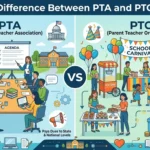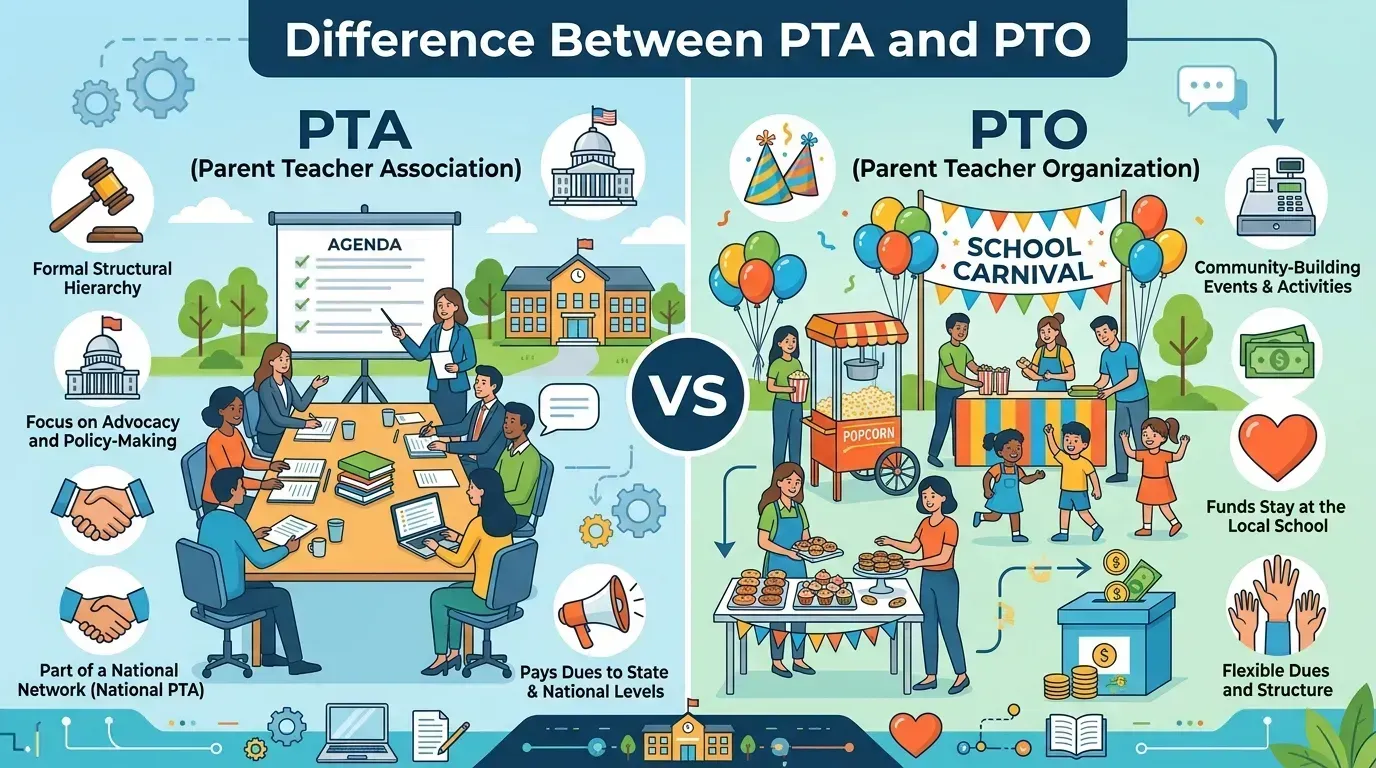
The difference between PTA and PTO is that PTA is a nationally affiliated parent-teacher organisation with membership rules and structure, while PTO is an independent school-based organisation that operates without national affiliation.
Understanding the difference between PTA and PTO is important for parents, teachers, and school administrators who want to become involved in school communities. At first glance, these two organizations may seem almost identical because both support schools, organize events, and encourage parental involvement. However, the difference between PTA and PTO becomes clear when you examine their structure, affiliation, and operational flexibility.
Both groups aim to improve student experiences and strengthen communication between families and schools. The National Parent Teacher Association (PTA) is a nationally recognized organization with state and local branches operating under a structured framework. In contrast, a PTO, or Parent Teacher Organization, is usually an independent local group created specifically for one school.
Learning the difference between PTA and PTO helps parents decide how they want to participate in school activities and fundraising efforts. By understanding the difference between PTA and PTO, schools can also choose the organizational model that best fits their goals and community needs.
Pronunciation
PTA
Spoken as initials: /ˌpiː.tiːˈeɪ/
PTO
Spoken as initials: /ˌpiː.tiːˈoʊ/
Key Difference Between the Both
The main difference between PTA and PTO is that PTA operates under a national organization with formal guidelines, while PTO functions independently without national oversight.
Why Is Their Difference Important?
Knowing the difference between PTA and PTO is important because each organization works differently in terms of funding, leadership, membership, and decision-making.
For parents, understanding the difference between PTA and PTO helps determine how school involvement works. For schools, choosing between a PTA and PTO affects administrative structure, costs, and flexibility.
Without understanding the difference between PTA and PTO, people may assume the organizations are identical even though they operate in different ways.
Difference Between PTA and PTO
1. Full Form
PTA stands for Parent Teacher Association.
PTO stands for Parent Teacher Organization.
Examples
PTA:
- Nationally affiliated association
PTO:
- Independent school organization
2. National Affiliation
PTA is connected to a national organisation.
PTO operates independently.
Examples
PTA:
- State and national memberships
- Formal network
PTO:
- Local control
- School-specific operations
3. Membership Fees
PTA usually requires dues or membership fees.
PTO may not require national membership fees.
4. Organizational Structure
PTA follows official bylaws and policies.
PTO creates its own rules and structure.
5. Flexibility
PTO generally offers more operational flexibility.
PTA must follow national guidelines.
6. Advocacy Role
PTA often participates in educational advocacy at state and national levels.
PTO mainly focuses on local school activities.
Examples
PTA:
- Education policy discussions
- National campaigns
PTO:
- School fundraising
- Classroom support
7. Decision-Making
PTA decisions may involve national standards.
PTO decisions are controlled locally.
8. Use of Funds
PTA may send a portion of dues to state or national offices.
PTO typically keeps all funds within the school.
9. Training and Resources
PTA provides official training programs and nationwide resources.
PTO resources depend on local organization efforts.
10. Popularity
Both are widely used in schools, though preferences vary by region and school leadership.
Nature and Purpose of Both
The difference between PTA and PTO does not change their overall mission. Both organizations aim to:
- Support students
- Encourage parental involvement
- Improve communication between families and schools
- Organize educational and social events
The primary difference between PTA and PTO lies in structure and administration rather than purpose.
Why People Are Confused?
People are often confused about the difference between PTA and PTO because both groups perform similar activities. They organize:
- Fundraisers
- School events
- Volunteer programs
- Teacher support activities
Since their goals overlap, many parents assume PTA and PTO are simply different names for the same thing.
Comparison Table
| Feature | PTA | PTO | Similarity |
| Meaning | Parent Teacher Association | Parent Teacher Organization | School support groups |
| Affiliation | National | Independent | Parent involvement |
| Structure | Formal | Flexible | School activities |
| Fees | National dues | Usually local-only | Fundraising |
| Focus | Local + advocacy | Mainly local | Student support |
Historical Background
The National Parent Teacher Association was founded in the late 19th century to improve child welfare and education. Over time, it became a nationwide organization with local branches across schools.
PTOs emerged later as independent alternatives that allowed schools greater flexibility and local control without national oversight.
This history explains an important part of the difference between PTA and PTO today.
Advantages and Disadvantages
Advantages of PTA
- National support network
- Advocacy opportunities
- Training resources
- Structured organization
Disadvantages
- Membership fees
- Less flexibility
- National rules must be followed
Advantages of PTO
- Greater independence
- Local control of funds
- Flexible operations
- Customizable structure
Disadvantages
- Limited national support
- Fewer training resources
- Less influence in educational advocacy
Which Is Better in What Situation?
PTA
PTA may be better for schools that:
- Want national resources
- Value educational advocacy
- Prefer structured systems
Best For:
- Large school districts
- Schools seeking statewide influence
PTO
PTO may be better for schools that:
- Want local independence
- Prefer flexibility
- Want to keep all fundraising money local
Best For:
- Smaller communities
- Schools with unique local needs
Real-Life Activities of PTA and PTO
Both PTA and PTO commonly organize:
- Book fairs
- Teacher appreciation events
- School carnivals
- Fundraising campaigns
- Volunteer opportunities
This shared involvement is another reason people confuse the difference between PTA and PTO.
Educational Importance
The difference between PTA and PTO matters because parent involvement strongly influences educational success.
Research often shows that active family participation can improve:
- Student performance
- Attendance
- School culture
- Communication between parents and teachers
Whether through PTA or PTO, involvement benefits schools and students alike.
Frequently Asked Questions
1. What is the main difference between PTA and PTO?
PTA is nationally affiliated, while PTO is independent.
2. Which organization is more flexible?
PTO.
3. Does PTA require membership fees?
Yes, in most cases.
4. Do both support schools?
Yes, both focus on helping students and schools.
5. Which is more common?
Both are common, depending on the school and region.
Real-Life Importance
Understanding the difference between PTA and PTO helps parents participate more effectively in school communities. It also helps schools choose an organizational system that matches their goals and resources.
Both organizations play a valuable role in building stronger educational environments.
Conclusion
The difference between PTA and PTO mainly lies in structure, affiliation, and flexibility. PTA is connected to a national organization with formal rules, membership dues, and advocacy programs. PTO operates independently, allowing schools greater freedom and local control.
Although there is a clear difference between PTA and PTO, both organisations share the same overall mission: supporting students, teachers, and schools. By understanding the difference between PTA and PTO, parents and educators can make informed decisions about school involvement and community engagement.

I’m Shabbir Hussain, a professional content writer who specializes in clear and authentic comparisons between similar terms. I write concise, research-based, and reader-friendly content that turns complex language into simple explanations. Through Mysynonyms.com, I help readers strengthen their vocabulary and clearly understand word differences.