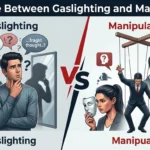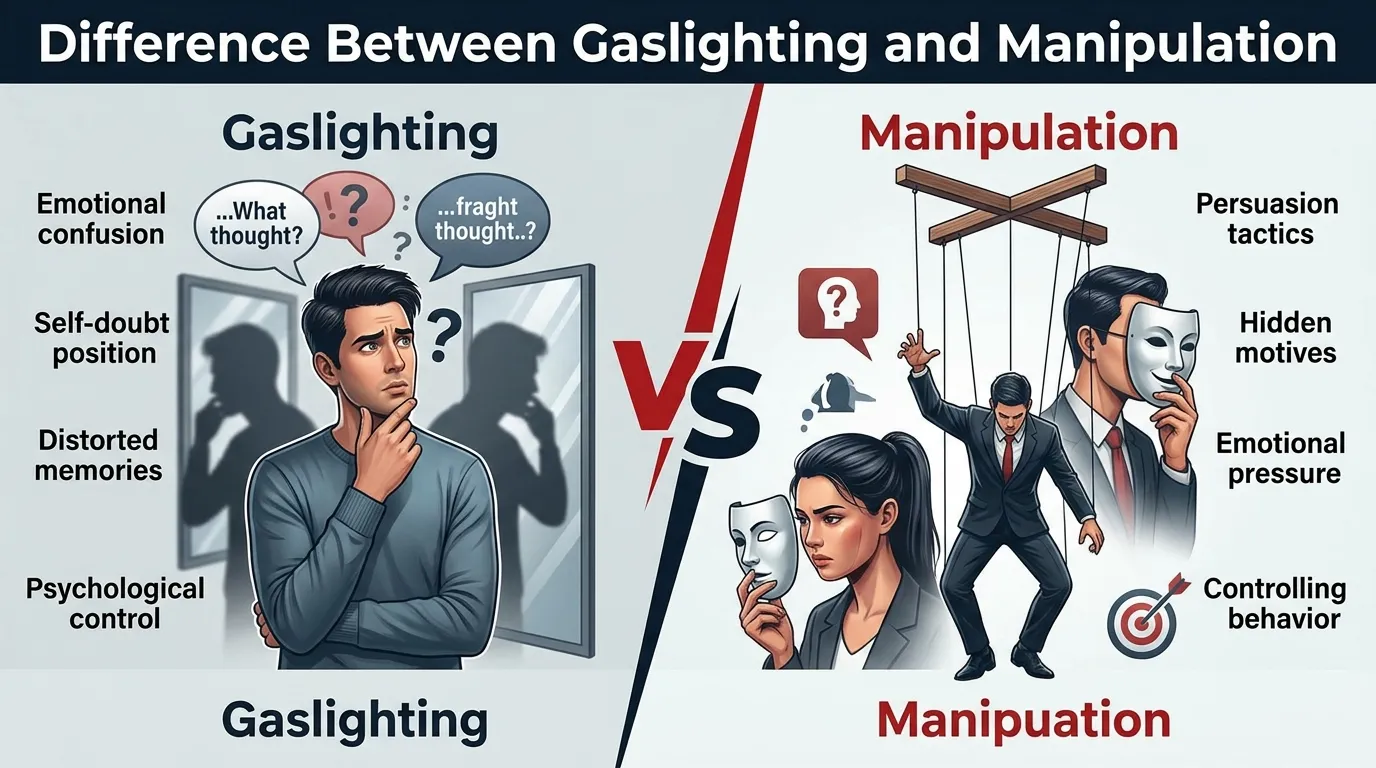
The difference between gaslighting and manipulation is that manipulation involves influencing someone’s behavior or decisions for personal gain, while gaslighting is a specific form of psychological manipulation that makes a person question their own memory, perception, or reality.
Understanding the difference between gaslighting and manipulation is important for recognizing unhealthy behavior in relationships, workplaces, friendships, and social environments. Many people use these terms interchangeably, but they are not exactly the same. While both involve influence and control, the difference between gaslighting and manipulation lies in the methods and psychological impact involved.
Manipulation is a broad behavior where someone tries to influence another person’s emotions, actions, or decisions to benefit themselves. This can happen subtly or openly. Gaslighting, however, is more specific and psychologically damaging. The term comes from the play and film Gaslight, where a husband manipulates his wife into doubting her sanity by distorting her perception of reality.
Learning the difference between gaslighting and manipulation helps people recognize toxic patterns and protect their emotional well-being. By understanding the difference between gaslighting and manipulation, individuals can improve communication, establish boundaries, and identify emotionally harmful situations more effectively.
Pronunciation
Gaslighting
US: /ˈɡæsˌlaɪ.tɪŋ/
Manipulation
US: /məˌnɪp.jəˈleɪ.ʃən/
Key Difference Between the Both
The main difference between gaslighting and manipulation is that manipulation aims to influence someone for personal advantage, while gaslighting specifically aims to make someone doubt their own reality, memory, or judgment.
Why Is Their Difference Important?
Knowing the difference between gaslighting and manipulation is important because both behaviors affect emotional and mental health differently.
General manipulation may involve persuasion, guilt, pressure, or emotional tactics. Gaslighting goes further by causing confusion, self-doubt, and emotional instability. Understanding the difference between gaslighting and manipulation helps people identify abusive behaviors before they become deeply harmful.
This knowledge is also valuable in psychology, counseling, communication studies, and relationship education.
Difference Between Gaslighting and Manipulation
1. Definition
Manipulation is influencing someone for personal benefit.
Gaslighting is making someone doubt reality or memory.
Examples
Manipulation:
- Guilt-tripping
- Emotional pressure
Gaslighting:
- Denying past events
- Claiming someone is “imagining things”
2. Scope
Manipulation is a broad category of behavior.
Gaslighting is a specific type of manipulation.
3. Main Goal
Manipulation aims to gain control or advantage.
Gaslighting aims to distort someone’s perception of reality.
4. Psychological Impact
Manipulation may create pressure or guilt.
Gaslighting often creates confusion, anxiety, and self-doubt.
Examples
Manipulation:
- Feeling obligated
Gaslighting:
- Questioning personal sanity or memory
5. Methods Used
Manipulation can involve persuasion, flattery, threats, or guilt.
Gaslighting often involves denial, contradiction, and reality distortion.
6. Awareness of Victim
Victims of manipulation may realize influence is happening.
Victims of gaslighting often become unsure of what is true.
7. Emotional Effects
Manipulation may cause stress or frustration.
Gaslighting can damage confidence and emotional stability.
8. Common Relationships
Both behaviors can occur in:
- Romantic relationships
- Families
- Friendships
- Workplaces
However, gaslighting is especially associated with emotionally abusive relationships.
9. Examples in Daily Life
Manipulation Example
- “If you loved me, you would do this.”
Gaslighting Example
- “That never happened, you’re remembering it wrong.”
10. Long-Term Consequences
Manipulation may strain trust.
Gaslighting can deeply affect mental health and self-perception.
Nature and Characteristics of Both
The difference between gaslighting and manipulation can be understood through intent and intensity.
Manipulation is often about directing someone’s actions. It may involve emotional strategies but does not always attempt to alter reality itself.
Gaslighting is more psychologically invasive because it attacks a person’s confidence in their own thoughts, memories, and perceptions.
Why People Are Confused?
People often confuse the difference between gaslighting and manipulation because gaslighting itself is a form of manipulation.
Since both involve control and influence, the terms are frequently used interchangeably in social media discussions and casual conversations. However, not every manipulative action qualifies as gaslighting.
For example:
- Lying = manipulation
- Convincing someone they are “wild” for remembering the truth = gaslighting
Understanding the difference between gaslighting and manipulation helps clarify these distinctions.
Comparison Table
| Feature | Gaslighting | Manipulation | Similarity |
| Meaning | Distorting reality | Influencing behavior | Psychological control |
| Goal | Cause self-doubt | Gain advantage | Emotional influence |
| Impact | Confusion and anxiety | Pressure or guilt | Harm relationships |
| Method | Denial and distortion | Persuasion tactics | Control tactics |
| Scope | Specific type | Broad category | Emotional behavior |
Examples of Manipulation
Some common manipulation tactics include:
- Guilt-tripping
- Silent treatment
- Flattery for advantage
- Emotional blackmail
- Playing the victim
These methods attempt to influence decisions or behavior.
Examples of Gaslighting
Common gaslighting behaviors include:
- Denying conversations happened
- Rewriting events
- Blaming the victim’s memory
- Saying someone is “too sensitive” repeatedly
- Contradicting obvious facts
These behaviors gradually weaken confidence in personal judgment.
Signs Someone May Be Experiencing Gaslighting
A person experiencing gaslighting may:
- Constantly apologize
- Feel confused often
- Doubt memories
- Feel emotionally unstable
- Depend heavily on another person’s version of events
Recognizing these signs is important when understanding the difference between gaslighting and manipulation.
Psychological Perspective
In psychology, gaslighting is often linked to emotional abuse and unhealthy power dynamics.
Manipulation, meanwhile, exists on a broader spectrum. Some forms are mild and socially common, while others become harmful or abusive depending on intent and severity.
The difference between gaslighting and manipulation is therefore partly about intensity and psychological damage.
Healthy Communication vs Toxic Influence
Healthy communication involves:
- Honesty
- Respect
- Open discussion
- Accountability
Manipulation and gaslighting damage trust because they rely on control rather than mutual understanding.
Understanding the difference between gaslighting and manipulation encourages healthier emotional boundaries and relationships.
Advantages of Recognizing These Behaviors
Learning the difference between gaslighting and manipulation helps people:
- Protect emotional well-being
- Recognize toxic behavior early
- Improve self-awareness
- Build healthier relationships
- Communicate more effectively
Frequently Asked Questions
1. What is the main difference between gaslighting and manipulation?
Manipulation influences behavior, while gaslighting specifically causes someone to doubt reality or memory.
2. Is gaslighting a form of manipulation?
Yes.
3. Can manipulation exist without gaslighting?
Yes.
4. Is gaslighting emotionally harmful?
Yes, it can seriously affect confidence and mental well-being.
5. Do these behaviours only happen in romantic relationships?
No, they can happen in families, friendships, and workplaces as well.
Real-Life Importance
Understanding the difference between gaslighting and manipulation is important in:
- Relationships
- Mental health education
- Workplace communication
- Counseling and therapy
- Conflict resolution
Recognizing these behaviors helps individuals make safer emotional decisions and maintain healthier boundaries.
Conclusion
The difference between gaslighting and manipulation lies mainly in psychological intent and effect. Manipulation is a broad attempt to influence someone’s actions or emotions for personal gain, while gaslighting is a more harmful form of manipulation designed to make someone question their own reality, memory, or sanity.
Although both behaviours involve control, understanding the difference between gaslighting and manipulation helps people recognise emotional harm more clearly and respond more effectively. By learning the difference between gaslighting and manipulation, individuals can improve emotional awareness, strengthen boundaries, and build healthier relationships.