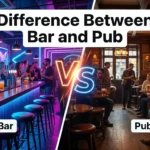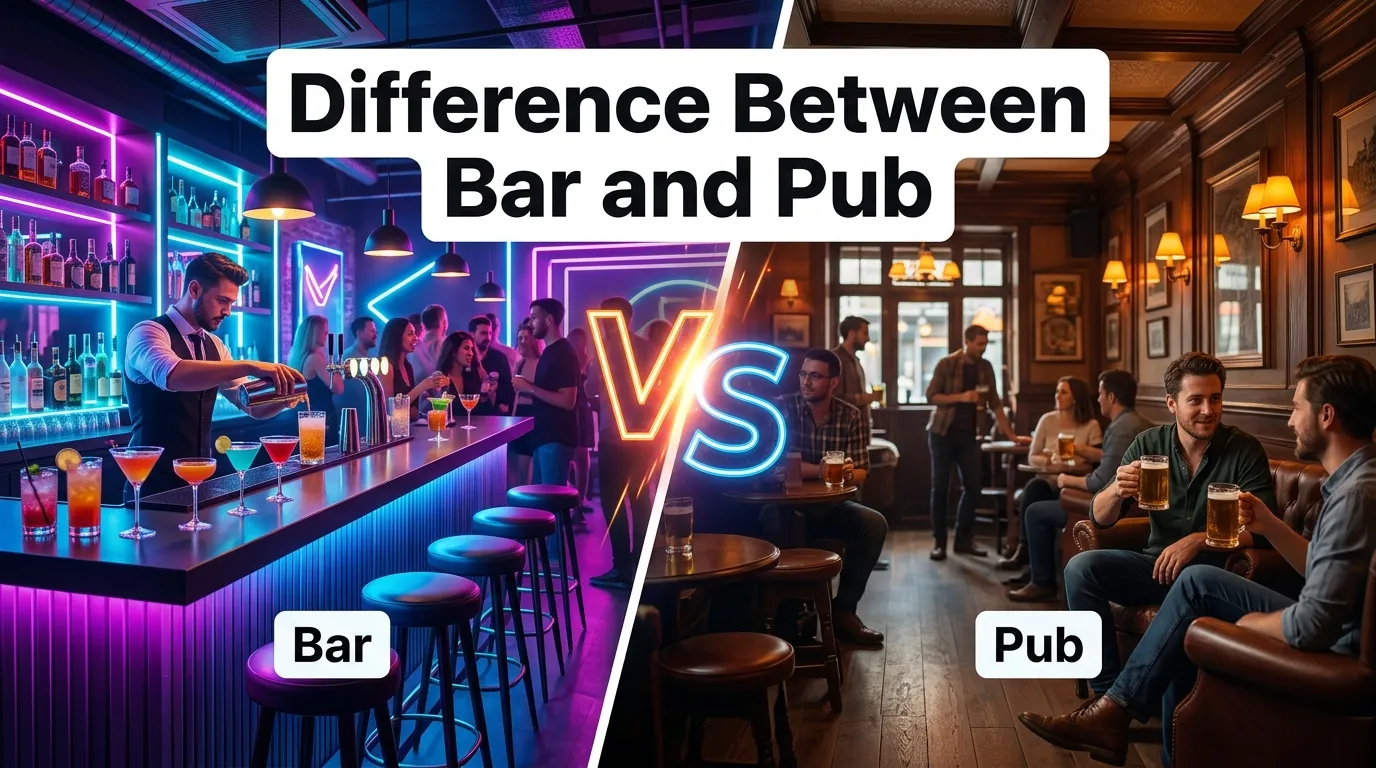
The difference between bar and pub is that a bar mainly focuses on serving alcoholic drinks in a lively social setting, while a pub is a more traditional establishment that combines drinks, food, and a relaxed community atmosphere.
Understanding the difference between bar and pub is important for travelers, English learners, and anyone interested in social culture and hospitality. Although people often use these terms interchangeably, the difference between bar and pub becomes clear when you look at their atmosphere, purpose, history, and customer experience.
A Bar is generally designed around serving alcoholic beverages such as cocktails, beer, wine, and spirits. Bars are often modern, energetic, and entertainment-focused. On the other hand, a Public house, commonly known as a pub, traditionally serves drinks along with meals in a warm and community-oriented environment.
Learning the difference between bar and pub helps people better understand cultural traditions, nightlife experiences, and hospitality terminology. By understanding the difference between bar and pub, you can choose the type of venue that best matches your mood, social activity, or dining preference.
Pronunciation
Bar
US: /bɑːr/
Pub
US: /pʌb/
Key Difference Between the Both
The main difference between bar and pub is that bars mainly emphasize drinks, entertainment, and nightlife, while pubs focus more on relaxed social interaction, traditional food, and community atmosphere.
Why Is Their Difference Important?
Knowing the difference between bar and pub is important because each offers a different social experience.
People looking for:
- Loud music
- Cocktails
- Nightlife entertainment
may prefer a bar.
People looking for:
- Relaxed conversation
- Traditional meals
- Community gatherings
may prefer a pub.
Understanding the difference between bar and pub also helps travelers navigate cultural differences, especially in countries like the United Kingdom, Ireland, and the United States.
Difference Between Bar and Pub
1. Main Purpose
Bars primarily focus on serving alcoholic beverages.
Pubs focus on both drinks and social dining.
Examples
Bar:
- Cocktail service
- Nightlife venue
Pub:
- Beer and meals
- Family-friendly gatherings
2. Atmosphere
Bars are often energetic and modern.
Pubs are usually relaxed and cozy.
Examples
Bar:
- Loud music
- Dance areas
Pub:
- Comfortable seating
- Quiet conversation
3. Food Availability
Bars may offer limited snacks or appetizers.
Pubs commonly serve full meals.
Examples
Bar:
- Finger foods
- Small plates
Pub:
- Burgers
- Traditional comfort foods
4. Cultural Origin
Bars became popular in many modern urban settings.
Pubs originated mainly in the United Kingdom and Ireland.
5. Entertainment Style
Bars often feature DJs, dancing, or live nightlife entertainment.
Pubs may feature trivia nights, sports viewing, or live acoustic music.
6. Customer Experience
Bars focus more on drinks and social excitement.
Pubs focus more on comfort and conversation.
7. Design and Interior
Bars often have sleek or trendy interiors.
Pubs usually have warm, traditional décor.
Examples
Bar:
- Neon lighting
- Modern furniture
Pub:
- Wooden interiors
- Rustic atmosphere
8. Age Group and Crowd
Bars often attract younger nightlife crowds.
Pubs attract a wider age range.
9. Drink Variety
Bars usually specialize in cocktails and mixed drinks.
Pubs often specialize in beer and ale.
Examples
Bar:
- Signature cocktails
- Premium spirits
Pub:
- Draft beers
- Local ales
10. Operating Style
Bars may stay open later and emphasize nightlife.
Pubs often operate more like casual social restaurants.
Nature and Purpose of Both
The difference between bar and pub mainly comes down to social purpose and atmosphere.
Bars are usually designed for:
- Entertainment
- Social excitement
- Nightlife culture
Pubs are traditionally designed for:
- Community interaction
- Relaxed gatherings
- Food and drink together
Both serve alcohol, but the overall experience differs significantly.
Why People Are Confused?
People often confuse the difference between bar and pub because both places:
- Serve alcoholic beverages
- Offer social experiences
- Function as gathering places
In some countries, businesses may even combine features of both. For example, a modern pub may resemble a casual bar, while some bars serve complete meals.
Because of this overlap, the difference between bar and pub is not always obvious.
Comparison Table
| Feature | Bar | Pub | Similarity |
| Main Focus | Drinks & nightlife | Drinks & food | Social venues |
| Atmosphere | Energetic | Relaxed | Serve alcohol |
| Food | Limited | Extensive | Gathering places |
| Origin | Modern urban culture | British tradition | Hospitality businesses |
| Entertainment | DJs & dancing | Conversation & sports | Social interaction |
Historical Background
The concept of the pub comes from the British “public house,” a place where local communities gathered for food, drinks, and conversation.
Bars evolved later as more entertainment-focused establishments emphasizing:
- Cocktails
- Urban nightlife
- Fast-paced social experiences
This historical background explains much of the difference between bar and pub today.
Types of Bars
Some common bar types include:
- Sports bars
- Cocktail bars
- Wine bars
- Rooftop bars
- Nightclubs
Each focuses heavily on drinks and entertainment.
Types of Pubs
Some common pub types include:
- Gastro pubs
- Traditional British pubs
- Irish pubs
- Tavern-style pubs
These usually combine meals with drinks and community interaction.
Advantages and Disadvantages
Advantages of Bars
- Exciting nightlife
- Creative drinks
- Modern entertainment
- Social energy
Disadvantages
- Can be noisy
- More crowded
- Limited food options
Advantages of Pubs
- Relaxed atmosphere
- Better food options
- Comfortable environment
- Community feeling
Disadvantages
- Less energetic nightlife
- Smaller drink variety in some places
Which Is Better in What Situation?
Bar
Bars are better for:
- Celebrations
- Dancing
- Cocktail experiences
- Late-night entertainment
Best For
- Young nightlife crowds
- Parties and events
Pub
Pubs are better for:
- Casual meals
- Friendly conversations
- Watching sports
- Relaxed evenings
Best For
- Families
- Community gatherings
Social and Cultural Importance
The difference between bar and pub also reflects cultural traditions.
Pubs are especially important in British and Irish culture as local community gathering spaces. Bars are more connected with modern nightlife culture in cities worldwide.
Both play major roles in hospitality and social interaction.
Frequently Asked Questions
1. What is the main difference between bar and pub?
Bars mainly focus on drinks and nightlife, while pubs focus on drinks, food, and relaxed social interaction.
2. Do pubs serve alcohol?
Yes.
3. Are bars louder than pubs?
Usually yes.
4. Which is more family-friendly?
Pubs are generally more family-friendly.
5. Can a place be both a bar and a pub?
Yes, some establishments combine features of both.
Real-Life Importance
Understanding the difference between bar and pub helps people:
- Choose the right social environment
- Understand cultural traditions
- Travel more confidently
- Improve hospitality vocabulary
It also helps explain why different venues create different social experiences.
Conclusion
The difference between bar and pub lies mainly in atmosphere, purpose, and cultural tradition. Bars focus more on nightlife, cocktails, and energetic social experiences, while pubs focus on relaxed gatherings, food, and community interaction.
Although there is overlap between the two, understanding the difference between bar and pub helps people choose the setting that best matches their preferences. By learning the difference between bar and pub, readers gain a better understanding of hospitality culture, social environments, and modern entertainment spaces.

I’m Shabbir Hussain, a professional content writer who specializes in clear and authentic comparisons between similar terms. I write concise, research-based, and reader-friendly content that turns complex language into simple explanations. Through Mysynonyms.com, I help readers strengthen their vocabulary and clearly understand word differences.