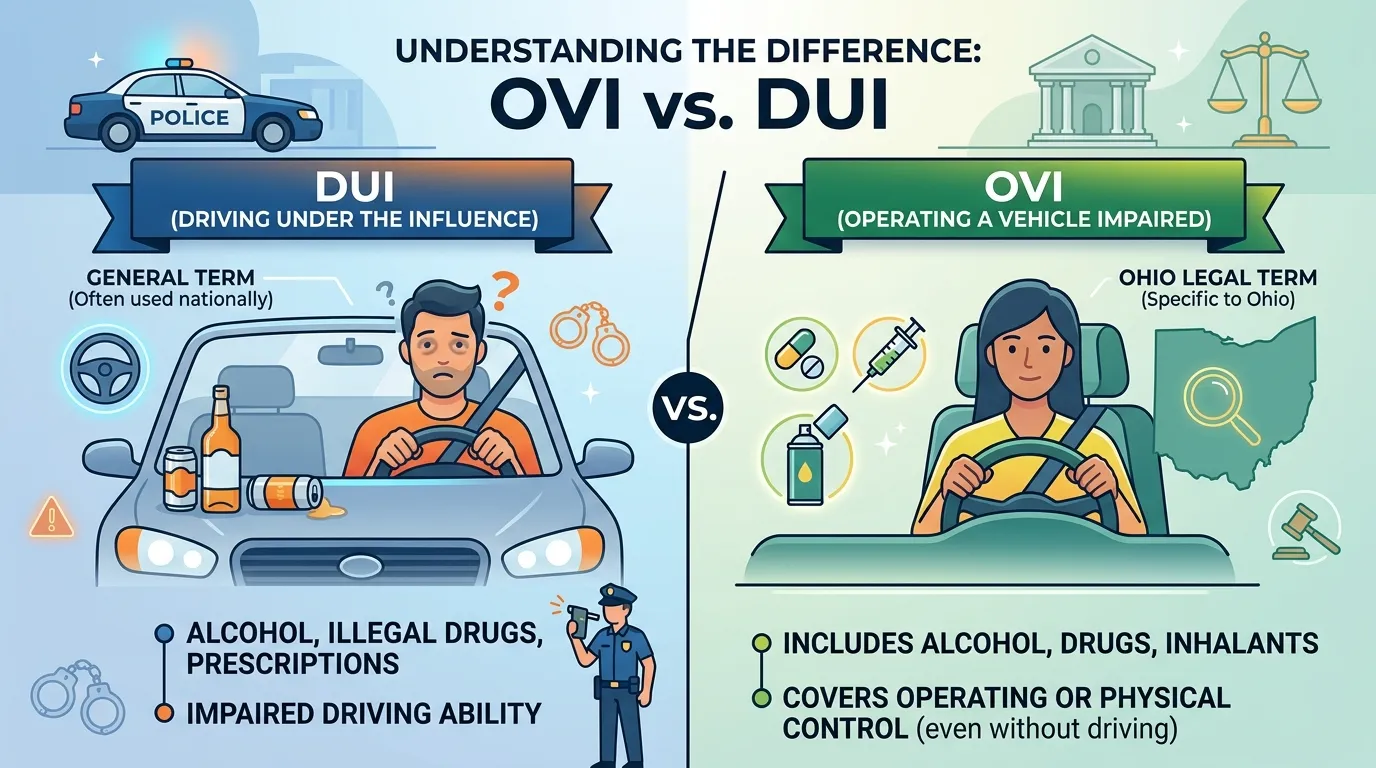
The difference between OVI and DUI mainly depends on legal terminology and state laws. DUI means “Driving Under the Influence,” while OVI means “Operating a Vehicle Impaired.” Both refer to operating a vehicle while impaired by alcohol or drugs, but OVI is a broader legal term used in some states like Ohio.
Understanding the difference between OVI and DUI is important for drivers, students, and anyone learning about traffic laws in the United States. Many people assume these two terms mean completely different offenses, but in reality, they are very similar. The main difference between OVI and DUI lies in legal wording, state usage, and the scope of the offense.
Across the United States, different states use different legal terms for impaired driving offenses. Driving Under the Influence (DUI) is one of the most widely recognized terms and usually refers to driving while impaired by alcohol or drugs. On the other hand, Operating a Vehicle Impaired (OVI) is the term primarily used in Ohio and emphasizes “operating” rather than simply “driving.”
Learning the difference between OVI and DUI helps people better understand legal terminology, traffic regulations, and the consequences of impaired vehicle operation. By understanding the difference between OVI and DUI, individuals can become more informed about road safety and legal responsibilities.
Pronunciation
OVI
Spoken as initials: /ˌoʊ.viːˈaɪ/
DUI
Spoken as initials: /ˌdiː.juːˈaɪ/
Key Difference Between the Both
The main difference between OVI and DUI is that DUI generally means driving under the influence of alcohol or drugs, while OVI refers more broadly to operating a vehicle while impaired and is the official legal term in certain states such as Ohio.
Why Is Their Difference Important?
Knowing the difference between OVI and DUI is important because laws, penalties, and terminology vary by state. Someone charged with an impaired driving offense may encounter different legal language depending on where the incident occurs.
Understanding the difference between OVI and DUI also helps drivers recognize that impaired operation laws apply not only to driving but sometimes to simply operating or controlling a vehicle.
Without understanding the difference between OVI and DUI, legal terminology can become confusing.
Difference Between OVI and DUI
1. Meaning
DUI means “Driving Under the Influence.”
OVI means “Operating a Vehicle Impaired.”
Examples
DUI:
- Driving while intoxicated
- Driving under drug influence
OVI:
- Operating a vehicle while impaired
- Being in physical control of a vehicle while intoxicated
2. State Usage
DUI is used in many US states.
OVI is mainly used in Ohio.
Examples
DUI:
- California
- Florida
- Nevada
OVI:
- Ohio
3. Scope of the Law
DUI focuses on driving.
OVI can include broader operation or control of a vehicle.
4. Legal Interpretation
OVI laws may apply even if the vehicle is not moving.
DUI often emphasizes active driving behavior.
Examples
OVI:
- Sitting in a running vehicle while impaired
DUI:
- Driving on public roads while impaired
5. Alcohol and Drug Coverage
Both DUI and OVI include impairment from:
- Alcohol
- Illegal drugs
- Prescription medications
- Controlled substances
6. Blood Alcohol Concentration (BAC)
Both offenses commonly use BAC limits to determine intoxication.
Examples
Typical legal BAC limit:
- 0.08% for adult drivers
Lower limits may apply to:
- Commercial drivers
- Underage drivers
7. Penalties
Both can lead to:
- Fines
- License suspension
- Jail time
- Mandatory education programs
8. Severity Levels
Both offenses may become more severe depending on:
- Repeat offenses
- High BAC levels
- Injuries or fatalities
9. Law Enforcement Procedures
Police may use:
- Field sobriety tests
- Breath tests
- Blood tests
for both OVI and DUI investigations.
10. Public Understanding
DUI is more widely recognized nationally.
OVI is more state-specific terminology.
Nature and Purpose of Both Laws
The difference between OVI and DUI mainly relates to terminology rather than overall purpose. Both laws exist to:
- Prevent impaired driving
- Protect public safety
- Reduce accidents and fatalities
- Discourage dangerous behavior
The goal of both offenses is to keep roads safer for everyone.
Why People Are Confused?
People often become confused about the difference between OVI and DUI because:
- Both involve alcohol or drug impairment
- Penalties are often similar
- States use different legal terms
Another reason is that many states use related terms such as:
- DUI
- DWI (Driving While Intoxicated)
- OWI (Operating While Intoxicated)
- OUI (Operating Under the Influence)
This variation in terminology creates confusion about whether the offenses are truly different.
Comparison Table
| Feature | OVI | DUI | Similarity |
| Full Form | Operating a Vehicle Impaired | Driving Under the Influence | Impaired driving laws |
| Main Usage | Ohio | Many US states | Alcohol/drug offenses |
| Focus | Operating vehicle | Driving vehicle | Public safety |
| Scope | Broader | Slightly narrower | Legal penalties |
| Recognition | State-specific | Nationally common | Traffic law violations |
Common Causes of OVI and DUI Charges
People may face these charges because of:
- Alcohol consumption
- Drug impairment
- Prescription medication effects
- Reckless behavior
- Poor judgment
Understanding the difference between OVI and DUI also highlights the importance of responsible driving habits.
Legal Consequences
Both OVI and DUI charges can affect:
- Employment opportunities
- Insurance costs
- Driving privileges
- Criminal records
Penalties often increase for repeat offenses.
First-Time vs Repeat Offenses
First-Time Offenses
May involve:
- Fines
- Temporary license suspension
- Education classes
Repeat Offenses
May involve:
- Longer suspensions
- Larger fines
- Jail sentences
- Vehicle restrictions
Importance of Road Safety
The difference between OVI and DUI is less important than the overall message behind both laws: impaired driving is dangerous.
Alcohol and drugs can affect:
- Reaction time
- Decision-making
- Coordination
- Vision
These impairments increase accident risks significantly.
Prevention Tips
To avoid OVI or DUI situations:
- Never drive after drinking
- Use designated drivers
- Use ride-sharing services
- Wait until sober
- Avoid mixing alcohol and medications
Frequently Asked Questions
1. What is the main difference between OVI and DUI?
OVI is a broader legal term used mainly in Ohio, while DUI is a more common national term for impaired driving.
2. Are OVI and DUI basically the same offense?
Yes, both involve operating a vehicle while impaired by alcohol or drugs.
3. Which term is more common?
DUI.
4. Can prescription medication lead to OVI or DUI charges?
Yes.
5. Is OVI only used in Ohio?
Primarily yes.
Real-Life Importance
Understanding the difference between OVI and DUI helps drivers:
- Understand state laws
- Recognize legal responsibilities
- Make safer decisions
- Avoid dangerous situations
It also promotes awareness about impaired driving risks and public safety.
Conclusion
The difference between OVI and DUI mainly lies in terminology and state-specific legal wording. DUI refers to driving under the influence, while OVI refers more broadly to operating a vehicle while impaired. Although the wording differs, both offenses are designed to prevent dangerous impaired driving behavior and protect public safety.
Understanding the difference between OVI and DUI helps individuals better understand traffic laws, legal consequences, and responsible driving practices. By learning the difference between OVI and DUI, drivers can become more informed, safer, and more legally aware on the road.

I’m Shabbir Hussain, a professional content writer who specializes in clear and authentic comparisons between similar terms. I write concise, research-based, and reader-friendly content that turns complex language into simple explanations. Through Mysynonyms.com, I help readers strengthen their vocabulary and clearly understand word differences.