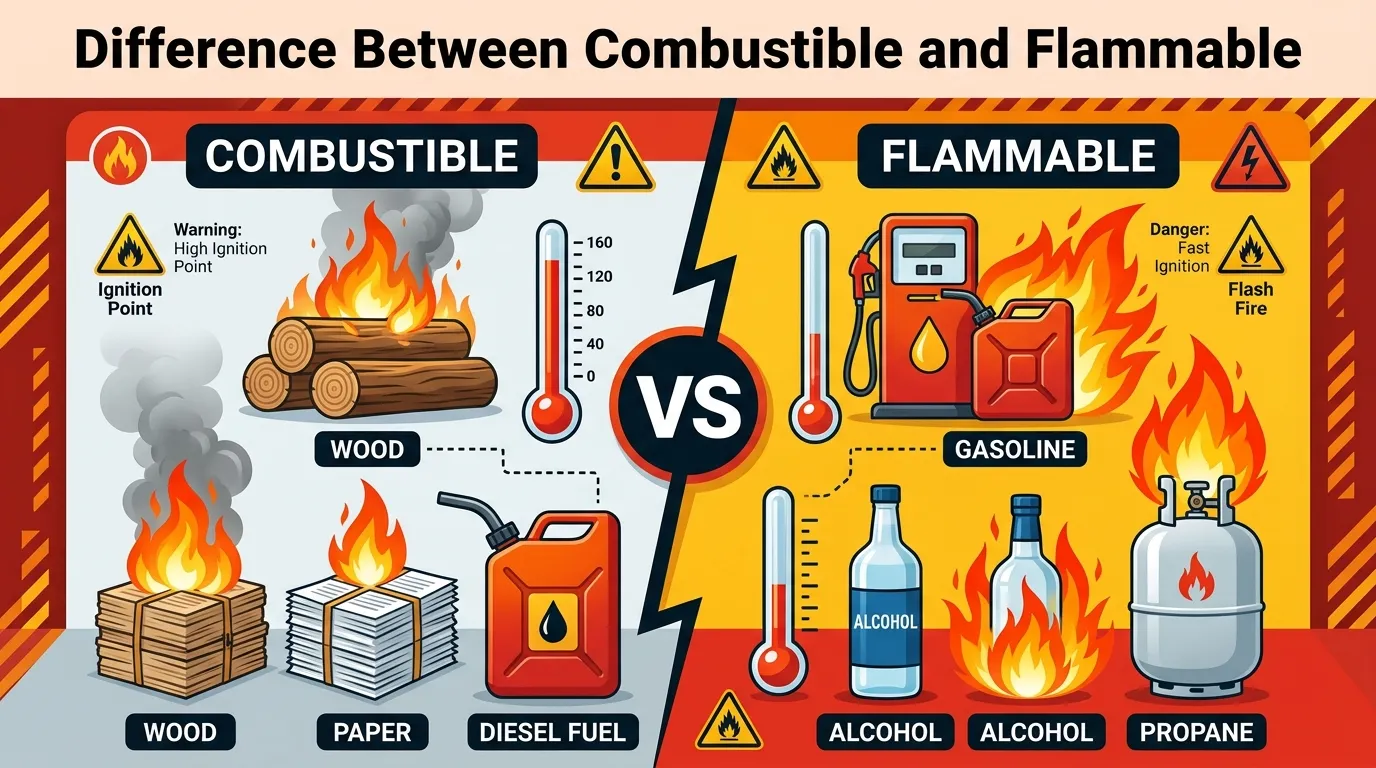
The difference between combustible and flammable is that flammable materials ignite very easily at lower temperatures, while combustible materials can also burn but usually require higher temperatures to catch fire.
Understanding the difference between combustible and flammable is extremely important in safety, chemistry, transportation, construction, and workplace environments. Many people mistakenly think these two terms mean exactly the same thing because both describe substances capable of burning. However, the difference between combustible and flammable mainly depends on how easily a material ignites.
A Flammable material refers to a substance that catches fire quickly at relatively low temperatures. In contrast, a Combustible material can also burn, but it generally requires more heat or a higher ignition temperature before it catches fire.
Learning the difference between combustible and flammable helps improve fire prevention, workplace safety, chemical handling, and emergency preparedness. By understanding the difference between combustible and flammable, individuals and organizations can reduce fire hazards and follow proper safety procedures more effectively.
Pronunciation
Combustible
US: /kəmˈbʌs.tə.bəl/
Flammable
US: /ˈflæm.ə.bəl/
Key Difference Between the Both
The main difference between combustible and flammable is that flammable substances ignite more easily and at lower temperatures, while combustible substances burn only after reaching higher temperatures.
Why Is Their Difference Important?
Knowing the difference between combustible and flammable is important because fire safety regulations often classify materials differently depending on ignition risk.
Flammable materials require:
- Stricter storage rules
- Greater ventilation
- Faster hazard response
Combustible materials are still dangerous, but they are generally considered less likely to ignite under normal conditions.
Understanding the difference between combustible and flammable helps:
- Prevent fires
- Improve workplace safety
- Ensure proper chemical handling
- Follow safety regulations correctly
Difference Between Combustible and Flammable
1. Ease of Ignition
Flammable materials ignite very easily.
Combustible materials require more heat to ignite.
Examples
Flammable:
- Gasoline
- Acetone
Combustible:
- Diesel fuel
- Wood
2. Flash Point
Flammable substances have lower flash points.
Combustible substances have higher flash points.
Examples
Flammable:
- Flash point below specific safety limits
Combustible:
- Flash point above those limits
3. Fire Risk Level
Flammable materials are generally considered more hazardous.
Combustible materials are slightly less volatile.
4. Storage Requirements
Flammable substances often require stricter storage controls.
Combustible materials may have less restrictive handling requirements.
5. Speed of Burning
Flammable materials usually ignite and spread fire quickly.
Combustible materials may burn more slowly after ignition.
6. Common Usage
Flammable is often used for highly volatile liquids or gases.
Combustible applies to broader burnable materials.
7. Workplace Regulations
Safety laws often classify flammable and combustible substances differently.
Examples
Flammable:
- Special warning labels
- Explosion precautions
Combustible:
- General fire safety handling
8. Examples in Daily Life
Flammable Examples
- Alcohol
- Propane
- Paint thinner
Combustible Examples
- Paper
- Cardboard
- Cooking oil
9. Transportation Rules
Flammable substances may face stricter transportation regulations because of higher ignition risk.
10. Hazard Labels
Flammable materials often carry stronger hazard warnings due to easier ignition.
Nature and Characteristics of Both
The difference between combustible and flammable mainly involves ignition temperature and fire risk.
Flammable substances:
- Ignite rapidly
- Require little heat
- Present higher immediate danger
Combustible substances:
- Still burn
- Require greater heat exposure
- Usually ignite less easily
Both types remain fire hazards and must be handled carefully.
Why People Are Confused?
People often confuse the difference between combustible and flammable because:
- Both terms involve burning
- Both describe fire hazards
- Everyday language often uses them interchangeably
Another reason is that many people assume “flammable” means “nonflammable” because of the prefix “inflammable.” However, “inflammable” actually means the same thing as “flammable.”
This confusion makes understanding the difference between combustible and flammable even more important.
Comparison Table
| Feature | Combustible | Flammable | Similarity |
| Ignition Ease | Harder to ignite | Easier to ignite | Both can burn |
| Flash Point | Higher | Lower | Fire hazards |
| Fire Risk | Moderate | Higher | Safety concerns |
| Storage Rules | Less strict | More strict | Require caution |
| Examples | Wood, diesel | Gasoline, propane | Burnable materials |
Flash Point Explained
One major part of the difference between combustible and flammable involves flash point.
A flash point is the lowest temperature at which a substance produces enough vapor to ignite.
General Safety Standard
- Flammable liquids usually have flash points below approximately 100°F (37.8°C).
- Combustible liquids usually have flash points above that level.
Lower flash points mean easier ignition.
Common Flammable Materials
Some common flammable materials include:
- Gasoline
- Ethanol
- Propane
- Nail polish remover
- Aerosol sprays
These substances can ignite quickly even from small sparks.
Common Combustible Materials
Some common combustible materials include:
- Wood
- Fabric
- Paper
- Diesel fuel
- Furniture
Although slower to ignite, they can still fuel dangerous fires.
Advantages and Disadvantages
Advantages of Flammable Materials
Some flammable materials are useful because they:
- Ignite easily for fuel use
- Provide efficient energy
Disadvantages
- High fire risk
- Greater explosion danger
- Strict safety requirements
Advantages of Combustible Materials
Combustible materials may:
- Be safer to store than flammable substances
- Burn more controllably in some applications
Disadvantages
- Still create fire hazards
- Can sustain large fires once ignited
Workplace and Industrial Importance
The difference between combustible and flammable is critical in:
- Factories
- Laboratories
- Construction sites
- Fuel storage facilities
- Transportation industries
Workers must understand:
- Hazard labels
- Fire prevention rules
- Storage procedures
- Emergency response plans
Safety Tips
To safely handle combustible and flammable materials:
- Keep away from open flames
- Use proper ventilation
- Store in approved containers
- Follow safety labels
- Avoid sparks and heat sources
Understanding the difference between combustible and flammable helps reduce accidents and fire damage.
Frequently Asked Questions
1. What is the main difference between combustible and flammable?
Flammable materials ignite more easily at lower temperatures, while combustible materials require more heat to catch fire.
2. Which is more dangerous?
Flammable materials are generally more dangerous because they ignite faster.
3. Can combustible materials still cause fires?
Yes.
4. Is gasoline flammable or combustible?
Flammable.
5. Is wood combustible?
Yes.
Real-Life Importance
Understanding the difference between combustible and flammable helps:
- Improve workplace safety
- Prevent household fires
- Ensure proper chemical handling
- Follow fire regulations correctly
This knowledge is valuable for homeowners, workers, students, and emergency responders.
Conclusion
The difference between combustible and flammable mainly lies in ignition temperature and fire risk. Flammable materials ignite easily at lower temperatures and are generally more hazardous, while combustible materials also burn but require greater heat exposure before ignition occurs.
Although both terms describe substances capable of burning, understanding the difference between combustible and flammable is essential for safety, fire prevention, and proper material handling. By learning the difference between combustible and flammable, individuals can make safer decisions in homes, workplaces, and industrial environments.

I’m Shabbir Hussain, a professional content writer who specializes in clear and authentic comparisons between similar terms. I write concise, research-based, and reader-friendly content that turns complex language into simple explanations. Through Mysynonyms.com, I help readers strengthen their vocabulary and clearly understand word differences.